July 7, 2026 | 14 min read
🎧 Listen to the full episode: Spotify | Apple Podcasts | YouTube
Direct answer: The same AI tool, deployed into two different dental organisations, produces wildly different outcomes. The reason is foundation. AI is not a strategy, it is a force multiplier: it amplifies whatever is already there. Ravinder Nottra, founder of sigmasmile and a Lean Six Sigma Black Belt, argues that the operational methodology behind Toyota, parts of the NHS, GE and Amazon has never been applied properly to dentistry, and that this is where the money, the capacity and the scalability of a dental business are actually decided. The groups that fix the foundation first will see AI compound. The groups that skip it will watch the same AI amplify their mess, faster and more expensively.
The Force Multiplier
There is a sentence that should sit at the centre of every dental group's AI strategy, and almost none of them have heard it. AI is not a strategy. It is a force multiplier.
Deploy AI onto a business built on well-designed processes, documented standards and clean data, and it does not merely add capability. It creates compounding, non-linear growth. Deploy the very same tool, at the very same cost, onto a business built on informal, founder-dependent, undocumented operations, and it amplifies what is already there. Faster mess. Louder mess. More expensive mess.
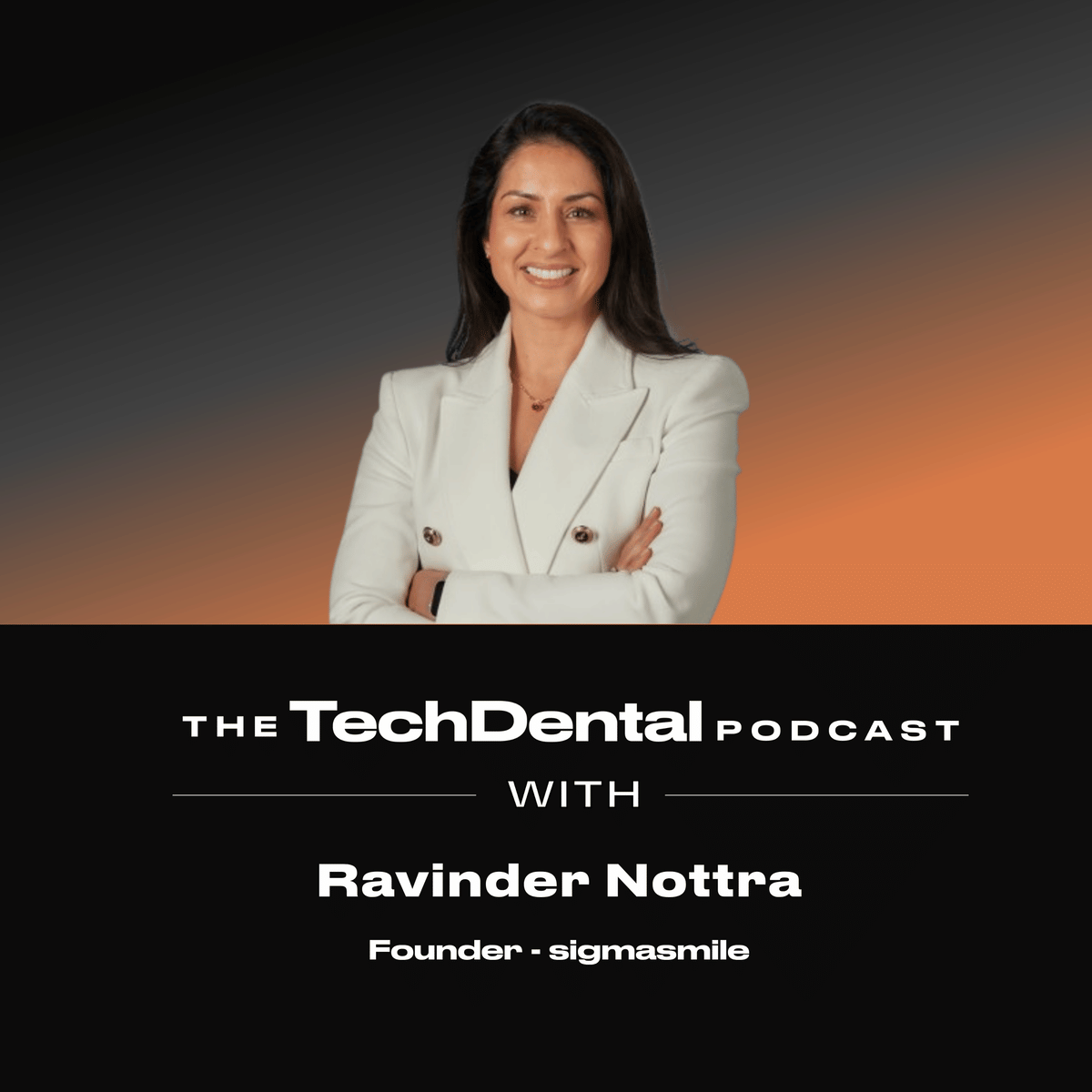
That asymmetry is the whole argument, and it is the same reason we have argued before that AI is not simply a better mousetrap, but a technology wave that demands a different kind of business. The person best placed to explain the foundation that decides it is Ravinder Nottra. She is the founder of sigmasmile and a Lean Six Sigma Black Belt with 15 years applying structured operational methodology across sectors, from two decades inside John Lewis to the legal world. Her case is that the methodology which rebuilt Toyota, reshaped parts of the NHS, and underpins the operational excellence of GE and Amazon has never properly reached the dental practice. And that gap is precisely where the opportunity now sits.
What Lean Six Sigma Actually Does in 30 Days
Strip away the jargon and the methodology resolves into two ideas. Lean, born at Toyota in the 1950s, is about producing only what the patient needs, when they need it, and stripping out everything else as waste. In a practice, the value-adding moment is the clinical treatment itself. A great deal of what surrounds it, the waiting, the rework, the duplicated forms, the unnecessary motion, is waste.
Six Sigma is about reducing variation. The same hygiene appointment that takes one clinician 20 minutes takes another 40. Reduce that variation and you increase capacity, and capacity is revenue and profit you already had the means to earn.
Crucially, Toyota did not invent this to be academically interesting. They were close to bankruptcy and needed to eliminate waste fast. Ravinder's argument is that dentistry now faces its own version of that pressure: rising operating costs, price-sensitive patients shopping around, and groups trying to scale while their operations creak. For many practices, she suggests, getting this right is the difference between staying in business and not.
Where the Money Is Actually Hiding
Ask most owners where growth comes from and they name two levers: acquire more patients, or cut costs. Ravinder's experience points somewhere less obvious and far cheaper. The money is already inside the building, invisible because the owner is too busy firefighting to see it.
It's hiding in the practice. It's there right under your nose. When you are firefighting on a day-to-day basis, you just don't see it. Ravinder Nottra
Across one three-site group, she uncovered half a million pounds without hiring a single person. Manual associate-pay processes were consuming around 15 hours a month. The owner was running three separate HR platforms where one would do. He was spending 2,000 pounds a month on marketing, acquiring each new patient at roughly 800 pounds, while 83% of his existing 8,000-patient base sat dormant. Re-engaging just 10% of the recently lapsed patients was worth an additional 57,000 pounds on its own.
Then there was the AI he had already bought. He had invested in a reception system and was delighted with it: it called customers, sent texts, recalled patients, or so he believed. Ravinder, who happened to be his patient, had received none of it. She tested the system. It was doing none of those things, and he had no idea. It is a live example of a pattern we have written about before, why most dental tech products fail, and what actually wins instead.
What he thought he bought into and what it was delivering were two completely different things. Ravinder Nottra
Procurement: The Overspend That Persists for Years
Procurement is a textbook example of waste hiding in plain sight. In one group Ravinder worked with, teams across sites ordered on intuition, from personal Amazon accounts, with no business agreement, no bulk pricing, no budget and no standard procedure. A quick check found some items available 49% cheaper elsewhere. Each site was independently spending 32,000 pounds a month; the owner believed the figure was nearer 15,000.
Her point about AI here is the one that runs through the whole episode. AI can absolutely help with procurement, searching, comparing, optimising, but only once the standards exist. Put the standard in place first, and the tool does a brilliant job. Skip the standard, and you have automated a guess.
Run the Chair Like a Formula One Pit Stop
The most vivid idea in the conversation is SMED, single-minute exchange of die, developed by Toyota engineer Shigeo Shingo in the 1950s. It is the reason a Formula One tyre change went from up to four minutes in the 1950s to around 2.4 seconds today. The principle: separate the tasks that can only be done while the car is stopped, the internal tasks, from everything that can be prepared while it is still running, the external tasks, and move as much as possible into the second group. Every modern pit crew rehearses the external work so that, when the car stops, only the unavoidable internal work remains.
Think of your chair as your pit. When the patient is in the chair, you are generating money. When they leave, you are losing money. Ravinder Nottra
Apply it to the dental chair and the implications are immediate. Pulling notes, preparing the tray, finding the right composite shade, briefing the patient on treatment, these are tasks many practices perform while the patient sits in the chair, burning revenue-generating time. The clinics that get this right do the preparation in advance, often first thing in the morning for the whole day's list, sometimes delegated to a nurse or receptionist. They do not skip the tasks. They resequence them. Ravinder's estimate is that planning the work beforehand can lift chair capacity by as much as 50%.
Standard Work Without Standardising the Clinician
The most common objection from clinicians is that standardisation threatens their judgement. Ravinder draws the line cleanly. Clinical judgement stays with the clinician and does not vary. What varies, and what standard work targets, is the process around the judgement. The same treatment can take 30 minutes with one dentist and 45 with another, not because of skill, but because one prepared everything in advance and the other did it live. Standardise the process, protect the judgement, and the variation disappears.
Clinical judgement will always be clinical judgement. What varies is the process around it. Ravinder Nottra
Why You Map the Process Before You Buy the AI
This is the operational heart of the episode, and the rule every operator should take away. Before deploying any AI tool, you need three capabilities: you must be able to measure the current process, you must have mapped where it actually breaks, and your team must be able to judge whether the AI is doing a good job. Fail any of the three and you are not ready.
Her example is voice-to-text clinical notes. The technology is excellent. But drop it onto an unstandardised note-taking process and it faithfully standardises the chaos, producing records that vary wildly from one clinician to the next and gaps you only discover when you need the note later. The tool did not cause the problem. The missing foundation did.
On an unmapped process, if you multiply zero by zero, you get zero. The problems will only be magnified and escalated. Ravinder Nottra
When the foundation is right, the same logic runs in reverse. Ravinder describes mapping a manual, single-person invoicing process, standardising the point of failure, and only then bringing in the right AI provider. The result was automation that removed the spreadsheet, embedded the process into the system, made it visible and compliant, and freed a full-time team member to focus on the patient. Same category of tool that creates chaos elsewhere, here producing compounding leverage. The difference was the order of operations.
The Structural Divergence Coming in 12 to 24 Months
Put these threads together and an asymmetry emerges that should concentrate every operator's mind. The groups that have done the foundation work are about to deploy AI and see compounding returns. The groups that have not are about to deploy the same AI and see chaos. This is not a gentle five-year gap. It is a structural divergence that will play out over the next 12 to 24 months.
There is, however, a more hopeful reading underneath it. Historically, only large groups could afford the centralised HR, procurement and process functions that make scaling efficient. AI lowers that barrier. A three-to-five-site operator who sequences it correctly, processes first, tool second, can now access capability that used to require expensive internal departments, and at a far lower overhead than hiring. Used well, AI democratises the operational advantage that large corporate groups have monopolised. Used carelessly, on an unmapped process, it simply accelerates the gap.
Operational Improvement as a Capital Strategy
For any founder or DSO operator thinking about exit, the arithmetic changes shape. Every pound of EBITDA added through process improvement does not add a pound to your valuation, it adds the exit multiple. And the operational work itself can move that multiple, because a business with clean, documented, auditable processes presents lower integration risk to a buyer than one running on the founder's institutional memory. It is the same gap between perceived and realisable value that we examined in what private equity actually sees in your dental practice data.
The hidden costs Ravinder surfaces are exactly what diligence uncovers: staff turnover at around 11,000 pounds per departure, single points of failure, critical knowledge living on one employee's personal drive, a compliance exposure as much as an operational one. Fixing the foundation is not a cost exercise. It is value creation that compounds into the multiple.
Culture Is a Process Variable
Finally, Ravinder treats culture not as the soft dimension that follows once the processes are fixed, but as a measurable variable in its own right, tracked through retention, absence and consistency. Change cannot happen without people, and people are the process. Involving the team in the mapping, drawing the problem definition out of the people who live it, and building a continuous-improvement habit, Kaizen, a few minutes a day, are what make any of this durable. The principal who tries to impose change from the top, while being the clinical lead, the cultural anchor and often the single biggest source of resistance, will struggle. The one who brings the team into the redesign will not.
What This Means For Operators, Founders and Investors
For operators, the sequence is the strategy: fix the foundation, then deploy the tool. Start with the dormant patient list, the chair turnaround, and the one process only a single person understands. This begins with treating your software as the brain of the business, a tool you own rather than a cost you manage. For founders preparing to scale or exit, documented, transferable process is both an operational asset and a valuation lever. For investors, the diligence question sharpens: weight a group's operational maturity and process documentation as heavily as its growth, because it is the clearest signal of whether AI will compound value or amplify risk.
The dental organisations that lead the next decade will not be the ones with the biggest AI budgets or the most software. They will be the ones that did the structured, unglamorous work of fixing the foundations first. Because when AI lands on top of that foundation, it does not just improve the business. It compounds.
Key Takeaways
AI is a force multiplier, not a strategy. It amplifies whatever foundation is already there. Strong processes compound, mess compounds faster.
The money is hiding in the practice. Dormant patients, manual processes, and unmanaged procurement routinely conceal six-figure sums, invisible to an owner who is firefighting.
Reduce variation to unlock capacity. Standardise the process around clinical judgement, not the judgement itself, and chair capacity can rise by up to 50%.
Run the chair like an F1 pit stop. Use SMED to move tasks out of chair time and into advance preparation. You do not cut the work, you resequence it.
Map before you buy. If you cannot measure the process, map where it breaks, and judge whether the AI is working, you are not ready to deploy it.
Process is a capital strategy. Documented, transferable operations raise the exit multiple and lower integration risk, while single points of failure do the opposite.
This article draws on the TechDental conversation with Ravinder Nottra, founder of sigmasmile. Full episode on Apple Podcasts, Spotify, and YouTube.
About the Guest
Ravinder Nottra is the founder of sigmasmile and a Lean Six Sigma Black Belt with 15 years of experience applying structured operational methodology across multiple sectors, including two decades at John Lewis, work across the legal industry, and three years working inside a supplier of clear aligners. Through sigmasmile she brings lean thinking into dentistry, helping practices and groups remove waste, reduce variation, and build the operational foundation that makes scaling, and AI, actually work.
Ravinder has produced a free Hidden Cost Audit workbook for practice owners and group operators. Download it at sigma-smile.com/#workbook
Connect with Ravinder and sigmasmile:
Website: sigma-smile.com
Ravinder on LinkedIn: linkedin.com/in/ravinder-nottra-52610185
sigmasmile on LinkedIn: linkedin.com/company/sigma-smile-consultancy
Book a consultation with Ravinder: calendar.app.google/jqtiZaTkhGLEFWqE6
About TechDental
TechDental is a strategic intelligence platform for founders, executives, operators and investors shaping the future of dentistry. Through high-level analysis and systems-focused conversations, we explore how AI, governance frameworks and operating model design influence performance, scalability and enterprise value in dental organisations.
www.techdental.com | info@techdental.com
Copyright Dr Randeep Singh Gill and RIG Enterprises Limited (Company No. 11223423) 2026. All Rights Reserved. TechDental is a trading name of RIG Enterprises Limited, incorporated in England and Wales on 23 February 2018, registered at 1a City Gate, 185 Dyke Road, Hove, England, BN3 1TL. Opinions attributed to named guests reflect the views of those individuals as expressed during recorded interviews. No part of this article may be reproduced without the prior written consent of RIG Enterprises Limited.