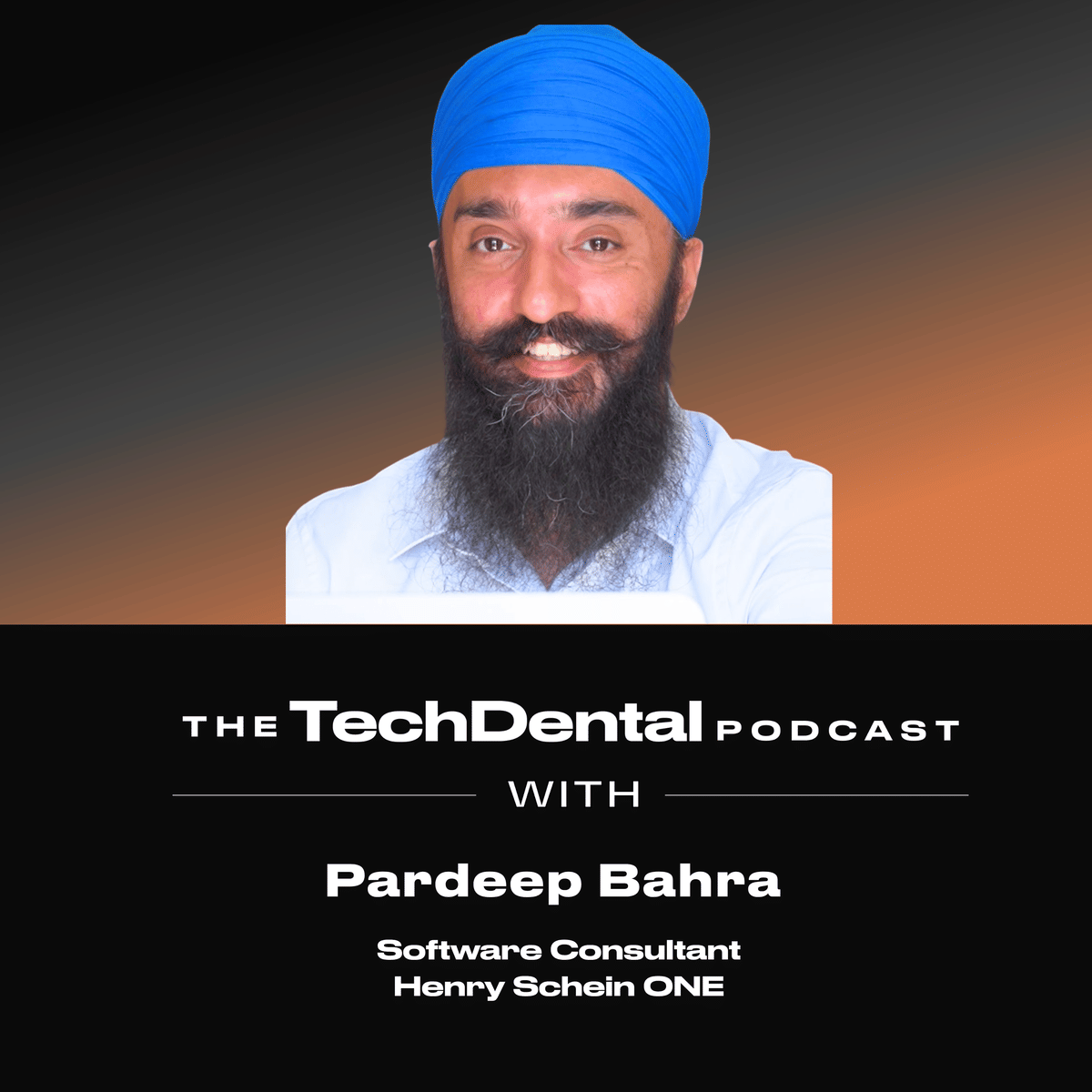
Direct answer: Pardeep Bahra, Software Consultant at Henry Schein ONE, argues that the commercial divide between UK dental practices is not primarily a question of which technology they use. It is a question of how they frame the technology decision itself. The practices treating their practice management system as a cost to be managed are making the wrong calculation, comparing the visible cost of migration against an invisible baseline that is not zero. The practices asking how to leverage their software to generate additional revenue, additional appointments, and additional valuation are building a structurally different business. Drawing on hundreds of direct conversations with UK practice owners at the exact point of the Exact-to-Dentally decision, Pardeep demonstrates that the objections most commonly raised, disruption, training burden, data security, and cost, are either manageable within a well-run migration process or, in the case of security, already resolved in the owner's favour by cloud architecture. His core argument is that cloud-native infrastructure is not the innovation any more. It is the baseline. The innovation is now the AI capability layer that cloud unlocks, and practices that have not yet moved to cloud are not standing at the starting line of that race. They are already behind it.
Listen to the full episode: 🎧 Spotify 🎧 Apple Podcasts ▶️ YouTube
Why the Cost Conversation Is the Wrong Conversation
There is a question that separates the dental practices building commercial advantage from their technology investments from the ones that are not. It is not a technical question. It is a framing question.
The practices asking whether they can afford their practice management software are treating it as a liability on their P&L. The practices asking how to leverage it to generate an additional five thousand pounds of revenue per month, or fifty additional appointments, are treating it as what it actually is: the operational infrastructure their entire clinical and commercial workflow runs on.
Pardeep Bahra has had this conversation hundreds of times. He works at Henry Schein ONE in the dental software migration space, which means he sits across the table from UK practice owners at the exact moment of deciding whether to move from Exact to Dentally. What he hears consistently is not a technical objection. It is a mindset one.
"The difference between successful practices and unsuccessful practices is very simple. It is just their perspective on their tools. If they are looking at it as a cost and not as an investment and not as a tool, it is going to be very difficult with that attitude to be successful."
The analogy Pardeep uses is precise. Comparing a basic legacy package to a fully featured cloud platform is not like comparing two versions of the same product. It is like going from a thirty-year-old Volkswagen Golf to a fully kitted Lamborghini Urus. You cannot compare the two on price alone because the outputs are not the same. The practice that frames the decision as a comparison of monthly fees will always find the migration hard to justify. The practice that frames it as a comparison of what each tool enables will rarely find it hard to justify at all.
The commercial case crystallises in a specific example. A five-surgery practice, in the first month after migrating to Dentally, added fifty additional appointments through the short notice filler feature alone. No additional training was required. The feature was already in the system. It was simply more visible, more intuitive, and easier to use than the equivalent on Exact. Fifty appointments at an average clinical value of one hundred and fifty to three hundred pounds each represents a return that absorbs the migration cost within weeks at most. That is the leverage argument made concrete.
The Invisible Costs That Never Appear on a Dashboard
The most commercially significant analysis Pardeep offers is not about what cloud software provides. It is about what legacy software costs that nobody measures. The cost of staying is not zero, but it is invisible, and invisible costs are the ones that accumulate until they appear as a surprise rather than a calculated trade-off.
Missed calls at peak time are the most quantifiable example. Even the best reception teams are managing arrivals, checkouts, and patient queries simultaneously during the morning rush. An appointment enquiry that is not answered does not appear as a missed appointment in any practice management report. It simply never existed, and the patient who did not get through has already called another practice. At thirty to forty missed or unanswered enquiries per month across a typical busy practice, and an average new patient lifetime value of several hundred to several thousand pounds, the invisible cost of an unstructured phone handling operation is material at both practice and group level.
Clinical notes completed after hours represent a second category of invisible cost. A team member staying an hour after close every day to finish documentation is not a line item anywhere. It shows up eventually as staff dissatisfaction, increased turnover, and the downstream recruitment and training costs that follow. Pardeep describes a practice where one of the clinical staff, a new mother, was staying late every evening to complete her notes. After migrating to Dentally and using the AI voice transcription feature, she was going home on time. The operational saving and the human one are not separable.
"She would spend at least an hour a day still at the practice after work doing her notes. And then after they migrated across to Dentally, she was leveraging the AI voice clinical notes and she was going home on time to see her baby."
The valuation argument is the third and often most overlooked invisible cost. A practice on legacy software going to market is a harder sell at a lower valuation than a cloud-native practice. The buyer's due diligence process is more complex. Patient data is less portable. Operational workflows that depend on institutional knowledge held in individual team members' heads rather than a documented, auditable system represent a risk premium that buyers will price in. The practice owner who has deferred migration for five years and then seeks to sell will encounter this discount as a surprise at the negotiating table rather than as a decision they consciously made.
Why Disruption Is the Most Common Objection and the Least Convincing
The narrative that cloud migration requires shutting up shop, disrupting patient diaries, and exposing the practice to days of operational chaos is the single most persistent barrier Pardeep encounters. It is also, in his assessment, the least convincing objection once it is actually examined.
The migration process at Henry Schein ONE begins months before a practice goes live. After a practice signs to move to Dentally, they do not go live for approximately eight weeks, partly because the migration team is fully booked and partly because the preparation time is built in intentionally. During that period, the practice gets access to a sandbox environment populated with a copy of their own patient data, so training feels real rather than abstract. They receive online resources, drop-in training sessions, and a formal training day booked in advance. The morning the practice goes live, it is typically closed for a couple of hours while the switch is made. That is the disruption.
"Disruption is absolutely minimal. These are planned weeks or months in advance, so there is going to be no commercial operational impact in your business."
The training objection follows a similar pattern. The most common framing is that the practice manager has used the same software for twenty or thirty years and cannot be expected to learn something new. Pardeep's response is consistent. If you are capable of becoming a dentist, running a dental practice, or managing a clinical team, you are more than capable of learning an interface that was built with thirty years of user experience knowledge behind it. The comparison he uses is switching from an Android phone to an iPhone. The first week feels different. After that, the muscle memory transfers. Dentally was designed to be used by people who are busy doing clinical work, not by people whose primary job is operating software.
On data security and GDPR, the objection often dissolves when the counterargument is made clearly. Cloud storage via AWS infrastructure with multiple redundant data centres is architecturally more secure than a local server sitting in a practice back office that is exposed to flood, fire, burglary, and hardware failure. The IT support company most practices already use is almost certainly backing up their data to a cloud solution anyway. The practice is already paying for the cloud layer. Moving to Dentally removes the middle layer and increases the security standing simultaneously.
Cloud Is Not the Innovation. It Is the Baseline. AI Is the Innovation.
The most important strategic framing in this episode is Pardeep's argument that cloud is no longer the differentiating capability in dental practice management. It is the foundation. Netflix disrupting Blockbuster is not a current analogy. It is a historical one. Cloud has been the standard in almost every other industry for a decade. The innovation that cloud unlocks in dental is AI, and AI is where the capability gap between cloud-native and legacy practices will become commercially decisive over the next two to five years.
Dentally is building a roadmap of AI features that operates across clinical notes, appointment management, patient communication, and diagnostic support. Practices on the platform today will have those features available as they release. Practices on legacy software will not, because the architecture that makes those features possible does not exist on a locally hosted system. The gap is not between two versions of the same tool. It is between two different generations of operational infrastructure.
"If they are not on Dentally, then the gap is going to be so wide that I just do not know how they are going to keep up, honestly, because that is how quick things are moving."
For UK dental groups evaluating their technology roadmap, the question is not whether to move to cloud. That decision has already been made by the direction of the market. The question is when, and what the cost of delay is measured in terms of the capability gap that accumulates with every additional year on legacy infrastructure.
The practices that are using AI-powered features to fill appointment gaps automatically, complete clinical notes by voice, and manage patient communication without adding headcount are not just more efficient. They are building a fundamentally different cost structure and a fundamentally different patient experience. Competing with them from a legacy platform is a structural disadvantage that compounds over time, not a temporary gap that can be closed quickly when the timing feels right.
For a deeper analysis of how AI infrastructure readiness maps to dental practice valuation, see Why AI Doesn't Fix Broken Dental Practices — It Exposes Them at techdental.com/insights.
Key Takeaways
1. The cost conversation is the wrong frame. Dental practices that treat their practice management software as a cost to be managed rather than a tool to be leveraged will consistently underinvest in the infrastructure that drives their commercial performance. The comparison that matters is not monthly fee versus monthly fee. It is what each platform enables at twelve months, three years, and at the point of sale.
2. The invisible cost of staying is not zero. Missed appointment enquiries, out-of-hours calls that go unanswered, clinical notes completed after hours, and valuation discounts at exit are all costs of legacy software that do not appear on any dashboard. The practices that have not built a mechanism to quantify them are making an incomplete cost-benefit calculation every time they decide to defer migration.
3. The disruption objection does not survive examination. A well-managed migration process closes a practice for a couple of hours on go-live day, is planned months in advance, includes sandbox training on real patient data, and results in a platform that is easier to use than the one it replaces. The disruption narrative is the most common objection Pardeep hears and the least convincing once the actual process is explained.
4. Cloud is the baseline. AI is the innovation. The capability gap between cloud-native and legacy practices is no longer primarily about features available today. It is about the AI capability roadmap that cloud architecture unlocks and legacy systems structurally cannot access. Practices deferring cloud migration are not maintaining parity. They are falling further behind the AI capability frontier with every year that passes.
5. Transactability is a migration argument most practice owners have not heard. A practice on legacy software going to market faces a harder due diligence process, less portable data, and a buyer risk premium that will show up as a valuation discount. The practice owners planning to sell in three to five years are making a compounding valuation decision every time they defer migration.
6. Training is the gold mine, not the obstacle. The practices that extract the most value from cloud migration are the ones that treat the training programme as the starting point of their commercial optimisation, not as a compliance exercise to get through. Tell the trainers what you are trying to achieve commercially, operationally, and personally, and they will build the pathway. The ones that rush through training and return to old workflows are paying for parity.
About TechDental
TechDental is a strategic intelligence platform for founders, executives, operators and investors shaping the future of dentistry. Through high-level analysis and systems-focused conversations, we explore how AI, governance frameworks and operating model design influence performance, scalability and enterprise value in dental organisations.
www.techdental.com info@techdental.com LinkedIn
The future belongs to those who deploy technology with discipline.
© 2026 RIG Enterprises Limited. All Rights Reserved. TechDental is a trading name of RIG Enterprises Limited (Company No. 11223423), incorporated in England and Wales on 23 February 2018, registered at 1a City Gate, 185 Dyke Road, Hove, England, BN3 1TL. All editorial content, analysis, synthesis and intellectual property contained within this article are the original work of the author and remain the exclusive property of RIG Enterprises Limited. Opinions and statements attributed to named guests reflect the views of those individuals as expressed during recorded interviews and are reproduced here for editorial and informational purposes. No part of this article may be reproduced, distributed, transmitted, republished, or otherwise exploited in any form or by any means without the prior written consent of RIG Enterprises Limited.