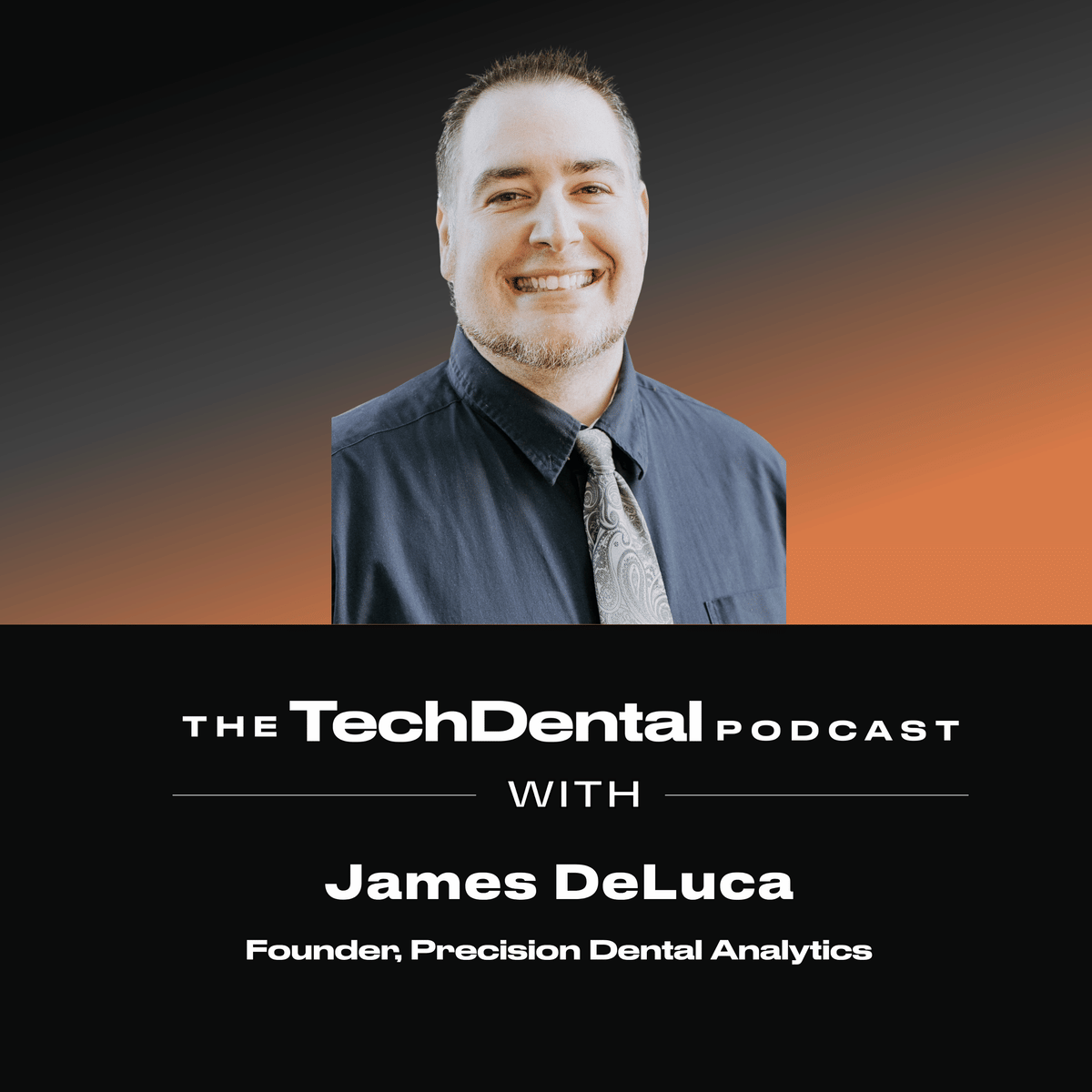
Direct answer: James DeLuca, founder of Precision Dental Analytics and author of Phantom EBITDA, argues that the most consequential information asymmetry in dental M&A is not about deal structures, legal terms, or negotiating strategy. It is about data. PE-backed acquirers enter dental acquisition conversations having read a practice's data at a granular level the seller has never accessed. The Quality of Earnings audit does not evaluate the same information the seller's broker and accountant have prepared. It pulls the entire practice management database, disaggregates clinical production data at the provider level, identifies coding patterns against industry benchmarks, and looks for the specific anomalies that justify a price reduction after the letter of intent is signed and the seller has entered exclusivity. Drawing on his experience building the operational playbook that DSOs use to acquire practices, and now deploying that same knowledge on behalf of sellers, DeLuca provides the most precise account available of what a buyer's analyst actually does with a dental practice's data, why the EBITDA on a well-run practice's P&L routinely fails to survive institutional scrutiny, and why the pre-LOI window is the only period in which a seller holds meaningful leverage.
Listen to the full episode: 🎧 Spotify 🎧 Apple Podcasts ▶️ YouTube
Free resource for TechDental listeners: James DeLuca has made his full book, Phantom EBITDA, available free to TechDental listeners. Download your free copy here and use code TECHDENTAL at checkout.
The Evidence Locker and the Interpretive Gap
Every dental practice runs a practice management system. Most practice owners interact with that system through a dashboard: a curated, user-friendly presentation of key performance indicators drawn from the underlying database. The dashboard tells a coherent story about the practice. It is also, in James DeLuca's assessment, using between 10 and 20% of the actual information the database contains.
The rest of the data is still there. The timestamp columns, the provider identifiers, the referral source fields, the payment trail at the transaction level rather than the summary level. A buyer's analyst does not read the dashboard. They pull the database. And the story the database tells is materially different from the story the dashboard presents.
This is the central mechanism of data asymmetry in dental M&A. It is not that the seller has done anything wrong. It is that the seller and the buyer are reading different versions of the same information. The seller reads the exhaust. The buyer reads the engine.
"They're measuring the exhaust. The institutional buyers are looking at all the inputs. They're actually looking at the engine. They're pulling your whole database and really looking at a more granular level what each provider does."
The specific consequence of this asymmetry that matters most for a practice approaching a transaction is the five-year versus three-year problem. Standard broker advice is to prepare three years of financial data for a transaction. PE buyers want to see five. The two-year gap is precisely the window that shows the buyer how the practice operated before the founder began preparing for the sale. Before the clinical standards were reviewed. Before the coding patterns were examined. Before the presentation was constructed. It is the unedited version of the business, and it is the baseline against which the Quality of Earnings audit measures everything that follows.
What a Quality of Earnings Audit Actually Does
A Quality of Earnings audit is the standard institutional due diligence instrument used by PE buyers to validate or challenge reported EBITDA. It is not a financial audit in the traditional sense. It is a forensic process that disaggregates the components of reported profitability and tests each one against the question of whether it represents sustainable, defensible income that will persist after the acquisition.
The mechanisms it applies to dental practices are primarily clinical. Provider coding drift is one of the most common. The relationship between procedure codes is not arbitrary: insurance benchmarks establish ratios for how frequently certain procedures should co-occur based on the clinical standards for each. A practice that bills 70 to 80% of its crowns with a core buildup, against an industry benchmark of approximately 40%, is generating revenue that a QoE analyst will immediately flag as aggressive billing. The revenue is real. The procedures happened. But it will not survive institutional scrutiny once the practice is inside a DSO structure with a larger regulatory target on its back.
"If you are billing 70, 80% of your crowns with a buildup, there's that gap that immediately jumps off the paper to the buyer and says, we have aggressive billing here. Once we roll this practice up where we have a much larger target on our back, it's not gonna withstand the institutional scrutiny."
Hollow growth anomalies are a related mechanism. Revenue growth that is driven by clinical coding patterns exceeding defensible benchmarks is hollow in a specific technical sense: it will not survive the transition to institutional ownership. It is income the seller has genuinely earned, through actual clinical work, but which the buyer will not accept as part of the sustainable EBITDA they are acquiring. The difference between genuine growth and hollow growth is not whether the revenue happened. It is whether the clinical documentation supports it against the standards an institutional buyer will apply.
The $8 million error James describes in this episode is the most commercially precise illustration of the alternative mechanism: not inflated revenue but missing revenue. A practice his firm audited was collecting 51% of expected collections from one insurance payer, against a correct collection rate that should have been substantially higher. The shortfall was $800,000 in uncollected revenue. Against a 10x acquisition multiple, the impact on enterprise value was $8 million. The practice owner was completely unaware. So was his broker and his dental accountant. They were all reading the same dashboard.
The Retrade and the Escrow Holdback
The retrade is the mechanism by which buyers use QoE findings to reduce the purchase price after the letter of intent has been signed. It is legal, it is common, and it is almost always anchored in genuine data anomalies the seller did not know existed. The seller's leverage position at that point is binary: accept the price reduction or walk away and start the entire process again with a new buyer who will find the same issues.
James argues that the retrade, while damaging, is not the worst outcome available to a seller. The escrow holdback is worse. A holdback of 20 to 30% of the purchase price, paid out over 36 months, with the buyer using that account to fund the remediation of the issues identified in due diligence. The deal has already closed. The seller no longer has any leverage. The remediation of problems the seller created is being funded by the seller's own money held in escrow by the buyer.
"It's like a security deposit. Most people expect when I leave my rental agreement that I'm gonna get that money back. But not if you don't clean the house before you give the keys back. Everyone understands that there's a mess still in there and they're just charging to clean it up after the fact but with your money not with theirs."
The opportunistic buyer exists but is not, in James's assessment, the primary risk. Most retrades are not fabricated. The data anomalies are real. The buyer is not creating problems that do not exist. They are identifying problems the seller did not know existed and pricing them at the point of maximum leverage. The seller's isolation after LOI signing, the exclusivity restrictions, the psychological investment in the exit, the difficulty of restarting the entire transaction timeline: these are structural advantages the buyer holds independent of whether the QoE findings are legitimate.
The Pre-LOI Architecture
The pre-LOI window is the only period in a dental M&A transaction where the seller holds meaningful negotiating leverage. James's framework for building a defensible position in that window has three components.
The first is forensic self-audit: running the same analysis a buyer-side QoE team would run, against the same benchmarks, before any buyer has access to the data. This requires pulling the actual database rather than reading the dashboard, which is precisely the capability gap that makes most practices vulnerable.
The second is remediation: addressing the anomalies that can be addressed. A provider coding pattern that has drifted outside defensible benchmarks can be corrected over a two to three year period with appropriate documentation. A collections gap can be closed. An overdue patient credit liability can be resolved. The practice that identifies these issues five years before a transaction has the runway to fix them. The practice that discovers them in due diligence does not.
The third is data room architecture: constructing the presentation of the practice's financial and clinical data in a way that tells the seller's story rather than leaving the interpretation to the buyer's analysts. If the coding patterns look aggressive but the clinical documentation supports every procedure, that documentation needs to be accessible and organised before the QoE team arrives.
For a UK dental founder with five to ten sites approaching an institutional transaction in the next three to five years, the immediately actionable version of this argument is to start reading your practice management data the way a buyer would read it. Not the dashboard. The database. The chain of evidence from patient acquisition to closed account. Every dollar, every procedure, every provider, every payer, every referral source. The gap between what you can see and what a buyer can see is the gap that will determine whether your transaction closes on your terms.
For further analysis on how data infrastructure and AI governance intersect with enterprise value in dental groups, see Why AI Doesn't Fix Broken Dental Practices — It Exposes Them at techdental.com/insights.
Key Takeaways
1. The dashboard uses 10 to 20% of your data. The rest is still in the database. A buyer's analyst reads the database. The information asymmetry in dental M&A is not about negotiating skill or legal sophistication. It is about data literacy.
2. PE buyers look at five years. You prepare three. The two-year gap is the unedited version of your business. It is the baseline the QoE audit uses to measure everything you have done to prepare for the transaction.
3. Phantom EBITDA is real revenue that does not survive institutional scrutiny. It appears on your P&L because the procedures happened. It disappears in a QoE audit because the coding patterns exceed defensible benchmarks. The revenue was yours. The multiple on that revenue was not.
4. The retrade is not the worst outcome. The escrow holdback mechanism allows buyers to remediate issues they identified in due diligence using the seller's own money after the deal has closed. Walking away from the LOI is theoretically available. It is practically almost never exercised.
5. The pre-LOI window is the only leverage window. Once the LOI is signed, the dynamic shifts permanently. Forensic self-audit, remediation, and data room architecture built in the pre-LOI period are the only defence mechanisms available to a seller. A broker and a dental accountant are not enough.
6. Five years is the right horizon, not six months. The practices that close this gap are the ones that start the remediation process long before they are emotionally ready to sell. Most dental founders wait until they are emotionally ready. That is precisely when they no longer have the runway to fix what a buyer will find.
About TechDental
TechDental is a strategic intelligence platform for founders, executives, operators and investors shaping the future of dentistry. Through high-level analysis and systems-focused conversations, we explore how AI, governance frameworks and operating model design influence performance, scalability and enterprise value in dental organisations.
LinkedIn: https://www.linkedin.com/in/drrandeep/
The future belongs to those who deploy technology with discipline.
© 2026 RIG Enterprises Limited. All Rights Reserved. TechDental is a trading name of RIG Enterprises Limited (Company No. 11223423), incorporated in England and Wales on 23 February 2018, registered at 1a City Gate, 185 Dyke Road, Hove, England, BN3 1TL. All editorial content, analysis, synthesis and intellectual property contained within this article are the original work of the author and remain the exclusive property of RIG Enterprises Limited. Opinions and statements attributed to named guests reflect the views of those individuals as expressed during recorded interviews and are reproduced here for editorial and informational purposes. No part of this article may be reproduced, distributed, transmitted, republished, or otherwise exploited in any form or by any means without the prior written consent of RIG Enterprises Limited.