Direct answer: The partnership between MyDentist, the UK's largest dental organisation, and Overjet, the global leader in dental AI, is not a technology procurement. It is the most significant AI rollout in the history of UK dentistry and the clearest signal yet that AI in the sector has moved from experimentation to infrastructure. The conversation between Dr Nyree Whitley, Chief Clinical Officer at MyDentist, and Dr Gordon Barfield, Clinical Director at Overjet, reveals what that transition actually requires: clinical alignment at leadership level, data maturity, psychological safety, and a governance architecture that was months in the making before a single practice went live. For DSO executives, PE investors and dental group leaders across the UK, this partnership is not a case study in technology adoption. It is a blueprint for what structural AI integration demands, and what it delivers when done correctly.
The partnership between MyDentist, the UK's largest dental organisation, and Overjet, the global leader in dental AI, is not a technology procurement. It is the most significant AI rollout in the history of UK dentistry and the clearest signal yet that AI in the sector has moved from experimentation to infrastructure.
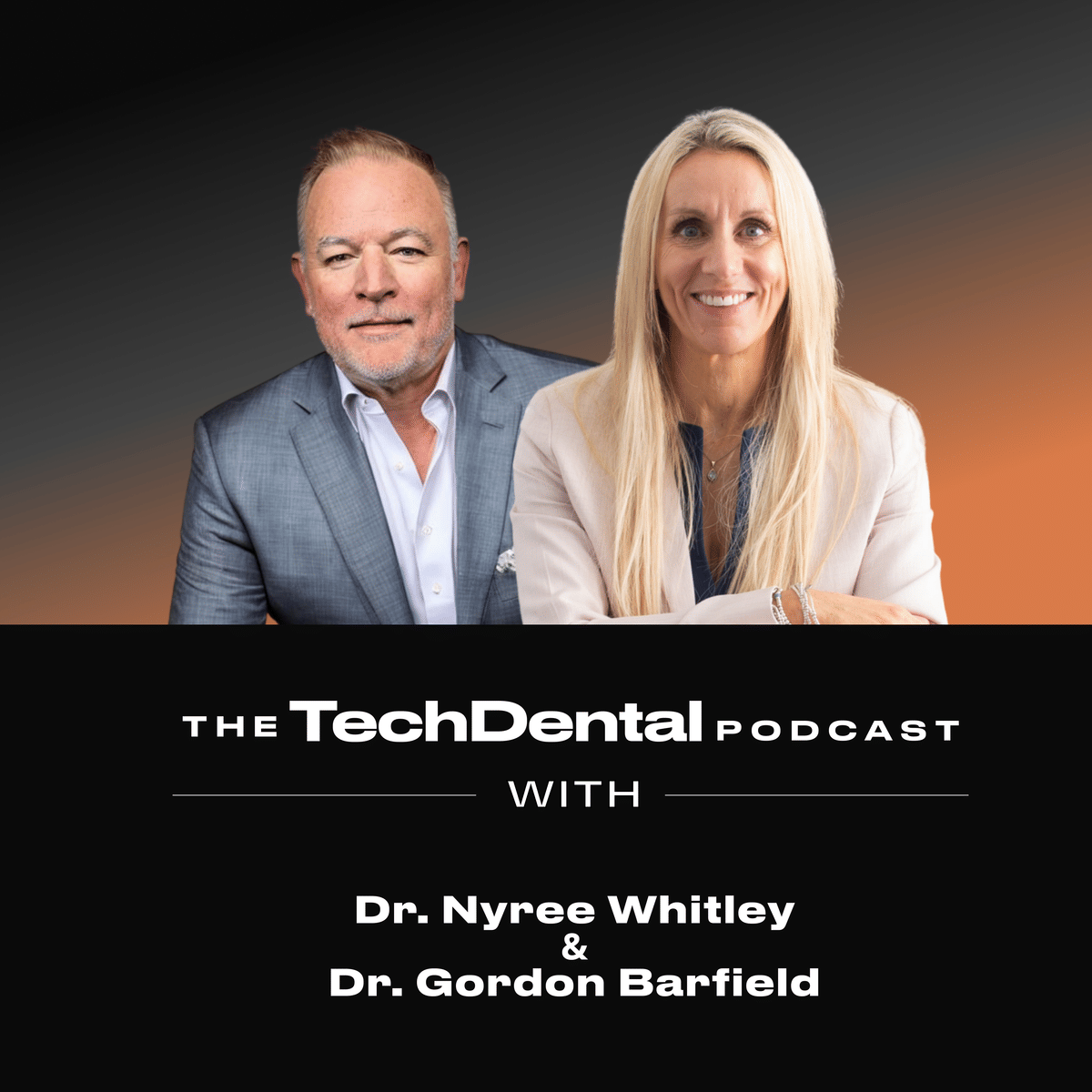
The conversation between Dr Nyree Whitley, Chief Clinical Officer at MyDentist, and Dr Gordon Barfield, Clinical Director at Overjet, reveals what that transition actually requires: clinical alignment at leadership level, data maturity, psychological safety, and a governance architecture that was months in the making before a single practice went live.
For DSO executives, PE investors and dental group leaders across the UK, this partnership is not a case study in technology adoption. It is a blueprint for what structural AI integration demands, and what it delivers when done correctly.
Listen to the full episode:
Spotify: https://bit.ly/4c7GoEe
Apple Podcasts: https://bit.ly/4vaVMbP
YouTube: https://bit.ly/4txoDp4
What Made AI the Right Move for the UK's Largest Dental Organisation?
MyDentist operates one of the largest clinical estates in UK dentistry, with over 3,000 clinicians across hundreds of practices. When Dr Nyree Whitley reflects on why AI was introduced, her framing is deliberate and worth noting.
"I'm not sure that it was operational friction that caused it. It's just about progression, isn't it? With regard to utilising all of the tech available just to assist our clinicians. Everybody can benefit from some support. It's very much an assistive diagnostic tool."
This distinction matters for every UK dental leader watching this partnership. The decision was not reactive. It was directional. AI was introduced not because something was broken but because the trajectory of clinical practice demands it.
The scale of the rollout, initially across more than 100 practices with full estate implementation planned, required a deployment strategy that went well beyond software installation. Dr Whitley describes a layered waterfall approach built on the existing clinical support infrastructure.
"We have the largest clinical support network of anywhere in the UK. So what's super important is that we have clinicians who will introduce this to our clinicians. We ask for hand raisers. We train them, we educate them. They then help to engage the next layer down."
This is the change management model that distinguishes organisations that extract value from AI from those that merely activate it. Clinical-to-clinical adoption is not a communications strategy. It is the architecture of trust.
What Must Exist Before AI Creates Advantage Rather Than Noise?
Dr Gordon Barfield's answer to this question is the most operationally precise framework for AI readiness available to UK dental leaders today. Three conditions must be present.
The first is clinical alignment at leadership level.
"You really can't deploy AI as an AI project solely. It has to be owned by the clinical team and the governance team as well. And that's something that MyDentist understood very early in this cycle."
The second is data maturity: clean imaging protocols, consistent radiograph quality and a shared definition of disease.
The third is psychological safety, and Dr Barfield is unambiguous about why it is the most important of the three.
"Our clinicians really need to feel that AI is a second opinion, not a surveillance tool. If those three don't exist, AI just amplifies inconsistency. But when they do exist, it becomes a real infrastructure and a force multiplier."
The amplification point is the one most frequently missed by boards evaluating AI investment. A practice or group with inconsistent imaging protocols, variable diagnostic standards and a clinical culture of defensive practice does not benefit from AI. It gets a quantified account of its own inconsistency, surfaced at scale. The preparation is not optional. It is what determines whether the outcome is value or exposure.
We examined how operational readiness determines AI outcomes across dental groups in Why AI Doesn't Fix Broken Dental Practices, It Exposes Them.
What Breaks First When AI Is Deployed Too Quickly?
The most common failure mode is treating AI adoption as a feature launch rather than a behavioural shift.
"Another mistake is focusing on activation metrics. How many practices are turning it on, rather than the clinical calibration around the tool and the education that needs to occur. AI changes how clinicians see, discuss and defend their diagnosis. And that really requires case review, clinical work, peer discussions, governance pathways for agreement as well as disagreement."
For UK DSO leaders managing multi-site rollouts, this is the distinction between a metric that looks good in a board report and a metric that indicates genuine organisational change. A practice activating Overjet is not the same as a clinician integrating it into diagnostic workflow with confidence.
The governance requirement compounds this. MyDentist's preparation for this partnership involved months of legal, compliance and GDPR work before practice-level deployment began.
"We even went down to the minutia in terms of speaking to the indemnity providers to give the clinicians the confidence to know that they were okay to utilise AI. You need to have all of that infrastructure in place before you even start to implement it into the practices."
For UK dental groups operating under NHS contracts, the governance burden is particularly significant. NHS legislative requirements, data security pen testing and patient data consent frameworks all require resolution before any clinical deployment. The MyDentist and Overjet partnership, as the first major UK-scale Overjet deployment, generated learnings in the UK and EU regulatory environment that Dr Barfield expects to inform global implementation standards.
What Does Clinical Alignment Actually Look Like in Practice?
The concept of clinical alignment as a North Star is central to Overjet's deployment philosophy. Dr Barfield's unpacking of what it means in practice is one of the most important contributions of this conversation.
"Alignment doesn't mean complete agreement. We're still going to have disagreement because we have our natural tendencies. But it means that they see the same anatomical landmarks on the X-ray, the ground truth. They can use the same threshold definitions and articulate why they disagree clinically based upon an objective piece of information. And most importantly, it brings these two closer to a shared truth. That's perhaps the most beautiful thing that AI provides us clinically."
The diagnostic variability that AI surfaces in large data sets has been the most surprising finding from Overjet's enterprise deployments. Dr Barfield is candid about the scale of the gap.
"The biggest one has been around variation and it's much, much wider than most dental leaders assume it to be. The gap in opinion between dentist one and dentist two is tremendous. Not malicious variation in any way. It's different training backgrounds, our philosophy, our experience levels. The AI doesn't really create that variation. But it does quantify it. It brings it to light."
For a UK DSO operating 50, 100 or 400 practices, the clinical and commercial implications of this are significant. Variable diagnostic standards produce variable treatment planning, variable patient communication and variable treatment acceptance. AI narrows that variability by anchoring every diagnostic encounter to a consistent objective standard.
Dr Whitley's framing of what this means clinically is precise.
"It's like having another clinician to discuss the radiographs with. We know that if you give a group of 10 clinicians a set of radiographs, they will all come up with slightly different treatment plans. It's just that support to make them think, to confirm what they think or actually to make them question their own interpretation. Which is a really healthy thing. That's development."
Where Is the Line Between Assistive Intelligence and Decision Displacement?
The question of where AI authority ends and clinical authority begins is the ethical and operational core of every AI deployment in a healthcare setting. Dr Barfield's answer is both clear and consequential.
"AI informs the clinician and the clinician decides. If AI auto-diagnoses without review, or suppresses clinician disagreement, or penalises deviation, then we have crossed that line. At Overjet, rejection of these findings and AI suggestions is not a failure. We see it as clinical calibration. AI should reduce the cognitive load for clinicians, but not reduce clinical authority."
Dr Whitley extends this to the patient-facing dimension, making a distinction that UK practice leaders should note.
"I don't know about changes the clinician's mind, but it will reaffirm the clinician's mind where possibly they had doubts before. The U-turn is in the patient's mind. When you show that patient in a visual way, that's where you get the U-turn. Not in the dentist's diagnosis."
This reframes the case acceptance benefit of AI diagnostic visualisation. The mechanism is not algorithmic persuasion. It is patient comprehension. The patient who can see their own pathology through AI-assisted imagery understands their need in a way that a clinician's verbal description rarely achieves.
How Does AI Convert Diagnostic Data Into a Mentorship Loop Rather Than a Surveillance System?
Dr Whitley describes the existing clinical development advisor structure that sits beneath the AI layer.
"We have a number of different types of clinician within the estate. Foundation dentists, people who are first year post qualification, mentees coming in from overseas. We already have a well-established mentor programme. There is one clinical development advisor for each small group of practices, usually covering about 12 to 15 practices. They have a very close relationship with all of their clinicians. They are already their mentor. And they are the people who would step into supporting those scenarios."
When AI flags a clinician whose diagnostic patterns fall outside expected ranges, the response is not enforcement. It is a conversation, supported by objective data, conducted by a clinical peer.
Dr Barfield frames the board-level version of this risk as one of the most dangerous misunderstandings of AI in dental organisations.
"Boards either overestimate it, the fear of replacement. Or they underestimate behavioural risk. They assume AI is a revenue lever rather than a governance lever. If an executive board treats AI as a growth hack purely for ROI, they're going to miss the structural value inherent in this type of technology."
Does AI Protect or Grow EBITDA in UK Dental Groups?
Dr Barfield's answer to the EBITDA question is one of the most important financial reframings of dental AI available to UK investors and group executives.
"It does, but it's indirect. It does not create revenue, but it certainly reduces leakage. It doesn't help you create more dentistry. But what it's really good at doing is uncovering the dentistry that exists within your patient population and then allowing you to act upon that. The goal is not to treat more dental disease than is there. It's to treat the right amount."
Dr Whitley adds the patient education dimension to this financial picture.
"It's around conversion. That sounds as though you're trying just to upsell, but it's not. It's about getting people to understand their disease and to better buy into treatment that's required, but also the prevention they will need to undertake in order to not have any further disease."
In the NHS-constrained UK market, where UDA caps limit volume-based throughput, Dr Whitley is clear-eyed about what AI can and cannot achieve.
"It'll just optimise. It's not going to increase throughput because you're going to diagnose whatever decay is there. It should make us more efficient in terms of having the confidence of being able to treatment plan, but it shouldn't change how we treatment plan things."
The honest framing matters. AI in an NHS context does not solve the structural economics of the UDA model. It makes the existing model more efficient, more consistent and more defensible.
We examined how AI platforms that reduce operational leakage translate into valuation premium at scale in Scaling Dentistry Without Breaking It.
Does AI Narrow the Digital Divide Between NHS and Private Practice?
Dr Whitley's answer draws on her understanding of clinician identity.
"One thing that I still hear is people saying I'm an NHS dentist and it drives me mad. You didn't do a BDS that said you're going to be an NHS dentist. You are a clinician, you are a dentist. By giving clinicians additional tools such as AI, previously thought of as the reserve of private practitioners, it gives clinicians more confidence to offer patients private alternatives and to have more confidence in their treatment planning processes."
Dr Barfield adds the democratisation argument from an enterprise data perspective.
"In the short term, the corporates can benefit from it because they really understand scaling governance. Long term, I think it really levels the playing field for everybody. Think about a single practice with a good governance structure and disciplined use. They can achieve the same diagnostic consistency as a DSO that has 600 offices. AI democratises the expertise if we use it correctly."
For a deeper look at how community infrastructure compounds as a non-replicable competitive advantage in a consolidating UK dental market, read What The Magic Dentist Teaches the Dental Industry About the Only Growth Strategy That Cannot Be Copied.
What Is the UK Regulatory Landscape and Is Governance Keeping Pace?
The UK regulatory environment for AI in healthcare is undergoing substantive reform. The MHRA's 2025 policy package introduces a Reliance Route, enabling devices cleared by the FDA, Health Canada or Australia's TGA to reach the Great Britain market faster, provided they demonstrate full equivalence. The National Commission into the Regulation of AI in Healthcare is expected to publish recommendations in 2026 covering safety, liability and transparency.
Dr Barfield's assessment of whether regulation is keeping pace with deployment is candid.
"I don't think it is. The rate at which the technology is changing and the deployment speed is moving faster every day. It's very similar to the concept of the self-driving cars. We have the technology for the cars, but the infrastructure to keep them on the roads isn't quite there yet."
His conclusion redirects the risk analysis inward.
"The real risk isn't necessarily regulatory lag. It's internal governance. Compliance with these frameworks doesn't equal necessarily safe implementation."
On liability, Dr Barfield's framework is straightforward.
"You can't sue your dental handpiece. AI is a tool. The responsibility remains with a licensed practitioner. Vendors like Overjet are responsible for algorithmic integrity and transparency. Organisations are responsible for training and governance. And at the end of the day, you and I as clinicians are responsible for the care of the patient. A shared ecosystem, each with distinct responsibilities."
For a ground-level account of how governance decisions inside a growing UK dental group determine whether AI creates value or creates chaos, read The Intelligence Layer: What a DPO Inside a Growing UK Dental Group Knows About AI That Most Leaders Don't.
What Does the Diagnostic Consistency Index Tell Us About Where Dental AI Is Going?
In the lightning round, Dr Barfield coins a metric that is likely to become a genuine industry standard.
"I'm going to call this one the DCI, the Diagnostic Consistency Index. Increasing consistency of assessment between clinicians, inter-clinician agreement, is going to be one that's very strong for us."
A DSO that can demonstrate high inter-clinician agreement, calibrated against objective AI findings, is not just demonstrating clinical quality. It is demonstrating operational predictability, governance maturity and the kind of evidenced consistency that commands premium valuations in M&A transactions.
Dr Whitley's corresponding prediction is equally precise.
"It is going to permanently improve confidence. But it should never replace a clinician's autonomy to make a decision. The ultimate decision."
And on what AI will fail to achieve, Dr Barfield is clear.
"AI will, even in part, replace the dentist. That will clearly fail."
Will This Be a Technology Upgrade or the Start of a New Operating Model?
Both speakers converge on the same answer.
Dr Barfield:
"I think that ultimately this is a new operating model. AI is a technology that's transformative. In fact, it's more transformative than anything that society has seen before, by orders of magnitude. There is change management required, there is cultural shift. But at the end of that road, the further we go down it, the better our outputs are. And for us as clinical oral health providers, that's what our North Star is. Better patient care and better patient outcomes."
Dr Whitley:
"There has been an exponential change in terms of tech and its involvement in dentistry over the last five years. Many associates now would not go and work in a practice where they still have paper records and non-digital films. I think it is the same with AI. A number of new clinicians will not even consider the positions if there's not a scanner in practice. I definitely think it's a much bigger operational change within the profession."
The trajectory is visible. Within the decade, AI-enabled diagnostic capability will be a prerequisite for clinical recruitment in the way that digital X-ray is a prerequisite today. The groups that build the governance infrastructure now, that develop the clinical alignment culture now, that invest in data maturity now, will occupy the structural advantage position when that transition completes.
Key Takeaways
The MyDentist and Overjet partnership is the largest AI rollout in UK dental history, initially deploying across more than 100 practices with full estate implementation targeted. It establishes the operational template for what enterprise-grade diagnostic AI deployment requires at national scale.
Three conditions must be in place before AI creates advantage: clinical leadership alignment, data maturity and psychological safety. Without all three, AI amplifies inconsistency rather than resolving it.
Diagnostic variability across UK dental practices is significantly wider than most leaders assume. Boards that treat this as a disciplinary risk will undermine adoption. Boards that treat it as a clinical development opportunity will extract the governance and commercial value the technology can deliver.
AI does not create new dentistry. It uncovers the dentistry that already exists within a patient population. The EBITDA case is built on reducing leakage, improving diagnostic confidence and increasing patient comprehension and case acceptance.
The governance architecture required for UK NHS-environment AI deployment is months of work, not weeks. GDPR compliance, NHS data security requirements, pen testing, indemnity clarification and patient consent frameworks must all be resolved before practice-level deployment begins.
Liability in AI-assisted diagnosis sits with the clinician, not the algorithm. This shared ecosystem model is the framework UK dental organisations should embed into their AI governance documentation now, ahead of the National Commission's 2026 recommendations.
The Diagnostic Consistency Index, the measurable improvement in inter-clinician agreement calibrated against objective AI findings, will define the highest-performing DSOs by 2030. Groups that can evidence this consistency will command premium multiples in M&A transactions and attract the clinical talent that increasingly selects employers based on technology and professional development infrastructure.
About TechDental
TechDental is a strategic intelligence platform for founders, executives, operators and investors shaping the future of dentistry. Through high-level analysis and systems-focused conversations, we explore how AI, governance frameworks and operating model design influence performance, scalability and enterprise value in dental organisations.
Website: www.techdental.com Email: info@techdental.com LinkedIn: https://www.linkedin.com/in/dr-randeep-singh-gill-576580357/ Advisory enquiries: www.techdental.com/advisory
The future belongs to those who deploy technology with discipline.
© 2026 RIG Enterprises Limited. All Rights Reserved. This article was authored by Dr. Randeep Singh Gill and is published under the TechDental brand, a trading name of RIG Enterprises Limited (Company No. 11223423), incorporated in England and Wales on 23 February 2018, registered at 1a City Gate, 185 Dyke Road, Hove, England, BN3 1TL. All editorial content, analysis, synthesis and intellectual property contained within this article are the original work of the author and remain the exclusive property of RIG Enterprises Limited. Opinions and statements attributed to named guests reflect the views of those individuals as expressed during recorded interviews and are reproduced here for editorial and informational purposes. No part of this article may be reproduced, distributed, transmitted, republished, or otherwise exploited in any form or by any means, whether electronic, mechanical, or otherwise, without the prior written consent of RIG Enterprises Limited. Unauthorised reproduction or use of this content may constitute an infringement of copyright under the Copyright, Designs and Patents Act 1988.