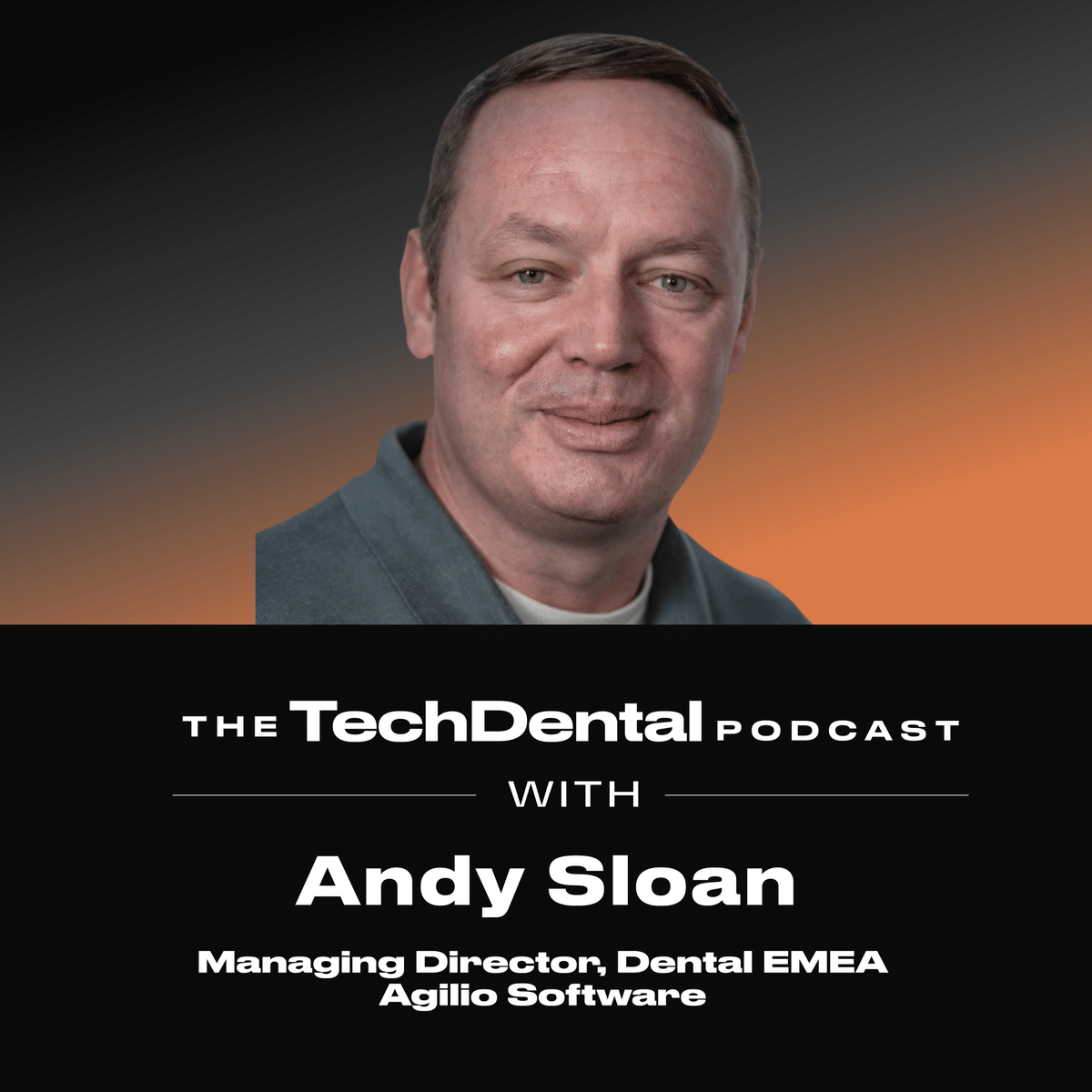
Direct answer: Scaling a dental group is not primarily a capital problem or a growth problem. It is an operational control problem. The moment a group moves beyond five or six sites, informal management systems fail, visibility is lost and decisions slow down. The margin erosion, leadership burnout and cultural firefighting that follow are not the result of bad leadership. They are the predictable outcome of building growth before building control. Andy Sloan, Managing Director for Dental at Agilio Software, has spent more than 15 years inside fast-growing dental groups and large-scale integrations. His diagnosis of why scaling dentistry breaks before it succeeds is one of the clearest frameworks currently available to operators, executives and investors in the sector.
What Is the First Thing That Actually Breaks When a Dental Group Scales?
Most dental group leaders plan the acquisition. Very few plan the operational aftermath.
The result is predictable and expensive.
Andy Sloan has seen it repeat across more than 15 years of dental technology implementation and integration work. The breaking point is not financial. It is not clinical. It is the loss of something far more fundamental.
"The first thing that breaks is informal control. At five practices, most leaders can run on memory, the relationships, and more importantly, the gut feel. They can attend to know what's good, what's not so good, and what's risky, even if it's not written down. Once you move past that, once you get to the six-plus sites, the founder can't really see it anymore."
This is a structural shift, not a management failure. The informal systems that work brilliantly at small scale, relationships, instinct, direct visibility, do not transfer to multi-site operations. They were never designed to.
What happens when visibility is lost at scale is equally predictable.
"When visibility is lost, what happens is decisions then tend to slow down. And when they tend to slow down, risks get missed and problems then surface too late for them to be fixed quickly and cheaply."
The cost of this does not announce itself immediately. It leaks. Margin erosion that appears unrelated to any single decision. Staff morale declining without an identifiable cause. A culture of constant firefighting that gets relabelled as fast-paced when it is actually reactive and expensive.
"By the time it's obvious, it's already very, very expensive."
Why Is Variation the Most Underestimated Challenge in Dental Group Acquisitions?
The single most consistently underestimated challenge in dental group acquisitions is variation. Every practice looks similar from the outside. Under the surface, the contracts, equipment, compliance habits and interpretation of what standard looks like differ significantly. That variation compounds with every site added to the group.
Sloan is precise about what this means in practice.
"Every dental practice looks similar from the outside, but under the surface, they're all very, very different. The contracts that they have, the kits that they use, the compliance habits, even how people interpret what standard looks like. So that variation compounds with every acquisition."
The implication is not that variation should be avoided. It is that variation must be planned for, documented and managed as a deliberate operational discipline from the moment of acquisition.
What most groups do instead is plan for growth and manage variation reactively when it surfaces.
"What feels like a one-off exception at 10 practices becomes a structural problem at 50."
At that point, the cost of standardisation is exponentially higher than it would have been at the point of acquisition. The exception that was tolerated at site three has now been replicated across dozens of sites. Changing it requires not a conversation but a programme.
"Very few actually plan for managing difference at scale. And what happens then is a variant business suddenly starts to leak. That can be margin erosion, staff morale, there are multiple things that can start to compound and that's all because variation is underestimated at the start."
The lesson Sloan draws from this is the most important single principle in dental group management.
"You can't buy growth before you buy control. A lot of founders assume that they'll sort out the systems later, they'll come good as they've scaled. But later is when the organisation's a lot louder and more political as well. And that becomes harder to change."
Where Does Lack of Clarity Do the Most Damage in a Scaling Dental Group?
In scaling dental groups, lack of clarity does the most damage at the level of decision-making. Compliance issues, people problems and asset risk are all symptoms of the same underlying failure: leadership teams that cannot see clearly enough to act decisively.
This is a counterintuitive finding for many dental group leaders, who typically attribute operational failures to specific functional breakdowns in HR, compliance or finance.
Sloan reframes the diagnosis.
"Operational failures in dentistry aren't because leaders don't care or they don't know what good looks like. They fail because they can't see where to intervene. Compliance issues, people problems, asset risk, they're all symptoms. But the real damage is when leadership teams don't trust the data enough to act decisively. Uncertainty creates hesitation, and hesitation is incredibly costly at scale."
The cost of hesitation at scale is not linear. It compounds. A decision delayed by two weeks at one site creates a two-week lag across fifty sites when that pattern is replicated. Risk that could have been addressed cheaply when first identified becomes expensive when it has been allowed to develop for months before anyone had sufficient visibility to act.
Operational maturity, in Sloan's framework, is the elimination of that hesitation.
"Operational maturity is when leaders don't need meetings to answer basic questions. They know what's compliant. They know what's overdue. They know what the risks are and who owns a decision. The most well-run dental groups I've seen have got fewer dashboards, not more."
This last point is worth dwelling on. The instinctive response to a lack of clarity is often to add more reporting, more dashboards, more data feeds. Sloan's observation is the opposite. Well-run groups have fewer dashboards because the data they do have is clean, connected and actionable.
"The business starts pulling leadership forward instead of leaders dragging the business behind them."
We examined how this shift from reactive to proactive leadership operates in practice in From Front Desk to Control Plane
Why Does Technology Adoption Often Amplify Chaos Instead of Resolving It?
Technology adoption amplifies chaos in dental groups when tools are purchased to solve departmental pain points rather than to create a unified operational picture. The result is multiple competing versions of operational truth, each created by a different system, none of them talking to each other.
This is one of the most important structural warnings for any dental group currently evaluating AI and software investments.
Sloan speaks from direct experience on both sides of this problem, as someone who has built software and as someone who has seen what happens when software is bought without an operating model to underpin it.
"Tools get bought to solve pain, but not to create clarity, which is a big, big mistake. Each department looks at solving its own problems within a scale group. HR buys one system, operations then go and buy another, compliance buys a third, but nobody's actually designing what the operating model should be."
The outcome is fragmentation dressed as digitisation.
"Instead of one version of the truth, what you end up with is several competing versions. And then what you try and do is digitize a fragmented operation. And as a result of it, you don't get clarity. What you'll get is faster confusion."
The phrase is precise and worth repeating: faster confusion. Technology applied to a fragmented operation does not resolve the fragmentation. It accelerates it. The same dysfunction that previously took weeks to compound now takes days.
This is the lens through which every dental group leader should be evaluating their current technology stack before making any further investment decisions.
What Does the Agilio Acquisition of Patient Plan Direct Signal About Where Dentistry Is Heading?
The acquisition of Patient Plan Direct by Agilio represents a strategic move to create an end-to-end attract, convert and retain patient engagement platform, connecting new patient digitalisation, CRM and membership plan management within a single integrated system. It signals that the future competitive advantage in dentistry will sit in connected patient engagement infrastructure, not in isolated tools.
Sloan describes the strategic logic behind the acquisition with unusual clarity.
The starting observation: dentistry, including practice management software, is largely commoditised. The differentiation opportunity sits elsewhere.
"It was quite clear to me that it's in the patient engagement space. We already had some of the tools to be able to deliver an end-to-end patient engagement experience."
The acquisition of Dengro brought CRM capability. The acquisition of Patient Plan Direct brought membership plan management. Together with the earlier Fresh UK work on patient attraction, the result is a connected platform that addresses the full patient lifecycle.
"We've created an end-to-end attract, convert and retain strategy within the dental market."
The commercial logic of connecting these elements goes beyond operational convenience. It addresses a fundamental revenue predictability problem that Sloan witnessed first-hand during the COVID period.
"I was at Portman on the board of Portman Dental when COVID hit. And as a predominantly private group, you can imagine that the income that we were going to generate disappeared. One of the saving graces was the plans that were in place in the dental practices at the time. They meant that we were still generating cash on a monthly basis, which kind of helped us and springboarded us to where we got to at the end of it."
The recurring revenue from membership plans is not merely a billing mechanism. It is a financial resilience layer that sits between a dental group and the volatility of fee-per-item income. In a period of economic uncertainty or operational disruption, that predictability has material value.
"The more recurring revenue, the more predictability you've got within that business, the higher the valuation will tend to be."
The AI dimension of this integration is equally significant. Connecting PMS to CRM to plan management creates a data environment in which AI can identify which patients should be offered a plan, when the offer should be made and through which channel, without requiring practice staff to manually promote plans themselves.
"What we can do is connect a PMS to a CRM, to a plan management system and look through a patient list and start to communicate to those patients when we believe a plan is pertinent to them. So that's great from the practice point of view, because it takes away that hard work of promoting plans."
Where Does AI Genuinely Deliver Value in Dentistry Today and Where Is It Being Oversold?
AI delivers genuine value in dentistry today in two areas: organising operational data and identifying exceptions, and removing low-judgement, repetitive tasks from human workflows. AI is being oversold wherever it is positioned as a solution to unclear data ownership, broken workflows or poor data quality. In those contexts, AI does not fix the problems. It exposes them faster.
Sloan's framing of the AI opportunity in dentistry is grounded in operational reality rather than technology enthusiasm.
His starting point is a human truth.
"Humans don't like repetitive tasks by nature. So the more you can reduce human efforts on low-judgement work, the better it will be for your business."
The applications where AI delivers reliably are the ones where the underlying data is clean, ownership is clear and the workflow exists to receive the output. Surfacing exceptions, flagging compliance risk, identifying patterns in patient behaviour, reducing the administrative load on clinical and operational staff.
The applications where AI is being oversold are equally identifiable.
"If your business is talking about adopting AI, when you don't have that clear ownership strategy, your data is poor, you've got broken workflows in your business, all it will do is expose your weaknesses very, very quickly. It won't fix them overnight."
This is the AI implementation truth that most vendor conversations do not surface. AI applied to poor data produces poor outputs faster. AI applied to broken workflows surfaces the breaks at higher speed and greater visibility. Neither of those outcomes is a feature.
"AI isn't a shortcut and it shouldn't be deemed as a shortcut."
The same principle applies to the AI-as-decision-support framing that is increasingly common in dental technology conversations.
"Leaders don't need more alerts or dashboards. They need prioritisation. The real value of AI is helping leaders understand what changed, why it matters, and what the decision is that's required. So when AI is positioned as a decision support layer, it becomes part of how the organisation thinks, not just another feature bolted on as a tool. The value isn't actually intelligence. The value is focus."
We examined the distinction between AI as noise and AI as genuine operational leverage in AI Didn't Fix Dentistry. Intelligence Will.
What Makes a Dental Business Investor-Ready in 2026?
Investor-ready dental businesses in 2026 are characterised by predictable performance, clean operational data, repeatable processes and low dependence on heroic individuals. Predictability beats growth in every serious capital conversation.
Sloan speaks from direct experience in private equity as well as from his operational role at Agilio.
His central assertion challenges a common assumption in dental group strategy: that the number and speed of acquisitions is the primary signal investors evaluate.
"Predictability beats growth every time. Investor-ready businesses have got clear data, repeatable processes and low dependence on heroic individuals. They can explain performance, manage risk proactively and demonstrate the problems don't reoccur endlessly. The operational confidence matters far more in my mind than how fast the last acquisition happened or how many acquisitions you've made in the last 12 months."
The data dimension of this is increasingly consequential.
"The data that your business runs on is the most important layer that you can get in place. If you've got messy operational data, it's not going to stand you in good stead."
Connected platforms, integrating membership plans with compliance, workforce performance, patient engagement and financial reporting, are moving from a differentiator to a baseline expectation for lenders, corporate acquirers and private equity investors.
"Lenders, private equity companies, they're all looking for that predictability. And that all sits on the operating system that you govern your business on."
The metric Sloan recommends that most dental leaders are not currently tracking is deceptively simple: time to decision. How long do obvious issues sit unresolved in the business?
"How long obvious issues sit unresolved can have a compounding impact on that business. I think a metric that people should look at and measure is how long does it take us to make decisions in this business?"
In a well-run dental group, the answer is measured in hours or days. In a group running on fragmented systems and informal control, it is measured in weeks or months, and the compounding cost of that delay is rarely visible until it has already become significant.
We examined the relationship between operational data quality and capital readiness in The Great Dental Reset: Why 2026 Will Reward the Prepared, Not the Big
What Does the Future of Dental Group Governance and Leadership Look Like?
Over the next five to ten years, dental organisations will undergo a structural separation between care delivery, operations and ownership. Systems thinking will move from a niche leadership skill to a core competency. The winning groups will not be the largest. They will be the ones that learn, adapt and make decisions faster than their competitors.
Sloan's forward view is a significant departure from the consolidation narrative that has dominated dental industry commentary for the past decade.
The assumption that scale is the primary competitive advantage in dentistry is being challenged by the democratisation of technology that was previously only accessible at enterprise level.
"We're going to see clear separation between care delivery, operations and ownership. Clinicians will spend less time managing complexity. Organisations will rely more on systems than individuals. The winners won't be the biggest groups. They'll be the ones that can learn, the ones that can adapt and make decisions faster than anyone else."
The leadership skill that underpins this is systems thinking: the ability to understand how the components of an organisation interact, where the leverage points sit and how changes in one part of the system affect performance across the whole.
"Systems thinking will become a core leadership skill in dentistry. Right now it's a niche one, but I do think it will move over the next five to 10 years to being a core skill."
For dental group leaders, executives and investors evaluating where to focus energy and investment in the current cycle, the implication is direct. The operational infrastructure built today, the data quality, the connected platforms, the decision-making discipline, is the competitive moat of the next decade.
The groups that are still running on informal control and fragmented systems at the point when their competitors have completed that transition will find the gap increasingly difficult to close.
We examined how the most forward-thinking dental organisations are approaching this transition in People-First AI: Why Most AI Projects Fail in Dentistry
Key Takeaways
The first thing that breaks when a dental group scales past five or six sites is informal control. The founder loses visibility and decisions slow down. That invisibility is where the real cost of scale begins.
Variation between practices is the most consistently underestimated challenge in dental group acquisitions. What feels like a one-off exception at ten practices becomes a structural problem at fifty.
You cannot buy growth before you buy control. Sorting out systems later is not a strategy. Later is when the organisation is louder, more political and more expensive to change.
Technology purchased to solve departmental pain points without a unified operating model produces faster confusion, not clarity.
AI exposes broken workflows and poor data. It does not fix them. The prerequisite for any AI implementation is clean data, clear ownership and documented processes.
Predictability beats growth in every serious capital conversation. Investor-ready businesses have clean data, repeatable processes and low dependence on heroic individuals.
The single most under-tracked operational metric in dental groups is time to decision: how long obvious issues sit unresolved.
Systems thinking is moving from a niche leadership skill to a core competency in dentistry over the next five to ten years. The groups that develop it earliest will have a durable competitive advantage.
About TechDental
TechDental is a strategic intelligence platform for founders, executives, operators and investors shaping the future of dentistry.
Through high-level analysis and systems-focused conversations, we explore how AI, governance frameworks and operating model design influence performance, scalability and enterprise value in dental organisations.
If you are building, scaling or investing in dentistry and want independent, systems-level insight into AI, governance and capital readiness:
For strategic advisory, board briefings or keynote speaking enquiries: www.techdental.com/advisory
The future belongs to those who deploy technology with discipline.
© 2026 RIG Enterprises Limited. All Rights Reserved. This article was authored by Dr. Randeep Singh Gill and is published under the TechDental brand, a trading name of RIG Enterprises Limited (Company No. 11223423), incorporated in England and Wales on 23 February 2018, registered at 1a City Gate, 185 Dyke Road, Hove, England, BN3 1TL. All editorial content, analysis, synthesis and intellectual property contained within this article are the original work of the author and remain the exclusive property of RIG Enterprises Limited. Opinions and statements attributed to named guests reflect the views of those individuals as expressed during recorded interviews and are reproduced here for editorial and informational purposes. No part of this article may be reproduced, distributed, transmitted, republished, or otherwise exploited in any form or by any means, whether electronic, mechanical, or otherwise, without the prior written consent of RIG Enterprises Limited. Unauthorised reproduction or use of this content may constitute an infringement of copyright under the Copyright, Designs and Patents Act 1988.