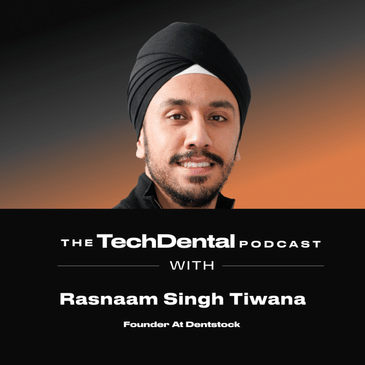
In this episode, Dr Randeep Singh Gill sits down with Rasnaam Singh Tiwana, founder of Dentstock, to unpack how data, automation and AI are reshaping procurement, decision-making and operational efficiency in independent dental practices.
Rasnaam shares the origin of Dentstock, built during the chaos of post-COVID supply chain disruption, and explains why procurement has remained overlooked for decades. He breaks down how practices routinely overspend, how small data points lead to huge operational wins, and why predictive, transparent, supplier-agnostic procurement is becoming a strategic superpower for the next generation of dental owners.
This conversation goes deep into AI as a founder tool, the mindset required to build in the cognitive age, and what independents can learn from the corporate DSO playbook without losing their identity.
What we cover
- Why procurement has been overlooked and misunderstood
- How Dentstock helps practices save 15–25% on costs
- Operational blind spots in independent practices
- How small data points lead to large financial gains
- The rise of AI as a “co-pilot” in dental operations
- How to respect clinical freedom while improving efficiency
- Why corporates win on systems and data
- How independents can close the gap without losing culture
- The founder mindset needed to innovate in difficult times
- Rasnaam’s take on the future of procurement and automation
Key insights
- Most practices don’t know what they spend or why
- Cost control isn’t a spreadsheet task; it’s operational intelligence
- AI is best used as an advisor, not an autonomous agent
- Transparency is the new currency in procurement
- Community-driven intelligence beats traditional supplier reps
- Clinical freedom + data-driven decision-making = competitive advantage
Guest Bio: Rasnaam Singh Tiwana
Rasnaam is the founder of Dentstock, a UK-based group purchasing and procurement optimisation company helping independent practices achieve DSO-level operational intelligence. He brings experience from clinical practice, health-tech and community leadership and is passionate about transparency, cost control and modernising dental operations.
Connect with Rasnaam
Website: https://www.dentstock.co.uk
LinkedIn: https://www.linkedin.com/company/dentstock
Connect with TechDental
Website: https://www.techdental.com
Instagram: https://www.instagram.com/techdentalmedia
LinkedIn: https://www.linkedin.com/company/the-techdental-podcast
Email: info@techdental.com
If you enjoyed this episode
Please follow, rate and review The TechDental Podcast on Apple Podcasts. It helps more dental innovators find conversations like this.
The TechDental Podcast (00:01.25)
Welcome back to the Tech Dental Podcast, the show where we explore how AI and emerging technologies are reshaping the business of dentistry. I'm your host, Dr. Randeep, and today we're diving into a vital area of business operations. My guest today is Rasnaam Singh Tiwana, the founder of Dentstock, a company helping independent dental practices achieve DSO level efficiency through smarter procurement, automation, and data-driven insights.
We'll explore how operational intelligence, not just technology, is becoming the real superpower for growth and resilience in modern dentistry. Reshnam, welcome to the show.
Rasnaam Tiwana (00:39.874)
Hi, thanks for having me on the podcast and for that great introduction as well. Sometimes I forget what we're doing in the grand scheme of things just because we're so focused on the everyday.
The TechDental Podcast (00:54.158)
100%. And let's talk a little bit about how you launched Denstock because you launched this during a period of massive supply chain disruption. How did that experience shape your belief in the importance of data and operational clarity?
Rasnaam Tiwana (01:09.166)
So we launched earlier in 2025. So coming out of COVID practices had often changed their purchasing habits due to the infection control requirements. During that time, prices had fluctuated quite heavily. And the chaos that came out of it was quite clear. Practices purchasing was quite fractured and in fact,
a lot of practices didn't really have clarity on their purchasing. We often on our calls ask the question of how much do you currently spend? And I'd say this is a question where often we get a response back of we don't quite know or it's an estimation, which is fine. But often it comes with a we don't know but we should know kind of response and
Cost control is often key in businesses, but in practice, it's often quite hard to do. For a big practice, you're often giving a person the responsibility of spending sometimes 60, sometimes even 100 or 200,000 pounds per year without the tools, any kind of support and without any structure to go and spend that 200K a budget for
that person to not have any kind of tools, training or insights often means they just end up ordering what they have in the past without any real strategy to purchasing. So that's the key findings we have found speaking to practices over the past few years.
The TechDental Podcast (02:58.422)
And many practices face this dual burden. mean, many practice owners, they balance clinical care with business performance. How did you design Dentstock to support that balance?
Rasnaam Tiwana (03:11.447)
So coming from working in a high-end cosmetic practice, I understood the requirements of clinicians wanting to have their own preferences without interfering in their processes and preferences often on products which do have a significant impact to the clinical outcome as a whole. So we've truly tried to respect that as
as much as possible. And that is very much tailored to every single practice with the onboarding process we complete. Plenty of principals are trying to run their business as a whole and trying to be in clinic the majority of the week. And that's where often you do need great people and great providers.
who can try and improve your business as a whole. And for a dental practice, especially, you're a small to medium-sized enterprise often, and there's a lot of compliance requirements, HR, involved. It's a heavily complicated operation as a whole. And I'd say procurement is an area where often it's undervalued in its impact.
because it isn't the number one priority that day, that week, things break, things go wrong, you may have the odd complaint, HR, people being off sick, often those are the priorities and this kind of purchasing of supplies gets pushed to one side. We understand why and that kind of framework of keeping every process.
to truly be as simple and as quick and easy as possible has been, I'd say, a foundation and a key principle in trying to design a complete end-to-end service for practices to be supported on their purchasing. So that's how we've come up with the concept to truly be quite simple. So from negotiating pricing with
Rasnaam Tiwana (05:37.469)
suppliers, analyzing your purchasing and from placing orders in the future. Everything is supposed to just be as clean and as simple as possible from the angle of the practice.
The TechDental Podcast (05:53.422)
Yeah, and it's interesting because I think procurement has traditionally been seen as a back office chore and kind of left till last. Why do you think it's been overlooked as a strategic growth driver for so long? Do you think it's just a mindset thing, a time thing? What's your opinion on that side of things?
Rasnaam Tiwana (06:12.479)
I'd say it's been under looked because it's been challenging to actually understand where your costs are going to. picking through invoicing is quite time consuming. Often in practice, you won't have anyone in house who's great at using, for example, tools like Excel to really understand your purchasing.
so it's often been very, very time consuming. Often practices focus on a handful of products when in fact the average practice is, is purchasing between three and 500 unique products throughout a year. That's why I believe it's been overlooked and hasn't been a strategic kind of tool to enhance your practice profitability. Generally we're able to find people
cost savings of between 15 to 25 % of their current spend. So generally that is a significant impact and often around a one to 2 % of their turnover being put on their bottom line. So it's very much an easy avenue to go and do that. But the admin required to go and complete that task has been very
time consuming and often practices don't have those expertise or understanding of products and catalogs in that strategic way of being able to approach their procurement of their clinical supplies and other services.
The TechDental Podcast (07:59.584)
And I think also with today's climate as well, you've got rising costs, you've got inflation, you've got supply chain volatility. How can predictive data-driven procurement help practices stay resilient without compromising quality or patient care?
Rasnaam Tiwana (08:16.919)
So we have a look at a practices purchasing in full and there are often areas where the product you purchase may not have a impact on the clinical outcome as a whole. So in changing a, for example, consumable won't have an impact on the treatment outcome as a whole. And these are areas where the patient won't know the kind of difference in these products. And I'd say,
That's an area where you can truly control your costs quite well without having any impact. We aren't here to change the products which clinicians enjoy, just because it's time consuming and we respect your opinions as a whole. However, there are plenty of areas where we can find you considerable cost savings, often 40, 50, even 60 plus percent.
in changing product without it, it's having a impact as a whole on the quality of the outcome. Because a Den stock as a company, our supplier agnostic, we're very transparent. We aren't supplying you anything directly. We work as a GPO, so a group procurement organization, supporting practices in their purchasing.
We are very much aligned with our customers as a whole. So we believe the customer is the person who pays you. And in our case, it's our customers, the practice. So we're very much aligned. We're trying to save you as much as possible. And it's been a requirement. We have a call with a new provider every few weeks and they're confused as to how we don't take.
any kind of kickback or commissions, but it means we get to be as transparent with our practices to go actually, this is the best thing for you. Traditionally in the US space, GPOs have made commissions and been free to the practices. However, if you're making a few percentage points on a practices purchasing, you want a line
Rasnaam Tiwana (10:43.245)
saving them money as a whole. That's how we get to unlock considerable cost savings for our practices. And it means we get to have very honest conversations with practices as a whole, which I thoroughly enjoy. And often they are surprised in how much we can save them. Just because practices often get told they have great pricing.
by their current kind of supplier reps, which is understandable. However, we are very transparent in our whole process.
The TechDental Podcast (11:23.062)
Awesome. can you, I mean, so you work with independent practices as well as groups of practices as well. Can you give an example of how a small data point led to a real big operational shift or real big cost saving as a real world example, something that really made you think, you know, this is why data truly matters and why practice owners should really think carefully about data-driven decision-making.
Rasnaam Tiwana (11:52.782)
So we took live a practice two weeks ago and when we had a initial conversation, they were very hesitant on change. So we had a look through their purchasing and we did find some considerable cost savings for them as a whole. we suggested a change on a product. So we suggested they change that.
wipes as a whole, they were in fact using the incorrect product on the majority of their surfaces, we did have this kind of conversational point. And they went, yeah, but we like our current ones. So we explained it from a infection control point of view, we then quantified how many they purchased. And it was saving them around 1800 pounds per year. And they were like, okay, then we will change.
that practice was only convinced by a great explanation and the cost saving. And that's truly taste driven decision making as a whole. Often we think a few pounds here and there doesn't really matter. And those decisions are often trusted with the person doing the purchasing. And I've been in a similar position.
before you're at the supermarket and you go, well, it's only 20, 30 P, but actually you've caught and bought two, 300 of that product across the entire year. That's where we get to unlock practices, considerable cost saving because it's a transparent look at all of their purchasing. And we often find there are alarming cases of purchasing certain products and we help to.
highlight those to the practice. Often it can go under the radar because that's just how things have always worked in this kind of practice. And we're very keen to always kind of turn this is how it's been done thinking on its head. And I'm very much a advocate of you can kind of sprint around being
Rasnaam Tiwana (14:16.173)
very proactive in doing tasks. But actually, once in a while, you need to stop and have a look at what you are doing. It's the A to Z of a process, but actually start with a why first and go why are we completing his task or what are we trying to achieve and trying to have a look at processes in that lens.
The TechDental Podcast (14:43.958)
And you mentioned historically it's a time consuming task. There's a lot of admin and business owners who are wearing many hats, maybe don't have the time to sift through all the data. And we've got AI coming in. I how are you using AI as a founder yourself from day to day operations and strategy in your own business? And how do you think it can be applied in procurement?
to kind of reduce this admin burden and really give people that kind of augmented superpower of having AI in their corner. mean, do you use it personally yourself in your company? And is it something that you see being used more and more in procurement?
Rasnaam Tiwana (15:27.095)
So, practices traditionally have had kind of two purchasing strategies is trying to have a singular supplier for everything or kind of comparing pricing and spending tons of time. Generally, those have been entrusted with members of the team, which is correct because practice owners...
time should be spent in clinic or on the business rather than completing these kind of admin tasks. That's where the process has traditionally sat. Generally we're able to those 15 to 25 % of cost savings overall, regardless of what the practice current purchasing strategy is. is through the combined purchasing power of our clients together.
insights and analytics into purchasing as a whole. And then it's tied together with a purchasing platform, bringing suppliers together into a singular place. And that really helps control cost. And I'd say it's one of the most underrated things we provide, just because practices can start to see how much they have spent in the current month.
Often it's very hard to track just because if you've got three or four suppliers, you might have someone putting it into a book or a spreadsheet, but actually trying to keep track of that info in real time and have a budget is quite hard to go and do. And I'd say it was one of the frustrations I had when I worked in practice. It's great to be able to have
a budget to aim towards, but if it's not able to be tracked or measured, it's very hard to actually quantify that in the current month. Otherwise, it's just a figure in a accounting software for how much you have spent and you don't really understand what was bought. And that's a kind of unique viewpoint, which practice owners and managers can then begin to have a look at as a whole.
Rasnaam Tiwana (17:53.578)
And then coming to your question on artificial intelligence, we have used AI heavily in our internal processes. For us, it's been a avenue of support. It's been the kind of secondary employee who's a great generalist. And I'd say it's been a advisory tool. It's been very helpful at providing intelligence cleaning up.
data as a whole, but it hasn't been a authoritarian for us. We've very much considered it as a helpful tool and a and just being able to get through work a heck of a lot quicker. I probably use AI once an hour at least in some capacity across all those tools. And I'd say our unique point of view to the market that has helped us kind of
get to market a heck of a lot quicker. I don't think that you would be able to like forecast things too well into the future with how AI is currently set just because practice purchasing does vary a lot per location. You've got clinicians personal tastes. There are areas where it is easier to forecast but there is still a great human input.
required. You wouldn't want to go and trust AI entirely to go and spend 40, 50,000 a year without having some kind of approvals and checks. However, I'm very excited to see what else comes out in terms of trying to support practices in their purchasing, which is AI driven. But I would say it will always be a advisory, a support tool, not there to complete everything, but just to help.
pull things together for that.
Rasnaam Tiwana (19:58.2)
person to confirm, check and validate against as a whole.
The TechDental Podcast (20:05.984)
So that's an interesting take. yeah, I've heard that a lot where, you know, AI really is being used as the kind of advisor or like a co-pilot, but yeah, always a human in the loop to kind of push the button and make sure that the decisions are being made in the right context. And yeah, with procurement, do have dentists, they have their favorite materials, they have their favorite materials, they love certain composites, they love the tactile feel of things. So there is that to contend with as well.
I'm interested to get your take on the independent landscape and the corporate landscape because corporate dentistry has always had the advantage of scale systems and centralized purchasing. How does Dentstock help independent practices achieve the same level of operational intelligence without losing their independent touch or without losing that culture within the practice?
Rasnaam Tiwana (20:58.829)
100%. So we provide you a service as a whole to manage your costs very effectively. We aren't there to say you have to buy X products. We give our customers as much flexibility as possible. In some cases, corporate industry has been more authoritarian in trying to restrict people's purchasing.
I'm very much a believer in clinical freedom and a dentist are correct in being selective in their products selection. And we aren't there to cut corners. We're there to improve your pricing, improve your purchasing and selection of products and speed up the whole process in full. Operationally,
we give you tools which cut down the amount of time it takes you to purchase. And that's a great impact as a whole in terms of being able to cut down time spent, comparing prices, purchasing good, and then tracking orders as well. People tell me it saves them anywhere from 20 minutes to an hour per order as a whole, plus those cost savings on top.
So it's often a really good win-win. And that's where we really help independent practices and emerging groups just have a great operational process on purchasing and cost control and just being able to keep the team within a kind of framework for certain practices. They want their teams to kind of create the order and then it gets approved by the
owner, or the manager, we can have that in place as well. It's very much tailored to the practice. But I'd say just being able to have a platform which helps you control your costs, understand how much you have spent are great wins for practices as a whole. And often we just help to show them where they're really overpaying for things. So that so every so often I'd say one in 10 customers
Rasnaam Tiwana (23:24.449)
comes to us buying gloves from a provider who charges double the industry average. Gloves are high volume, everyone has to purchase them. However, if you're paying double the industry average, that's normally a significant area of overspend, normally somewhere to the few hundreds. We as a GPO take you below the industry average price because we've pulled that purchasing power together.
In some cases, I've saved singular practices, three, four, even 5,000 pounds on just gloves. And that's, I'd say just one of the 400 products they are purchasing as a whole. That's a case for certain practices, but just being able to have that insight or a practice is handy. And they've often been purchasing that previous glove for years and years.
So it very much compounds and those savings have a massive financial impact to their end of year because that is simply funds they haven't spent. So their profitability increases by that same amount. Those are just some of the few insights we've been able to provide our customers over the past few years. And we've...
encourage a alternative glove, which all of our customers have gotten along with exceptionally well. I've been surprised that a singular glove has gone down exceptionally well, just because I know how particular clinicians are on gloves. But that's our kind of insight over a vast number of practices to go.
it's actually a great fit for the vast majority of our customers as a whole.
The TechDental Podcast (25:21.774)
And with the independent owners that you encounter, what are some of the most common misconceptions or fears when they first consider automation or any kind of procurement tech? Are there any kind of barriers that you've found just from a fear point of view of having some sort of automation in place? Or is it generally well received once you've explained the USP and you've explained the
profitability and cost savings from a business point of view.
Rasnaam Tiwana (25:56.27)
There are some practices who are skeptical. They think they have great pricing and that we're not gonna be able to improve upon that. And that is totally fair. I understand that it does sound like a very good opportunity, but actually how can we quantify the change? And we're very transparent in our onboarding to compare your current costs.
prior to joining up. And we often talk about these areas of change and practices go, are you going to change products I love? And we try and understand each customer in full. We're not here to change products which affect a outcome or affect a piece of equipment. There are plenty of easy wins. However, if you are
open to changing some more of your more clinically sensitive products. We do have a industry lens to try and steer you in the correct direction. And often for practices who've got a big NHS contract, that is often helpful in just trying to understand how they can keep an eye on their costs in a slightly more effective way, just because of the structure of the NHS contract and the
financial rewards which the NHS contracts providing, we can just help steer them on the correct path. And because we aren't a supplier ourselves, we're not trying to upsell them or try and steer them towards products for the sake of our own pocket. That transparency often is very handy for practices to go, we didn't.
consider that in the past, or we had considered it, but we hadn't gone ahead because we only thought it'd be a couple of quid when actually the quantity they have purchased is three times what they thought. And that's been very handy for practices to just have a transparent third party consider their purchasing.
The TechDental Podcast (28:19.382)
And Riznam, let's, yeah, no, that makes perfect sense. let's, I want to zoom out a little bit more on like a, on a mission level. So at Tech Dental, we talk a lot about trying to level the playing field between corporates and independents. How does Dentstock fit into that bigger movement?
Rasnaam Tiwana (28:19.755)
I think I'll answer that question.
Rasnaam Tiwana (28:38.685)
Our key process is on trying to cut down the amount of unnecessary admin, which is in the industry. And I have spoken about this in the past. Excel is a great tool if you know how to use it well. And often there are practices just keying in info into like a book or Excel as a kind of tracker, but that info exists elsewhere. And
I've seen a kind of early version of a dentist CFO. These kinds of insights are incredibly helpful for a practice to be able to improve its financial metrics as a whole. And truthfully, we are just here to support practices in their purchasing, just having it as quick and convenient and just to help keep a control of costs.
In the long term, we are very keen to support our practices on other things as well outside of clinical supplies. And we continue to to grow the number of support areas we can support practices on. And we're very much keen to see the changes and developments of 2025 and 2026. There are plenty of brand new products coming.
to market as well. And we're keen to make sure that practices can make the right choices. There are a number of areas where practices have been taken advantage of. think telecoms contracts is an area where the vast majority of practices have experienced a pain point in the past. I think everyone's now realized that actually signing a long-term contract.
is a no go, but there's a certain number of practice owners who go through that trap every year and get stung. We're keen to prevent that happening in the industry and just being able to support as a GPO our clients in their purchasing and on decision making of supply selection, just be as easy as possible.
Rasnaam Tiwana (31:06.741)
and trying to ensure that we meet our customers requirements as a whole is also very important. Just because there isn't anything worse than trying something out, it not working and actually being tied into a contract. We discourage that as a company as a whole. And we're always keen to ensure that there's a good two way fit from practice to any kind of
third party supplier in that sense.
The TechDental Podcast (31:41.88)
Fantastic. And Rishnayam, I always like to finish up our conversations with like a little lightning round, more for kind of the mindset and the entrepreneurial spirit of a lot of our listeners who are practice owners and founders. So give me the first thing that comes to mind here. What's one belief or mental habit that's helped you stay resilient through disruption?
Rasnaam Tiwana (32:07.243)
I did have a good think about this earlier today. And the best trait I've had is actually being able to keep calm, understand what's gone wrong and why, and just being able to problem solve on the exact issue rather than getting frustrated or flustered. It's just being able to keep a very calm head, understanding and trying to problem solve what the issue or
how this issue's come into existence has been quite key. Being tech savvy issues, what I call myself, has helped that. I'm not technical, but I've got a very good technical understanding. Having worked at a health tech startup in the past has helped. And that angle and viewpoint has been...
very useful in the past few years. It's just being able to keep a calm head. And over the past year with starting up a DentStock, I'd say just being able to just get my head down and just grind through hours of spreadsheets for customers has been challenging, but I've gotten into a great frame of mind to be able to.
complete hours of ensuring that we get our customers the best pricing. That mental resilience has been very good. Regardless of if I've been in a tired mood or I'm not interested in doing it, I will talk myself into doing it and I will sit there for a few hours. And I've started to kind of enjoy it. And actually if I don't do it for a while, I go, oh, I haven't kind of had that three hour.
period of just ensuring that we've had a look through a practice cost in full. Those two areas I'd say would be my key strengths. I haven't always been the best at those, but it's been a learning point to take on board and try and implement over the past few years and has been helpful in building something brand new from the ground up.
The TechDental Podcast (34:30.87)
Awesome. second one here, if you lost everything tomorrow but kept your knowledge, what's the first thing that you'd do?
Rasnaam Tiwana (34:41.505)
I've always been a big believer in, having conversations and trying to learn a little bit about a lot of things. So being a good generalist is quite handy in just trying to understand different parts of healthcare and dentistry over the past few years. There's plenty of cross similarities and differences, but it's the ability of
being able to take insights and learnings from other industries, other business interests, other conversations, other personal interests as well. Together, I found has been quite helpful. So just go out there and be a sponge, try and learn something.
from every single conversation you have, I'd say that would be my go back to square one and begin again process of how to just go out to the world and learn and just be a good person for people to know and be able to make good introductions as a whole. The industry is a small place and just being able to kind of understand people and their culture.
context has been incredibly helpful in just having good meaningful conversations with industry colleagues, staff and everyone in between as well.
The TechDental Podcast (36:24.418)
Yeah, I think there's something to be said for being a sponge. And I second that. I think you can learn something valuable from anybody you do meet. And it's always nice to have a broad skill set as well, especially if you had to start something over again. It's nice to know a lot of people and a lot of things. And finally, finish this sentence, the future belongs to those who...
Rasnaam Tiwana (36:54.145)
did think of an answer. Can you go again?
The TechDental Podcast (36:56.962)
Yeah, I think I put you on the spot there. just whatever comes to mind, finish this sentence. The future belongs to people who...
Rasnaam Tiwana (37:08.237)
question why they complete... I did think of this yesterday evening. Hold on, let me just think of the exact wording and then you can ask me again.
The TechDental Podcast (37:19.874)
No worries, no worries. We'll edit it out. We'll do some outtakes, bonus outtakes.
Rasnaam Tiwana (37:22.451)
one. Yeah.
You bet not.
Rasnaam Tiwana (37:32.071)
That's an insanity quote, hold on.
Rasnaam Tiwana (37:39.437)
Cool, show again. I've got it.
The TechDental Podcast (37:41.068)
Yep. So finally, complete this sentence. The future belongs to those who...
Rasnaam Tiwana (37:48.3)
who question the why and the how of processes they undertake. I'd say in the past few years, the best innovators and dentists I have met are very much innovative. They try and learn, they try and question the, we aren't a fan of how it has been done. We aren't quite a fan of that particular outcome.
they go and they develop themselves as clinicians to try and improve the outcome. You can take that same angle and approach with so many areas of dentistry and business as a whole. And it's very intrinsic to, I'd say where the industry is trying to go to in understanding its, its figures, trying to have
dashboards and clear insights. How it's always been done isn't how it should be done.
The TechDental Podcast (38:53.24)
I love that. Reshnam has been inspiring. Yeah, no, I that actually. And Reshnam has been inspiring to hear how Dentstock is redefining operational efficiency and helping practices think more intelligently about the business side of dentistry. For our listeners who'd like to learn more, where can they connect with you and the Dentstock team?
Rasnaam Tiwana (38:54.955)
The end bit's probably the best bit.
Rasnaam Tiwana (39:16.973)
So I'd say we do a discovery call. You can book those on our websites, even if you're just curious on how much we can save you or the process. Feel free to book a call or connect with me directly on LinkedIn and we'll be more than happy to have conversation and just...
see how much we can save your practice or group on their supplies and on other areas of the business.
The TechDental Podcast (39:53.315)
Awesome.
The TechDental Podcast (39:57.698)
Fantastic. That brings us to the end of this fascinating and insightful episode. If you want more conversations like this, don't forget to follow, like, subscribe and share. It helps more dental leaders discover stories like this one. You can reach us at www.techdental.com or drop us an email at info at techdental.com. I'm Dr. Randeep and this has been the Tech Dental Podcast, exploring the intersection of dentistry, AI and intelligent business thinking. Until next time, keep innovating.
Keep learning and join us for a disruptive ride into the AI revolution ahead.