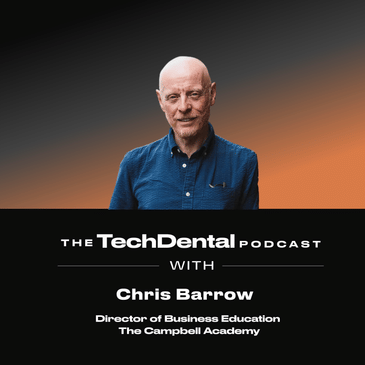
Coach Chris Barrow has been inside over a thousand dental practices since 1997. He has watched digital X-rays, intraoral cameras, cloud practice management systems, and every technology wave sweep through the industry. Most of them promised transformation. Most delivered considerably less.
His position on AI is different in structure, not just in scale. In this episode he explains why, and what it means for every practice owner making decisions about their business right now.
What you will learn in this episode:
Why AI is not another piece of kit but a quantum change in how dental businesses operate, and what that distinction actually requires of practice owners.
The Y junction every practice faces: use AI to reduce headcount or use it to give your people the time and space to deliver exceptional patient experiences. Why that decision determines the kind of business you are building.
The Golden Goose Practice explained: what it looks like on a Tuesday morning when the owner is not there, how the managing director and clinical director model actually works, and why equity alignment is the piece most operators miss.
Why the 30-year corporate acquisition cycle is ending, who is buying practices now, and what that means for anyone still building with a multimillion-pound exit as the primary objective.
The stepping stone patient journey, from a Friday night pub conversation to a signed treatment plan, and where AI changes every conversion point along the way.
Why the biggest mistake practice owners make with new technology is not whether they buy it.
The one question to ask before adding any new system, platform, or tool to your business.
About Chris Barrow:
Chris Barrow is one of the most recognised names in UK dental business coaching. He has worked with over a thousand dental practices across the UK and internationally since 1997, co-authored the E-Myth Dentist with Michael Gerber, appeared on The Island with Bear Grylls, and recently sold his coaching business to The Campbell Academy, where he has signed an eight-year service contract. He writes a daily blog, a monthly newsletter, and a regular column for Private Dentistry magazine.
Connect with Chris: Website: https://www.coachbarrow.com LinkedIn: https://www.linkedin.com/in/chrisbarrow/ The Campbell Academy: https://www.linkedin.com/company/the-campbell-academy
Connect with TechDental: Website: https://www.techdental.com Email: info@techdental.com LinkedIn: https://www.linkedin.com/in/drrandeep/
Subscribe to the TechDental newsletter: https://www.linkedin.com/build-relation/newsletter-follow?entityUrn=7320560217455271939
Full written analysis: techdental.com/insights
Copyright Dr Randeep Singh Gill and RIG Enterprises Limited (Company No. 11223423) 2026
[00:00:00] AI is not another feature. It is restructuring existing business models at a pace that's truly unprecedented. AI is changing the shape of the adoption cycle. It's no longer a bell curve. AI is here to stay, and the answer is hell yes. It's the lowest paid, most intelligent member of my team, including me. You've watched digital x-rays, intraoral cameras, cloud PMS.
[00:00:27] You can either sack people, or you can create the time that allows your people to do more interesting and more fruitful things. Here's the challenge I want to put to you about the Golden Goose thesis. What I was seeing was the motor car replacing the horse, the television replacing the radio, the internet switching on again. It was that big.
[00:00:54] This is the Tech Dental Podcast, the strategic intelligence hub for leaders shaping the dental industry. We break down how AI, data, and operating discipline drive performance and scale. I'm Dr. Randeep. Let's dive in. Today's guest has spent the last 30 years inside over a thousand dental practices and seen every technology wave sweep through the industry.
[00:01:22] All of them promised to transform practice performance. Most of them didn't, not because the technology was wrong, but because the business model underneath simply did not keep up. Today, we're going to explore why this wave is different. AI is not another feature. It is restructuring existing business models at a pace that's truly unprecedented. Who captures the value and who gets left behind? Coach Barrow, welcome to Tech Dental.
[00:01:52] It's an absolute pleasure. Thank you so much for the invitation. And it's a real treat to spend some time with you, Randeep. Thank you. Chris, you've been coaching dental practices since 1997. You're a household name in the industry. I want to start somewhere that feels almost too simple for someone of your experience. What is the single most consistent finding after all that time? The thing that has never changed, no matter what technology came through the door. Wow.
[00:02:21] What a brilliant first question. It's interesting that looking back, the one constant through all of this which hasn't changed is human nature. The very first year that I actually visited a dental trade show, it was 1996. 1996. And it was the NEC. And I spent the best part of the day wandering around. Why was I there, by the way?
[00:02:46] Because by the time I'd got to 1996, I was beginning to work with a few dentists in amongst a client base of butchers, bakers, candlestick makers and other professions. And I'd gone along to the trade show at the invitation of a dental laboratory owner that I was working with. And he said, it's the motor show for dentists. And I thought, well, that sounds interesting. Spent the whole day wandering around and didn't meet a single human being that I knew, apart from the guy that had introduced me.
[00:03:14] And here we are, all of these years later, I'm actually popping into the dentistry show on Saturday. And I have absolutely no doubt that for me it will be like a school reunion because I'll be meeting people on the supply side of dentistry as well as practitioners who I've known for three decades. So let's get back to that human nature point.
[00:03:37] I think the latest statistic is that around about 4% of the working population of the United Kingdom are crazy enough to run their own businesses. We know that in dentistry, when I came into dentistry back in the 90s, there were about 12,000 independently owned practices in the UK.
[00:04:01] That number is now down to about 8,000 because the other 4,000 have gone into what we used to call corporate ownership, what I think we now call group ownership. And if you look at the 4,000 people that have made that transition into group ownership, and if you look at the 8,000 that are still flying their own kite,
[00:04:23] they are the constant because they are people who have got that entrepreneurial spirit within themselves that says that I want to be my own boss. I want to develop my own culture. I want to bring my own beliefs and values into the delivery of clinical dentistry as well as the business of dentistry.
[00:04:47] And I have this burning passion in my gut that says that I want to do something and make a positive difference in the world. So those people have remained the constant. And even though, as we are going to discuss, the daily lives of those people has been transformed by the impact of technology as well as many other things as well,
[00:05:14] the reality is that they are still the same people underneath that exterior. It's almost like an onion skin. And think about all of the skins of the onion and then think about the fact that right at the middle of the onion is the core. And the core is a human being trying to make a positive difference in the world. What's happening is that the onion skins have changed over time. And we're obviously going to discuss some of those in this conversation.
[00:05:43] Chris, you've watched digital x-rays, intraoral cameras, cloud PMS, and every one of them arrived with a promise of transformation. And most of them delivered something considerably more modest. What went wrong? We're talking about the adoption cycle, aren't we here? And those people are familiar with it. If you can imagine that bell curve at the left hand end, we've got innovators and early adopters who are prepared to try anything.
[00:06:13] And I, by the way, I put myself at that particular end of the adoption cycle. I think you do too, Randy. And we're the guys that are first in the queue and we say, I'm going to give it a go. And then after that, we have the early adopters. Okay, if a few innovators have tried it and if they haven't died, then maybe I'll have a go. And then we've got the early majority. This thing looks like it's got legs. Let's have a try.
[00:06:41] And then we've got the late majority. We're now over the top of the bell curve and we're heading down the other side again. And the late majority are saying, everybody seems to be doing this. I'd better jump on the bandwagon. And then we've got the laggards who are there saying it will never catch on. And it's interesting that the adoption cycle has always been there. It's still there today. Although when we get onto the subject of AI, I believe that the AI is, I don't even know how to describe this,
[00:07:08] but I think it's almost changing the shape of the adoption cycle. I think it's no longer a bell curve. And I'm not quite sure what you'd describe it as now. I'd probably need a whiteboard or an append to draw this thing that's got a very steep adoption cycle right at the beginning and then tails off very quickly. Because as I think we'll discuss, the laggers have better sort themselves out. So let's go back to your question.
[00:07:35] So part of the problem is that adoption cycle takes time. And there are people who are out there in the market, not many left, but there are people out there that are probably saying that CEREC will never get off the ground. And there are some people who are saying not only clinical procedures, but also business systems will never get off the ground or I'm not really ready for them.
[00:08:01] Frankly, I still meet people who own dental businesses who have not yet migrated to cloud-based accountancy software. And they're still working with an accountant who's using effectively a laptop-based bookkeeping system, which doesn't sit on the cloud. And of course, dare I say it, at the risk of getting myself shot, one of the largest providers of PMS software in the United Kingdom has got what can only be described
[00:08:30] as a primitive cloud-based visibility, no open APIs at the back of the software, and yet still command a very significant 40% market share of UK dental practices. And those people, that's 40% of the community, are using PMS, which frankly isn't fit for purpose in the current technological age.
[00:08:58] So I'm not quite sure whether I'm exactly answering your question, but if we add together the slowness of some of the product providers to innovate, along with the slowness of users sometimes to innovate, things have taken time over the years. So when you stood up at the British Dental Conference in 2024 and said, AI is here to stay, and the answer is hell yes and get over it,
[00:09:26] what were you actually seeing on the ground that made you say that? Maybe it's a hunch born out of experience. If we go back to 2024, I think that there are quite a lot of people in the landscape that thought of AI as a bit of a joke, gimmick, but I've been in full-time employment for 56 years this year. I've run my own businesses in one shape or form or other for over 40 years,
[00:09:56] and when you run your own business, you've got to be constantly scoping the landscape, trying to anticipate what's around the corner. I don't go to dental trade shows because I've got nothing else to do on a Saturday. There's loads of other things I'd love to do on a Saturday, but I recognize the fact that I've got to put myself out there. You've got to try and answer the question, what's next? And back in 24,
[00:10:25] it seemed obvious to me at that time that what I was seeing was the motor car replacing the horse. What I was seeing was the television replacing the radio. And what I was ultimately seeing was the internet switching on again. It was that big. And I was able to identify that impact was going to take place.
[00:10:54] And here we are two years down the line from that show. And here I am two years down the line, having, as it happened, use chat GPT as my main interface with AI. But I have been using and training and educating my own personalized GPT for over a couple of years now. And it's dentally savvy. It's business savvy.
[00:11:25] It's Chris Barrow extreme business savvy. And every single day, it's taking on more and more work within my organization. And also my clients, I invite to get in and use my branded GPT in order to ask their own questions. So it's learning from me. It's learning from over 100 dental businesses in the UK.
[00:11:54] It's learning from over 40 dental businesses in India. And it's learning from a variety of businesses dotted around the world who are using that GPT. And it's getting extraordinarily clever. And back in 24, I had a hunch that was going to happen.
[00:12:14] I'm completely and utterly now in a world in which I pay for the 200 US dollar a month version of chat GPT. And it's the lowest paid, most intelligent member of my team, including me. I want to test that a little bit, Chris. You've been making bifurcation arguments about dentistry since the late 90s. The death of the NHS practice, the dominance of the corporate,
[00:12:43] the technology enabled practice, widening the gap. Most of those predictions were directionally right, but significantly slower to materialize than you suggested. What's your honest assessment of your own track record on timelines? And why should we believe that AI lands on schedule? I do have a joke that I like to use when I'm speaking at workshops, which is that if you look back over the years, 50% of my predictions came true.
[00:13:09] It was impossible to determine which 50% at the time of uttering them. And that's not science. It's a joke. But it does demonstrate a point. And I think, do you know what? I think it's a fair challenge because the problem with being an innovator is that it's difficult sometimes to understand why everybody else is so slow to jump on the bandwagon. It's, what's wrong with you all?
[00:13:38] I've never had shares in a company that sells inter-wall scanners. I've never had shares in a company that sells cloud-based accountancy software. I wish I bloody well had done. So I had no commercial vested interest in, as it were, declaring the benefits of using technology. I just always saw it as common sense. But there is a famous joke, isn't it? That common sense is not so common. And so historically, you know what? You've been absolutely right.
[00:14:08] I've got a very small cohort of clients, former clients, colleagues and friends who listen very carefully to what I say. I'm very fortunate in that respect. And of course, they challenge and push back and argue and say, do you know what, Chris? Don't think you're right. But what they do is they say, okay, he's probably actually been right more than he's been wrong. So let's just keep an eye on what he's saying. But that still,
[00:14:37] after all of these years, represents a very small cohort within the industry. I don't actually know how many clients I've worked with over 30 years. I've just never kept count. But if I had a guess, it would be somewhere between 10% or 20% of the community. And do you know what? Maybe, just maybe, Signor Pareto was correct. And maybe, just maybe,
[00:15:05] 20% of those 8,000 independently owned practices are actually at the right end of the adoption cycle. And maybe it's those 1,600, which themselves are churning because people are selling, people are retiring, people are joining, people are opening squats, people are buying practices. So it's a churning 1,600 community. But I have a sneaking suspicion
[00:15:33] that as far as the UK are concerned, it's that churning 1,600 that are the people that are actually really making all the difference. And they're probably at the shows, they're probably buying the kit, they're probably trying things out. And everybody else is sat at home saying, I'll jump on that bandwagon when I think I have to. However, because there's a however at the end of this, what remains to be seen
[00:16:02] is whether the impact of AI-driven systems, both in clinical delivery and in business, whether the impact will be as slow to take off as all of the other things that we've talked about. But if it is a motor car replacing a horse,
[00:16:29] if it is a television replacing a radio, if it's that bigger thing, then maybe, just maybe, this thing is going to impact us a little bit faster than all of the others did. And my sense around that at the moment is that I'm seeing the pace of change as AI-driven systems impact not only my life,
[00:16:58] but as they begin to impact the lives of the clients that I'm actively working with. And I'm seeing this tsunami of change that is beginning to manifest itself in every aspect of our business now, because you don't even ask a question without asking, and is there an AI-driven system that can actually make this more efficient? Whether we're answering the phones,
[00:17:29] whether we're running calendars, whether we're answering emails, whether we are preparing treatment plans for patients, whether we're running a CRM system, or a PMS system, or a financial monitoring and analysis system, whatever, or an HR management system, there's nothing that escapes the attention of AI-driven business systems.
[00:17:58] Nothing. And let me get a little bit specific, because I think this is where it becomes real. You describe the primary return on AI investment as a time dividend. Translate that for me. I have a practice doing £800,000 annual gross. What does that dividend actually look like in the EBITDA line? Controversial coming up. Health warning for listeners. You can do one of two things with AI.
[00:18:29] You can either sack people, or you can create the time that allows you people to do more interesting and more fruitful things. And I believe that is a fundamental Y junction in the road ahead. And the controversy is that I believe that that fork in the road
[00:18:57] will be determined by whether or not your business has got institutional finance behind it or not. And this is where I'm going to have a go at the private equity guys particularly. Because institutional finance, and we're recording this interview in May 2026 with geopolitical challenges,
[00:19:25] with political challenges, with economic challenges, which are both global, national, and local. It's a tough time. And the Y junction in the road is what happens when PE-driven businesses respond to those challenges. And the traditional approach has been to look at the biggest expense, which is payroll,
[00:19:55] and to ask ourselves a question, what can we do to reduce those payroll expenses? And in the past, the answer was sack people and don't replace them. And now there's an alternative approach, which is sack people and replace them with AI-driven automated business systems. And I have absolutely no doubt whatsoever
[00:20:23] that pretty much every institutionally financial-backed business in the world is a long way down the line already of looking at how AI can replace payroll. And then the other fork in the road is owner-managed, self-financed businesses who have got an opportunity
[00:20:51] to take a different direction. And the different direction is how can we use AI-driven business systems to allow our people to do more interesting things. And when I say more interesting things, more interesting for them as employees, as team members, and also more interesting in terms of the end result that they deliver to the consumer. And this is where I am very passionate
[00:21:20] about the interface between technology and hospitality. Because I am going to quote from the author of the book Unreasonable Hospitality, restaurateur Will Godara, and all of my clients have that as a compulsory read as part of our coaching program. And Will Godara famously says in his book
[00:21:48] that service is the thing we do and that hospitality is the way that we make people feel while we do that thing. Now that phrase is written in the context of somebody who ran the world's most famous restaurant, 11 Madison Park in New York, but can be then transferred even into a dental environment by asking ourselves the question, does it transfer?
[00:22:17] Service is the thing we do. Hospitality is the way that we make people feel while we do that thing. Yes, of course it can be. And so I'm fascinated and I'm working very hard with my client base to say, you have front of house team members. Can AI-driven technology give them the time to deliver more hospitality, whether it's telephone or face-to-face?
[00:22:47] You have treatment coordinators, same question. You have dental nurses, same question. You have marketing assistants, same question. You have clinicians, hygienists, therapists and dentists, same question. You have managers, same question. And one of the joys of the work that I'm doing at the moment is to look at every single job,
[00:23:16] every single position position in dentistry and every single task that those people perform in that position, whether you are a dentist or whether you are front of house or anywhere else and to have a dialogue to say, what AI-driven systems do we have available to us that will allow us to achieve that objective? And what I find incredibly exciting is that two years ago
[00:23:46] in the presentation that you were talking about, there were very few options available to answer that question. 24 months later, we're in a situation where every role has an AI support facility available to it. There's not a thing, not a single thing in dentistry that cannot be delivered with AI-driven systems,
[00:24:15] thus allowing the people who are doing that delivery to have more time to deliver hospitality to patients and also to deliver a better experience to the end user. It's incredible and that's why that case of change has accelerated. You do something that I find genuinely interesting and also slightly contradictory. You recommend AI-written content
[00:24:45] for your dental practice clients but you write all of your own content, no AI. What is the distinction you're making there? When I deliver content what we're talking about here and by the way, I'm probably going to slightly qualify what you said. One of the joys I have in life is writing and that writing simply extends to a blog five days a week, a newsletter
[00:25:15] once a month, a regular article for private dentistry magazine. That's the kind of the bedrock of the writing that I do and have done. I've been writing a blog since 2004. I've been writing newsletters since the 1990s and that business-based creative writing is one of my joys and I do not need AI-driven
[00:25:44] assistance in order to do that because that's almost like going along to Pizarro, the French artist and saying, listen, don't bother trying to make stuff up. Here's a painting by numbers kit or just do blue for the river and blue for the sky and white for the clouds and just do the numbers and of course that isn't creative art, is it? It's a way of learning but it's not creative art. So I want to
[00:26:14] paint my own pictures, thank you very much. but there is a second thing which is called content development and content development might be a presentation for a trade show. It might be a PowerPoint or some of the slide deck for a workshop that I intend to run and I do use AI-driven business systems because I will go into an AI-driven slide deck generator for example called like Gamma.app which I use
[00:26:44] extensively and I will start a conversation with Gamma.app and I will say I would like to create a deck which will demonstrate these points and Gamma will create the deck for me or alternatively I will give a presentation at some event I will have a note-taking device that will record everything I say during that presentation and I will drop the transcript
[00:27:14] of that presentation into something like Gamma.app and say please turn this into a slide deck for me or please turn it into a PDF that we can generate and brand and offer to our clients as a PDF guide to the 10 bullet points that Chris covered so let's make that distinction shall we please between musing on my opinions
[00:27:44] as to what's going on I want to keep that pure Chris Barrow and I want to make all the mistakes that I make there as opposed to generating content which I'm very happy educative content which I'm very happy to enroll AI as my content creation partner in there that's the difference let's talk about the treatment coordinator you've made the TCO central to your
[00:28:13] performance framework for years AI is now moving into exactly that space this treatment plan presentation case acceptance support patient communication where does AI augment the TCO and where does it make the TCO role redundant it doesn't make the TCO role redundant let's start there and frankly this might be the shortest answer I'm going to give you because I'll just point which is that TCO by definition
[00:28:44] is somebody who understands the importance of creating hospitality experience for the patient by definition you could argue that I'm going to get in trouble when you're going to say something you're going to get in trouble for it you could argue that a brilliant treatment coordinator is a qualified dental nurse with personality and I apologize for any offense caused by that but you understand the point and so the beauty of AI
[00:29:13] driven business systems whether it's a CRM system whether it's a telephone system whether it's a booking system or whether it's a more and more time into the hospitality experience that they're delivering to the patient I'm sorry to repeat myself but that is the answer I'm going to push back on the
[00:29:43] whole AI position here because you're telling your extreme business 100 clients to adopt AI tools that recommendation is generating a subscription line on their overheads what's the specific evidence from inside those practices that AI is actually delivering the time that gets partially adopted and mostly ignored so let me take you on a stepping stone journey let's imagine that one of my daughters tells
[00:30:13] me that she's getting married and I'm very nervous about having a photograph taken in public or I'm very nervous about eating in public because of my dental condition and the fact that my daughter has announced a wedding has been the trigger event that has said oh my god there's going to be loads of cameras around I'm going to be sat in a room full of people having the dinner I need to get something done about this so that was the trigger event let's
[00:30:52] get married oh my god well done let's get around him yeah but I'm really embarrassed about my smile now I know you went to see a dentist you had your smile done who was it and the guy says oh actually my guy is Dr Randeep he's got a practice in down the road really nice guy lovely team lovely practice you should what was the name of the practice okay fine let's get another round in and we carry
[00:31:22] on talking about football or whatever that was Friday night so I'm going to enter Dr Randeep in my town dentist and I'm going at which point I might have a look around
[00:31:51] his website stepping stone I might have a look around one or more of his social media channels stepping stones when I go to his I might see a link to a branded YouTube
[00:32:21] channel where there's either patient video testimonials because I want to find somebody in my demographic to make sure that I'm not Dr Randeep's first rodeo and so I'll go off to a branded YouTube channel and I might look at those testimonials or I might look at some explainer videos that are on that YouTube channel stepping stones we're going to measure another series of stepping stones now which was new patient inquiry to TCO
[00:32:51] assessment what was our conversion rate TCO assessment to clinical consult what was our conversion rate clinical consult to treatment plan delivered and taken up what was our conversion rate and we might also then measure at the end of treatment number of Google reviews number of video testimonials collected as part of our measurement
[00:33:20] system but at the end of the day we have to look at the totality in order to determine whether our activity has been fruitful or not so in the middle of all of that as far as AI driven systems are concerned I'm now going to focus down on those latter conversion rates new patient inquiry to assessment to consult to treatment plan
[00:33:50] number of treatment plans taken up and average treatment plan value and I'm going to see what the direction of travel is of all of those conversion rates and if as a result of introducing AI driven systems at every point there is no measurable improvement in our conversion rate then knock yourself out send it all back
[00:34:21] but I have a sneaking suspicion that will never be the case Chris let's talk about the age of the golden goose because you've named this era the age of the golden goose and I absolutely love that frame tell me what it looks like not the concept but the operational reality what does a golden goose practice look like on a Tuesday morning when the owner is not there well a golden goose practice is an attitude let me
[00:34:51] explain first of all golden goose is a practice that allows you as the owner should you wish to terminate the delivery of clinical dentistry yourself and gives you the option as the owner should you wish to terminate your role as chief executive and managing director and the two reasons for that are first of all because all of the clinical delivery is being done by other
[00:35:21] people and secondly all of the management is being done by other people as well and to all intents and purposes if you go and sail around the world for six months you come back and it's all still there but you still own it so that's the ultimate golden goose okay now before we start how many of my clients have achieved but that's
[00:35:51] not because it's not possible it's because the dialogue has been pointing in a different direction and what I mean by that is that when the history books are written from 1996 to 2026 it will be described as the age of the dental corporate
[00:36:20] and the age of the exit plan and I've lived through that era and the overwhelming majority of clients that I have worked with who have sold their practices have decided to sell their practices and there are two reasons for that the first reason is because they've been able to
[00:36:50] because somebody was buying and we'll come back to that in a minute and the second reason also is that the overwhelming majority of clients and I'm talking 99% of them of my clients who sold their practices did so as a result of what I to move
[00:37:20] away from distress so what do I mean by distress no particular order no priority I am distressed because my marriage has ended and I need to pay out my spouse I'm distressed because my tax liabilities have mounted and I need to pay the revenue or my tax avoidance scheme has been
[00:37:49] successfully challenged and I've just been presented with a bill that I need to pay back taxes the distress is the level of debt that I have in the practice and the rise in interest rates has killed my profit and so I need to jump ship the distress is I can't take another day of fear of litigation
[00:38:20] the distress is I can't take another day of my clinicians or my team because they're all driving me nuts the distress is I've had enough of my patients and the distress also is that my doctor has told me that if I don't stop doing this it's going to kill me and my wife or husband has agreed with the doctor and that has been the
[00:38:50] world I've lived in for three decades and when those people have reached that point I have worked with them diligently to explore the opportunity of selling their practice and that three decade period has been a period during which a significant proportions of to make the purchase but there's a but
[00:39:21] and that is the balance is shifting and back to the earlier references to geopolitical economic factors and the state of institutional finance there are a couple of very interesting things going on at the moment the first is that if you look at the largest of the groups they're simply not buying if
[00:39:50] anything they are closing practices down they are consolidating their portfolios because those same PE guys that we were talking about earlier on not only are saying how do we reduce our payroll costs at office and regionally but how do we reduce our payroll locations and the answer is close them down move them into super centers or chuck the keys down the grid and go and we're
[00:40:20] seeing more and more evidence of that it's been going on for a couple of years now and it continues second point if we go back 30 years and say how many dental groups were there let's go back to the mid 90s late 90s I understand that there are now over 150 members of the association of dental groups many not all but many
[00:40:50] of those members are institutionally financed and the interesting thing is that they're all telling the same story which is that we're going to buy your practice at six or seven times earnings by the way we'll only give you four rest of it will either pop into an earn out or we'll give you shares in top co and the plan is that
[00:41:19] we're going to get to a certain size at which time we're going to be able to sell at 12 to 13 times earnings to an even bigger group and then we'll get rich and if you've had shares in top co you'll get rich as well and for those of you that can remember school this is a south sea bubble and call me a grumpy old man I don't
[00:41:49] mind but I'm seeing this bubble get bigger and bigger and bigger and it's going to do what every bubble has ever done it's going to burst and that is going to create a very interesting landscape and I do believe that if you were to ask the independent valuers onto this podcast right now
[00:42:19] and if you were to ask them under oath to tell you what had happened to the shift in interest from corporate and group buyers to independent individual buyers they would tell you that the balances moved right to the other end of the scale that most of the acquisition work that's taking place is actually independent buyers who are looking to get onto the ownership ladder for perhaps the first
[00:42:49] time or to go from two to three to four to five locations in other words the small business sector that I've always worked in so we're seeing that massive shift in the marketplace at the moment and it's a huge disruptor and I'm finally going to get back to my golden goose point which is that you can't now turn around to me and say I'm going to build a practice and then I'm
[00:43:19] going to sell it because here's the ultimate paradox the bigger your business the more difficult it becomes for an independent owner to buy it so I'm hearing stories in the marketplace at the moment and let's face it there are people
[00:43:49] who have got 600,000 cash lying around so that they can bother the other 70% from lenders most of that independent transaction work is at the million pound level and so you've been a
[00:44:19] cycle but the cycle of corporate acquisition lasted 30 years and it is my view that it is ending and I just wonder how long it's going to be before there are people back in the marketplace who are looking at making multi million pound acquisitions so I've been talking to my clients for a few years now about an
[00:44:49] alternative strategy what would it be like if you built a business that you had absolutely no intention of selling other than ultimately perhaps moving it on to family through inheritance or selling to your existing team through some kind of either employee share ownership trust or making it
[00:45:18] available to your clinicians to buy in the same way that junior partners would buy into a legal or accountancy practice in fact isn't it odd that in accountancy and law junior partners buy out senior partners but that never happened in dentistry because we had a dental act back in the 90s that made it difficult to incorporate and difficult to do that kind of transaction but maybe
[00:45:48] just maybe as part of this evolution we will begin to see the arrival of employee trusts or we will and a bleak or we will begin to see the arrival of junior equity participation so that shares can transfer over a period of time in the meantime what I'm saying to my clients is I can't guarantee that you can sell your business but I can guarantee that if you
[00:46:18] do the homework you can build a business that will run itself and what's not to like about being 75 years old and a 20 year life expectancy and having retired from clinical delivery and having retired from operational activities and simply becoming as it were the landlord of your own business working with your management your senior management team and your senior
[00:46:47] clinical team in order to make sure the business carries on producing the return on investment that you're looking for and I am working with more and more clients with that as a view and we are beginning to build both the clinical teams and the business teams around them SLT senior leadership teams who can run the business for the owner and by the way if there was a
[00:47:17] sudden shift in the market if the cycle turned around quickly if a bunch of groups arrived and suddenly started wanting to do acquisitions you've got an option to leave the casino but why not build it as what my very good friend and now business partner Colin Campbell calls the 100 year business you've been a non-executive director at dental corporates you've been on the other side of the acquisition table
[00:47:46] what are the acquirers systematically undervaluing in the practices they're currently buying gosh that's a tough question experience there's nobody understands the importance of spreadsheets more than I do nobody understands the importance of getting the numbers right more than I do I've got an obsessive compulsive disorder called Microsoft Excel
[00:48:13] but I understand that the numbers can't operate by themselves that what you need is people with experience and passion and I am not accusing all of the groups of being guilty here because I know that there are ADG members who are very passionate about people do those
[00:48:43] ADG members stand out let's remind ourselves that I think the and should be very proud of themselves for that but they are in my opinion in a minority and the majority are looking at the spreadsheets but they're not looking at the experience of the people who work there
[00:49:14] and it's tragic when a in a location who's the ownership of which moved to a group a couple of years ago gets a phone call on a Monday morning from quote head office close quote to
[00:49:44] say don't go in today and if you prepared to sign a non disclosure agreement that guarantees that you won't speak to any of your former colleagues will give you three months wages today in the bank that's tragic it's disgusting and it's the wrong end
[00:50:13] of capitalism but it's happening Chris here's the challenge I want to put to you about the golden goose thesis dentistry has GDC registration CQC oversight clinical governance obligations that are genuinely structural genuine owner independence and a clinical practice is legally and professionally more complex than in most service businesses where does the
[00:50:43] golden goose model hit a hard regulatory wall in UK dentistry and have any of your hundred practices found it the answer to your last part of the question is no and the reason for that is a golden goose business is dependent upon two positions the first position is managing director and the second position is clinical director the clinical director's job is to keep everybody out of jail
[00:51:13] simple as that and that's called ethics and the managing director's job is to keep the business profitable and I am going to quote my good friend and business partner Colin Campbell again because a number of years ago he coined a and prefix is the meeting
[00:51:43] place of profitability and ethics and you can't have one without the other so in the very few circumstances so far where I have worked with clients who have developed what I would describe as true golden goose businesses they
[00:52:13] have achieved prefix and the reason that they've done that is because they have had both managing directors and clinical directors who have been absolutely at the top of their game and here's where I'll make an important point about that which is that so far both the managing director and the clinical director have had share
[00:52:42] options in the business skin in the game because that level of responsibility has to be evidenced by something more than income and the only other thing apart from income is equity and where equity is involved you are doing as much as you humanly can in order to provide what I might call the golden
[00:53:12] handcuffs that are first of all going to keep the people safe from being headhunted and secondly are going to keep them financially interested in the future well-being of the business you said in January 2026 that the gap between practices that adapt to AI and those that do not is widening by the month that's a very considered statement from someone who's watched 30 years of technology waves come and go
[00:53:41] help me understand what that gap actually looks like not in theory in the specific practices you're working with right now I'm going to I'm just going to go back and challenge that I think that we need to make a distinction between technology and AI I don't believe that the same thing I believe that AI is taking us into a new dimension technology is just electrically powered engineering
[00:54:11] that's all it is and if I go along to the Air and Space Museum in Manchester and take my grandchildren along there I can see steam engines from the 1700s and the 1800s and that was technology and it was technology that was driven by fire and water and air base elements and then along came technology that was driven by electronics
[00:54:42] and a lot of the stuff that we've talked about in terms of the digital technology that has improved over the last 30 years and so on and so forth it's just electronics instead of fire air and water AI is a different thing now of course there are servers sat in warehouses super cooled using up ridiculous amounts of electricity so in that contest yes it's still electronics
[00:55:12] but it's intelligent electronics and that's an entirely different thing so I'm going to go back and I'm saying why is this technology different from all the other technology and my answer to that it's going to sound ridiculous is that it's a different type of technology because it's there are people who would challenge what
[00:55:41] I'm about to say but it appears to be reasoning technology and for me that's the difference okay that everything that we've done so far has been nothing other than trying to build a better mousetrap since the 1700s and the spinning jenny we're just trying to build better mousetraps and what's happened with
[00:56:11] AI is that the servers have become so powerful now that we're now actually able to ask a different question which is not how do we build an even better mousetrap but what could we replace the mousetrap with and it might even be a more intelligent mouse that does as it's told and that's dare I say it the quantum change
[00:56:42] and that for me is why we have to pause and think very carefully and say this isn't just another bit of kit it's a quantum change in the way that we are living our lives I'm a road cyclist and
[00:57:12] this is going to sound so almost corny in a way but I've just bought my first pair of meta AI glasses to wear whilst I am riding my bike and it I'm literally just a few weeks into this and I'm preparing to go on a major bike ride in a few weeks time from now and I'm playing around with all of the technology and I'm now in a situation
[00:57:42] where first of all the glasses that I'm wearing are in communication with my bike computer in communication with the radar camera that's on the back of my bike and in communication with the lights that are on the front of my interface with open AI and ask whatever question I want to ask in terms
[00:58:12] of the journey that I'm taking now at one level it's gimmickry I understand that I absolutely understand that and I'm just like every other cyclist playing with new toys I absolutely get that but the other aspect of this is that I'm not just carrying around a new piece of kit that's giving me more data I've also got an interface there to all of the knowledge of humanity should I want to use it and that's
[00:58:41] a quantum change and we better all get ready for the fact that I'm sat on this call with a pair of Apple AirPods in you're sat on this call with a pair of very professional looking podcast headphones and a microphone in front of you but the reality Grand Deep is that two years from now it may well be that you'll be creating podcasts like this using an entirely
[00:59:11] different type of technology that's not only allowing you to capture this conversation but probably writing the show notes probably creating the branded packaging probably posting the podcast to the appropriate platforms and probably allowing you to go into the living room switch on the TV and watch a bit of football whilst all that is taking place or maybe just spend some time being more hospitable
[00:59:41] to the people that are sat on the end of the sofa with you we're we're on an incredible journey here if my 1996 self could have even an inkling of this conversation I doubt very much whether the 1996 Chris Barrow wandering around his first dental show would have believed it possible Chris we're almost at the end of the podcast I want to ask
[01:00:14] the E-Myth with Michael Gerber and you've appeared on the island with Bear Grylls and it looks like you have no plans to retire what does that tell us about how you think about the value of what you're building that's a great question I sold my business to the Campbell Academy on the 31st of March and I've entered into a new phase of my life I'm 72 years old and I've signed an eight year
[01:00:43] service contract like a football manager to work at the Campbell Academy although I sincerely hope I don't end up like most football managers but I'd rather do an Alex Ferguson I think but first things first absolutely no thoughts or intention of retiring while I'm still physically and mentally able to do this work I will carry on doing it listen I'm not a dentist I couldn't do a filling if my life depended on it or anything else for that matter but dentistry and my people I've I've
[01:01:13] since for 30 odd years this profession has provided me with a very good income it's allowed me to build what ultimately after a number of false starts has become a very successful business it's allowed me to sell a business at the value that I'd always wanted but it's much more than that the best man at my wedding was a dentist and client I go road cycling with dentists
[01:01:44] I'm very proud to be an advisor to Bridge to Aid the dental charity and I'm equally proud of the fact that my wife who is a retired dental hygienist works for Bridge to Aid the dental charity and we're very closely involved with delivering training in Tanzania I've got dentistry written through the middle of me like a stick of Blackpool rock and I define myself as a dental business coach
[01:02:14] that's the difference I've made in the world in terms of as you say all the crazy stuff I've done whether it's been celebrity television or reality television I should say and do some crazy stuff around the world not just on bikes I've got 35 marathons under my belt although I'm now a retired marathon runner the body is not capable of
[01:02:45] folk and along the way I've been very blessed to have the opportunity of working with some if I can use a football metaphor some Champions League practices both UK and overseas I've seen best practice as a reality and I've learned a huge amount from it and I've also sadly seen practices that haven't worked out and I've been able to see the reasons why that has
[01:03:15] happened and I've ended up with a family of friends whose friendship is one of the greatest joys of my life last year I decided to take one week off work and to stay at home and I said to my wife Annie I said I'm staying at home for a week I'm closing the office down
[01:03:45] I'm going to have a retirement rehearsal I'm in your hands I'm going to ride my bike every day but the at the end of which I said to Annie I just want to thank you because this has been a fantastic exercise in revitalizing my enthusiasm
[01:04:15] for my working life Chris when historians look back at this specific window in dentistry will they say the practices that built lasting value did so because they had the best clinical team the best technology or the clearest understanding of what kind of business they were actually building what the historians will say is that the practices who survived
[01:04:43] prospered and endured were those that were completely totally and utterly committed to making a positive difference to the people that they served as patients to the people that they employed as team members and to the people that they partnered with as self-employed clinicians and that the
[01:05:13] interesting coincidence is that those practices were profitable as well Chris we've come to our lightning round quick answers if you're ready I'm ready a principal dentist five years from exit has not thought seriously about AI yet first thing they do this week one thing read a book called the AI driven business leader by
[01:05:43] Jeff Woods and then get on with it the biggest mistake practice owners make when they encounter a new technology and it's not whether they buy it what is it waiting for other people to prove to them that it's useful the one question every practice owner should ask before adding another system platform or tool to their business is this going to feed me or is
[01:06:13] it going to textbook could humility love it Chris this has been packed so full of golden nuggets that I've lost count where can people connect with you and learn more thank you for asking as I say I
[01:06:43] sold my business not many weeks ago and so we're in a transitional process at the moment my existing website is also take a look at my LinkedIn profile which is Coach Barrow because it's a pretty well populated LinkedIn profile as well and if you want to follow around what's going on in my head as I go back earlier through the website you can subscribe
[01:07:13] to a daily blog a monthly newsletter and keep an eye on private dentistry magazine I've got a column there for as long as they have me thanks for asking Chris fantastic and to our listeners if this episode landed for you the full written analysis is live at tech dental dot com listen subscribe and share all the links are in the
[01:07:47] the strategic intelligence hub for leaders shaping the dental industry we break down how AI data and operating discipline drive performance and scale I'm Dr. Randeep let's dive in