
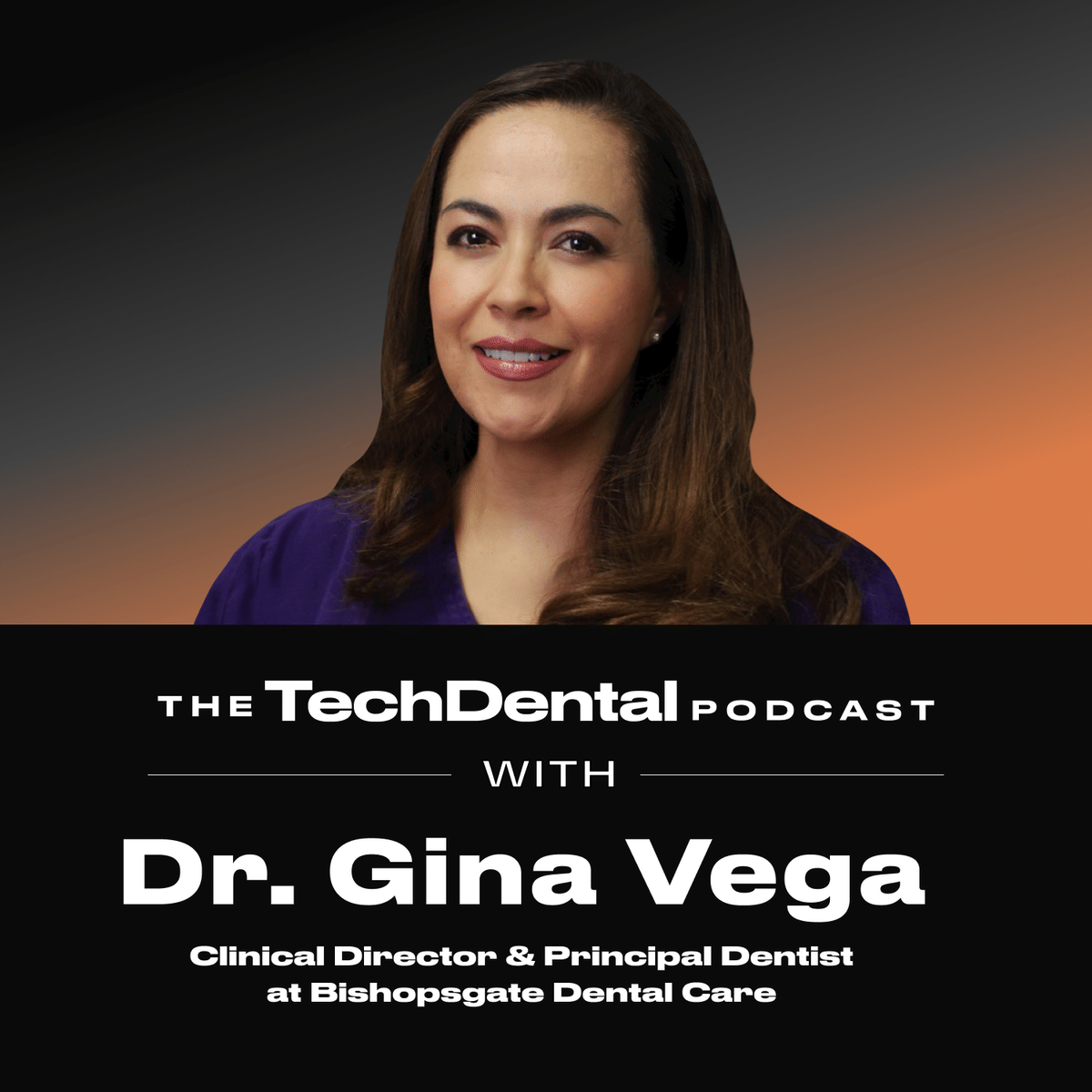
Direct answer: Dr. Gina Vega, Principal Dentist at Bishopsgate Dental Care in the City of London and an Invisalign provider with over 1,250 completed cases, argues that intraoral scanning technology, particularly the iTero platform, has fundamentally changed the economics and patient experience of private dental practice, not just for orthodontics, but across all clinical disciplines. Having purchased Bishopsgate from bankruptcy in 2010 and turned it into a thriving, scanning-first cosmetic and orthodontic practice, Dr. Vega's evidence-based insight is that the scanner is the single most powerful tool for treatment acceptance, patient retention, clinical self-improvement and word-of-mouth growth simultaneously. Her approach, scanning every new patient regardless of the reason for attendance, using the time-lapse comparison feature to drive recall compliance, and training the whole team to operate the scanner, provides a replicable model for any UK practice seeking measurable return on its digital investment within approximately six months. The primary action for UK dental practice owners is straightforward: if you do not have an intraoral scanner, acquire one, and then use it for everything rather than reserving it for a single treatment stream.
When Dr. Gina Vega bought Bishopsgate Dental Care in 2010, the practice was bankrupt. The previous owner had disappeared without leaving notes, training records, or guidance on the 20 Invisalign cases that came with the keys. Dr. Vega, freshly arrived in full private practice after requalifying in the UK six years earlier, had to learn the system from scratch while simultaneously running a business in turnaround.
It is a backstory that makes everything she has built since more instructive, not less. The operational clarity, commercial discipline and clinical confidence visible in Bishopsgate today did not come from an easy starting position or a well-resourced launch. They came from a practice owner who had to make difficult decisions quickly, bet on technology before she fully understood it, and then find ways to make the team and the patient base believe in the same direction she had chosen.
"I didn't know what Invisalign was, but I inherited with the practice about 20 Invisalign patients. The people at Invisalign really helped me out because they realised that obviously I needed to certify in order to be able to treat more patients. That's how I started."
The move from surviving to scaling happened in 2016, when Dr. Vega made a deliberate decision to commit to Invisalign as the clinical and commercial core of the practice. By then she had the procedural confidence to treat cases but had not yet built the volume or the referral engine. The shift in mindset from competent provider to intentional leader of a cosmetic orthodontic practice is what changed the trajectory.
Today, approximately 70% of her clinical activity is split between Invisalign and cosmetic dentistry. She has completed over 1,250 Invisalign cases. Bishopsgate runs three intraoral scanners across the clinical team, and no practice impressions have been taken in putty since around 2018.
The Scanner Decision: How Early Adoption Changed Everything
The iTero scanner arrived in Dr. Vega's practice in 2017, one year after she began building her Invisalign volume in earnest. She describes her first encounter with it at an open day, borrowing a unit from her Invisalign representative and experiencing it live with patients.
"I tried it and I thought, oh my God, this is so amazing. How fantastic that I don't have to do these putty impressions. If it doesn't go right, you need to send it thinking it's perfect and then a few weeks later they say, actually, you need to retake the impression. That took so long."
The decision to purchase was made that year. The unit she bought, an Element 1, she still has. But the more telling detail in how she approached adoption is what happened twelve months later, when she asked her head nurse to hide the putty and wash material from the other dentists in the practice.
"About 2018, I actually asked my head nurse to hide the putty and wash from the other dentists so they were to use the scanner. So I kind of bullied them to use the scanner."
The language is deliberately light, but the leadership principle behind it is substantial. Technology investment in dental practice typically fails not at the point of purchase but at the point of adoption. New equipment is bought, used by the lead clinician when the conditions are right, and then gradually deprioritised as the team reverts to familiar workflows. Dr. Vega identified this risk early and eliminated the alternative. If the old method is unavailable, the new method gets learned.
The same philosophy governs how she trains nursing staff. She insists that nurses learn to scan and take clinical photographs, and she accepts the additional appointment time that learning requires as a necessary cost of building a practice-wide capability rather than a single-operator dependency.
"I push my nurses to scan and take photos. I teach them. Sometimes the appointment may be taking a little bit longer because a new nurse is learning to scan. But that is also part of the learning of the new technology. It's not only for dentists to use, but also to make it worth for the team to help us out."
For UK practice owners considering scanner investment, this team-wide adoption model is worth examining carefully. A practice where only the principal can operate the scanner is fragile in two ways: it creates a single point of failure for patient throughput, and it limits the scanner's use to appointments where the principal is present. A practice where nurses can scan means every new patient appointment, every monitoring visit and every recall can generate scan data, regardless of who chairs the appointment.
From Consultation to Conversion: The AI Simulation as a Trust-Building Tool
The consultation model at Bishopsgate is built around a forty-minute encounter that transforms the patient's understanding of their own oral health before they leave the building.
The sequence begins with a scan, then photographs through the Invisalign Practice App, then a video recording of the patient speaking. Within two minutes of completing the scan, Dr. Vega can show the patient a smile simulation on the iTero monitor, with their own face reflected back to them wearing the projected outcome of treatment.
"I sit the patient in front of the iTero and we will then discuss what are the issues in the mouth, what is the malocclusion, what we're doing. And then within two minutes, I can show them the smile in their face. And similarly, about two or three minutes later, my nurse has already opened the video in the computer because it's still not integrated with iTero. That is coming in the next few months."
The video overlay feature, which maps the iTero simulation output onto the recorded video of the patient speaking, is cited as particularly powerful for patients who are financially hesitant about treatment. A patient watching a video of themselves with aligned teeth, while hearing their own voice explaining why they came for the consultation, experiences the prospective treatment outcome in a qualitatively different way than looking at a static scan image.
"That is amazing because a lot of people are hesitant to spend money in treatment. Unfortunately, a lot of people see orthodontic treatment or using a ligner as a cosmetic treatment. When they see how the smile is going to look like, when I show how easy it's going to be to floss or how I can create the space for the restorations, then the patient goes, yes, it's worth spending the money for this."
The clinical and commercial case being made to the patient in that moment is not aesthetics alone. It is functional: the relationship between crowding, gum disease, tooth wear and the inability to clean effectively. By contextualising the cosmetic outcome within a clinically meaningful framework, Dr. Vega transforms the conversation from a discretionary spend into a health investment. The simulation makes that argument visible rather than theoretical.
The latest version of the Outcome Simulator extends this further by allowing restorative treatment planning to be visualised within the same session. A patient with worn anterior teeth can see, in the same consultation, what the outcome looks like with straightening alone, and then what it looks like with composite bonding or veneers added afterwards.
"The patient is able to see it. So you can already integrate the digital smile design into the consultation. So those forty minutes that the patient is in the practice, they are already seeing what the future may look like. And then you put a little bit of a seed in their head."
For UK dental practices attempting to increase treatment plan acceptance for aesthetic and restorative work, this consultative model has a direct application. The scan is not an add-on to the consultation. It is the architecture around which the entire clinical conversation is organised.
For analysis of how patient communication tools and digital workflows connect to the commercial performance of dental practices, see AI Didn't Fix Dentistry: Intelligence Will.
Monitoring, Retention and the Time-Lapse Advantage
Beyond treatment conversion, the scanner's most underutilised capability in many practices is longitudinal monitoring. Dr. Vega scans every new patient, not only those presenting for orthodontic treatment, and this policy sits at the heart of Bishopsgate's patient retention strategy.
"What I do is I try to do a scan for every new patient, whether it is for Invisalign or not. And then we can discuss many issues showing them. So we see patients coming back again and again and again for their checkups, simply because we are showing them where there is gum recession. We want to monitor gum recession."
The time-lapse feature of the iTero platform, which places two scans from different time points side by side and highlights dimensional changes, creates a form of clinical evidence that patients find genuinely compelling. A patient who has been told for two years that their tooth wear is stable will understand stability differently when they can see two superimposed scans and observe the absence of change. Equally, a patient who has been drifting in recall compliance will understand risk differently when the scans show measurable progression.
"I can show the patients: okay, yes, the gum is stable. You don't have more gum recession. But then we can see a little bit of wear on the root surface because of the fact that it is exposed. Dentin is exposed and it's going to wear quicker than the enamel. So the patient is seeing that. So then of course they want to come six months later, a year later to check, to monitor."
This mechanism drives recall compliance not through reminder communications or practice management prompts but through genuine clinical engagement. The patient returns because they want to know the answer to a question the previous scan opened.
Dr. Vega also highlights the scanner's value in the specific challenge of new patient trust in a competitive urban market. In the City of London, where patients often change practices due to office relocations, a new clinician who shows radiographic decay using the iTero's infrared imaging functionality removes the perception of treatment upselling entirely.
"You can actually show the decay within the iTero. So then they will believe you that the decay is there and that probably is not that you only wanted to upsell treatment because you are the new dentist. So that brings confidence. It gives the patient confidence that you are actually treating them properly."
For UK practices operating in areas of high patient mobility, whether through professional workforce concentration or new residential development, this trust-building mechanism is particularly valuable. The evidence-based consultation does not just convert treatment plans. It converts sceptical patients into loyal ones.
ROI, Financing and the True Cost of Not Adopting
Dr. Vega's analysis of scanner ROI is grounded in operational specifics rather than aspirational projections. Her estimate for the time to measurable return on a scanner investment is approximately six months, with two primary variables that affect that timeline: the learning curve for the clinical team, and the conversion rate of scanned new patients into treatment.
"Definitely is something that your practice manager should be keeping an eye on. I would probably suggest that it takes about six months to see some return on the investment. At the beginning, you're taking longer appointments because you're learning to scan. But once you get quicker, when you're really understanding what you need, you can cut down the length of your appointment and then facilitate seeing more patients during the day."
She offers a clear measurement framework for practice managers tracking scanner ROI: of the new patients seen in a given month, how many received a scan? Of those scanned, how many accepted treatment? Tracking that conversion funnel over time both validates the investment and identifies where the clinical communication process can be improved.
The financing dimension is addressed with characteristic directness. With deposit models available and monthly payment structures spread over twelve to thirty-six months, the upfront capital barrier to scanner acquisition is materially lower than the sticker price suggests.
"You can make a deposit, I don't know, £5,000, and then the rest you pay over 12, 24, 36 months. The money shouldn't really be an issue because there are options for payment. And if at the end of the day you see that you don't try what you are investing, then that is your own fault that you're not really working it properly."
Her framing of underutilisation as a leadership failure rather than a product failure is important. The return on a scanner investment is not primarily determined by the scanner. It is determined by the practice owner's commitment to deploying it consistently, training the team to use it across all disciplines, and communicating its outputs clearly in every consultation.
"When you buy a piece of kit, use it and abuse it because it's for your benefit. And at the end, you are paying the bills every month. So make the most of it."
The AI Collaboration Model: Experience Interpreting Technology
On the question of how AI-generated simulations are communicated to patients, Dr. Vega describes a model of clinical collaboration between the technology's output and the practitioner's experiential judgment.
The iTero and Invisalign platforms generate projections, not guarantees. A ClinCheck simulation showing 25 aligners over eight months represents the algorithm's best estimate based on the scan data, not a contract. The biological reality of tooth movement, the variability in patient compliance, the tracking challenges that emerge mid-treatment, none of these are captured in the initial prediction.
"This is a projection. This is a prediction. A computer is very easy to manipulate, is very predictable, but the human body is not. What is important is that you put your professional experience to say, okay, in my opinion, normally a case like this will need one extra additional set of aligners or we may need a couple of them."
The trust Dr. Vega builds in the simulation is not uncritical. She explains to patients precisely what the simulation represents and what her clinical experience adds to it. This transparency, setting expectations accurately from the outset rather than over-promising on the technology, is what protects the clinical relationship when treatment does not track precisely to the initial plan.
The mid-treatment scan monitoring process she describes is equally collaborative. When a patient is not tracking as expected, the iTero generates a colour-coded report identifying which teeth are moving as planned and which are lagging. That data informs a clinical decision about whether to pause and order refinement aligners or to apply auxiliary techniques to improve tracking. The AI provides the assessment. The clinician makes the decision.
"You put the technology working in your favour because you are still communicating with the patients and reassuring them, things are going in the right direction, or if they are not going in the right direction, you have the tools to change that."
For analysis of how the clinical decision-support model in dental AI connects to patient trust and regulatory frameworks, see AI Didn't Fix Dentistry: Intelligence Will.
The Generational Imperative: Why Digital Adoption Is No Longer Optional
Dr. Vega's final piece of advice for UK dental practices sits within a demographic argument that should give pause to any practice owner still treating scanner acquisition as optional.
The patient cohort now entering private dental practice in significant numbers grew up with smartphones and expects digital engagement as a baseline in every service they use, from travel to banking to healthcare. They are not impressed by digital dentistry. They expect it. The practices that cannot provide a visual, evidence-based, technology-supported consultation will increasingly feel dated to this cohort, not modern.
"Unfortunately, I see practices not adopting this technology staying behind. We are treating many generations that were born with a telephone in their hands. They are going to expect technology in every single aspect of their lives, from how they work, to how they travel, to how they are treated in their health. And that includes dentistry."
Her specific recommendation for UK practice owners evaluating digital investment over the next one to two years is unambiguous: acquire an intraoral scanner, use it across all disciplines rather than just orthodontics, and invest in training the entire clinical team to operate it.
The iTero Lumina, the platform's current generation, scans at approximately half the time of its predecessor. For practices that previously found the scanning workflow disruptive to appointment timing, this development alone changes the feasibility calculation.
"Obviously iTeros are the best ones, especially now with the Lumina, where it takes us half the time to scan, so it's so quick. It's amazing."
The broader principle that runs through Dr. Vega's clinical and commercial thinking is that technology adoption in dental practice is not a one-time event but a continuous posture. The practice that scans every new patient today will know things about that patient's dentition in five years that no other practice in their history knows. That knowledge, accumulated in scan data over time, becomes an irreplaceable clinical asset and a powerful reason for a patient to stay.
For analysis of how data continuity and patient retention intersect with the operational performance of UK dental practices, see The Great Dental Reset: Why 2026 Will Reward the Prepared, Not the Big.
Key Takeaways
Scanning every new patient, regardless of the reason for attendance, creates a longitudinal clinical dataset that drives recall compliance, builds patient trust and generates treatment acceptance across multiple disciplines simultaneously. This policy costs one extended appointment and returns years of clinical intelligence and patient loyalty.
The fastest path to scanner adoption across a clinical team is to remove the alternative. Making the digital workflow the only available workflow forces learning at a pace that voluntary adoption never achieves. The short-term disruption to appointment times is temporary; the team capability built is permanent.
Time-to-ROI for an intraoral scanner investment is approximately six months for a practice actively using the scanner in new patient consultations and tracking the conversion of scanned patients into accepted treatment plans. The primary variable is utilisation rate, not the scanner's technical capability.
Dental AI simulation tools, including the iTero Outcome Simulator and the Invisalign ClinCheck mid-treatment tracking reports, are decision-support instruments. Their value is amplified by the practitioner's willingness to contextualise the simulation within their clinical experience, set accurate expectations about biological variability and maintain communication through the full treatment arc.
Scanner investment in the UK dental market is now financed with typical deposit structures of approximately £5,000 and monthly payment terms of twelve to thirty-six months. The capital barrier is materially lower than the perceived full-cost barrier. Under-utilisation, not the cost of acquisition, is the primary risk to return on investment.
Patients who change practices due to relocation or retirement of their previous dentist are converted to loyal, trusting patients most effectively through evidence-based consultations that make pathology visible. Showing a patient their own decay using infrared imaging, or their tooth wear progression using time-lapse comparison, eliminates the perception of unnecessary treatment and builds clinical credibility faster than any verbal explanation.
The demographic shift towards patients who expect technology in every aspect of their lives is not a future trend. It is the current market. Practices not yet adopting intraoral scanning and digital consultation workflows are not standing still. They are receding relative to the expectations of the patient cohort they most need to attract and retain.
About TechDental
TechDental is a strategic intelligence platform for founders, executives, operators and investors shaping the future of dentistry.
Through high-level analysis and systems-focused conversations, we explore how AI, governance frameworks and operating model design influence performance, scalability and enterprise value in dental organisations.
If you are building, scaling or investing in dentistry and want independent, systems-level insight into AI, governance and capital readiness:
For strategic advisory, board briefings or keynote speaking enquiries: www.techdental.com/advisory
The future belongs to those who deploy technology with discipline.
© 2026 RIG Enterprises Limited. All Rights Reserved. This article was authored by Dr. Randeep Singh Gill and is published under the TechDental brand, a trading name of RIG Enterprises Limited (Company No. 11223423), incorporated in England and Wales on 23 February 2018, registered at 1a City Gate, 185 Dyke Road, Hove, England, BN3 1TL. All editorial content, analysis, synthesis and intellectual property contained within this article are the original work of the author and remain the exclusive property of RIG Enterprises Limited. Opinions and statements attributed to named guests reflect the views of those individuals as expressed during recorded interviews and are reproduced here for editorial and informational purposes. No part of this article may be reproduced, distributed, transmitted, republished, or otherwise exploited in any form or by any means, whether electronic, mechanical, or otherwise, without the prior written consent of RIG Enterprises Limited. Unauthorised reproduction or use of this content may constitute an infringement of copyright under the Copyright, Designs and Patents Act 1988.