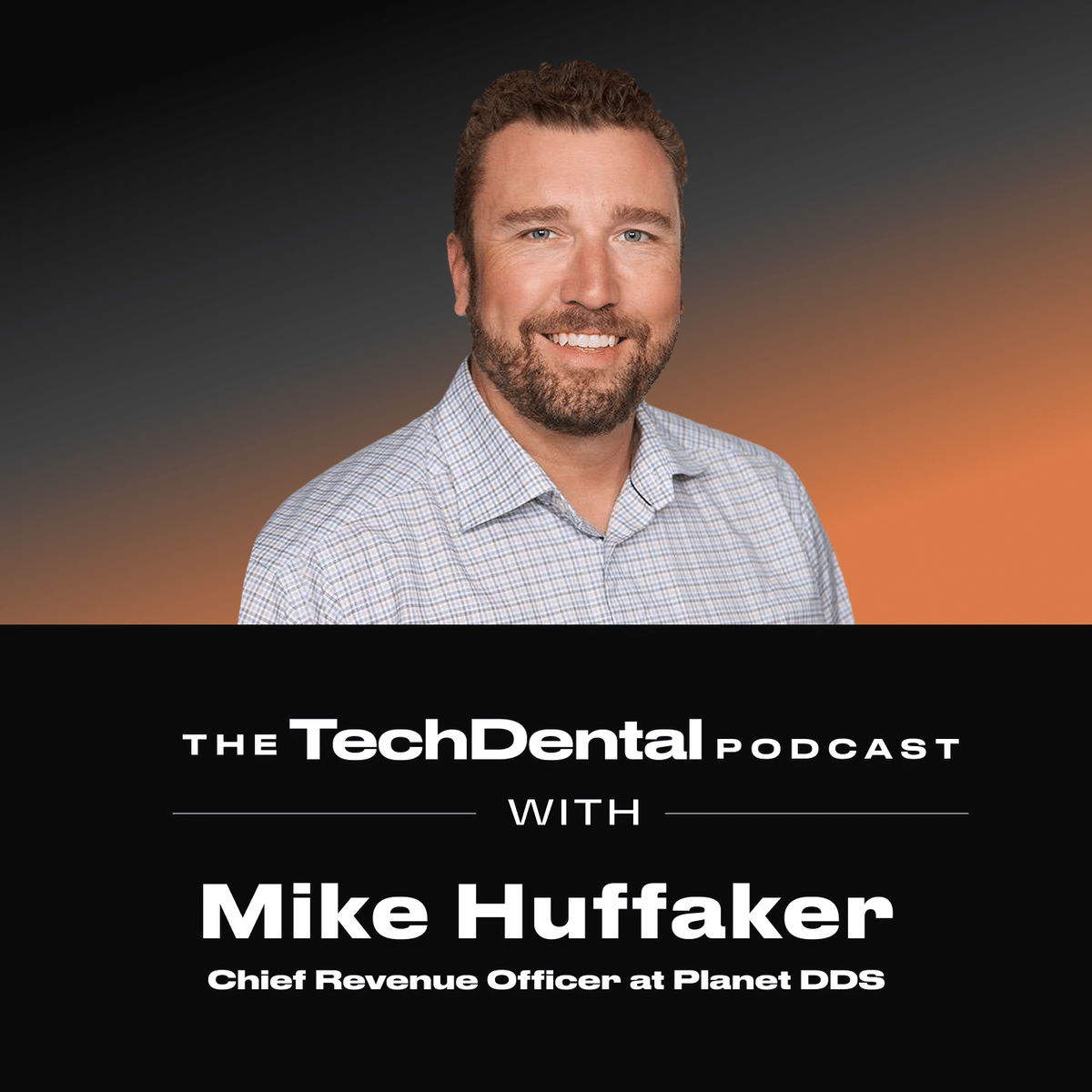
Direct answer: Mike Huffaker, Chief Revenue Officer at Planet DDS, argues that dental software is structurally broken because decades of siloed, server-based systems have left practices without consistent data, fragmented workflows and no foundation for the AI tools that will define competitive advantage over the next decade. Having scaled Planet DDS from approximately 600 practices to over 13,000 across three cloud platforms in under six years, Huffaker's central thesis is that cloud migration is no longer a modernisation choice but a prerequisite for survival, because agentic AI, the automation of the administrative tasks nobody in a practice wants to do, cannot function on fragmented, inconsistent data. Internationally, he estimates that when he joined Planet DDS five years ago only approximately 15% of dental practices were using cloud SaaS solutions, compared to 60% to 80% cloud adoption rates in industries like real estate and healthcare, and that this gap was primarily caused by large legacy suppliers actively steering customers away from cloud to protect their own server-based product revenues. The primary action for UK dental leaders is to begin the cloud migration journey now, not because AI is fully mature today, but because the data infrastructure required to take advantage of it when it is can only be built on a cloud foundation.
There is a moment in the story of how Planet DDS went to market that says everything about why so many dental practices, in North America and across the UK alike, are still running on software that was never designed for the world they are now trying to operate in. When Mike Huffaker joined the company in late 2019, the largest and most trusted names in dental supply had spent years telling their customers that cloud was not for them. Not because it was not, but because they did not have a cloud product to sell.
"The largest names in the dental space were suppliers. And what was taking place was those large players in the space did not have a cloud software solution. So for years, they would guide their clients: hey, you don't need cloud, cloud's not right for you. You should be using the server-based solution because that's what I have to sell you."
That was the structural distortion that held an entire profession back by a decade. And its consequences are still being felt today in every dental practice that cannot generate clean analytics across its locations, cannot give an investor meaningful financial visibility, and cannot take advantage of the wave of AI tools now reaching clinical and operational maturity.
Mike Huffaker has spent five and a half years fixing that problem at scale. As Chief Revenue Officer at Planet DDS, the company behind Denticon, Cloud9 and Dental OS, now trusted by over 13,000 practices and 118,000 users across North America, he brings a perspective that is simultaneously commercial, operational and strategically long-range. His mission statement is blunt: dental software is broken, and they are there to fix it.
Why Dental Software Is Broken and What That Actually Means
The phrase "dental software is broken" could sound like marketing. In Mike's framing, it is a precise technical and operational diagnosis.
For decades, dental practice management systems stored all their data inside the practice itself, on physical servers that nobody outside that location could access. When a group owned eight practices using four different server-based systems, it had eight isolated data islands, each with different procedure code conventions, different field usage habits, different data schemas, and no reliable mechanism for normalising any of it at the group level. Leadership visibility into performance across the estate was based on what could be exported to spreadsheets, translated by humans, and re-entered somewhere else.
"You had siloed data, you had server-based solutions where all your data lived within a practice itself. You did not have consistent control across multiple locations or visibility. And there's a lot of technology that comes out and none of it played nice in the sandbox with each other. So it was broken integrations, very challenging to get your workflows dialled in."
The situation was further complicated by the ecosystem of MSPs and IT providers whose revenue model depended on managing hosted solutions and cloud backups for individual practices, and who therefore had a commercial incentive to discourage clients from moving to cloud infrastructure that would make their services redundant.
The result, internationally, is a cloud adoption rate that lags dramatically behind comparable industries. At the time Mike joined Planet DDS, the company estimated that only approximately 15% of North American dental practices were using cloud SaaS solutions. By contrast, healthcare, real estate and retail were already at 60% to 80% cloud adoption. The UK market, facing its own version of the same structural forces through the dominance of established legacy PMS vendors, reflects a comparable pattern.
That gap is now closing, but not because the industry reached a moment of collective enlightenment. It is closing because the large legacy suppliers have finally built cloud products and switched their narrative, and because the compounding pressure of AI capability, security risk and investor expectation has made the cost of staying on server-based infrastructure impossible to ignore.
The Cloud Migration Imperative: Why It Is No Longer Optional
Mike's argument about cloud migration is not primarily a technology argument. It is a business viability argument.
The practices and groups that remain on server-based systems are not just constrained in what they can do today. They are structurally locked out of the AI capabilities that will determine competitive positioning tomorrow. The data foundation required for agentic AI to function, clean, consistent, standardised records across every location, cannot be built on a fragmented server-based estate.
"You're not going to have the capabilities to take advantage of new technology in the way that you'd like to if you remain on server-based solutions. These server-based solutions in some ways are dead men walking. If you are purchasing your software, your server-based solution from a vendor that also has a cloud solution, how much investment do you think is still going to take place in that server-based solution? It's going to be very little."
This is the specific risk that UK dental groups and independent practices currently evaluating their PMS decisions need to understand. The vendor who still offers a server-based product alongside a cloud product is not investing meaningfully in the legacy system. The gap between its capability and that of cloud-native alternatives will widen every quarter. Practices holding onto familiar server-based workflows are not preserving stability. They are accepting a compounding capability deficit.
The investment community is already pricing this in. Mike's observation about due diligence in acquisition contexts is pointed and directly applicable to the current wave of consolidation visible in UK dentistry, where independent practices are affiliating with emerging groups and PE-backed DSOs are assessing portfolios with increasing analytical rigour.
"The diligence is much easier if there's visibility into all of it. If I'm an investor and you've got ten different systems or they're all server-based, the data is so messy, I'm going to ask: can I trust what you're telling me to be true? Because you've now translated everything from your core system of record to a bunch of spreadsheets, and those can be changed."
For UK practice owners considering affiliation, acquisition or any form of external capital, the readiness of their data infrastructure is not a secondary concern. It is the primary lens through which a sophisticated buyer will assess what they are actually buying.
For a broader analysis of how the readiness of UK dental practices for the consolidation wave is shaped by their operational infrastructure, see The Great Dental Reset: Why 2026 Will Reward the Prepared, Not the Big.
Agentic AI: The Promise, the Reality and What Practices Should Do Now
Mike draws a precise and genuinely useful distinction between the AI that exists in dental today and the AI that is coming. The existing tools, radiographic detection, call coaching, AI receptionist functionality, AI-powered scheduling, all have demonstrable value as it stands. But they are discrete tools solving discrete problems.
Agentic AI is different in kind. It is the replacement of sequential administrative tasks within a practice workflow by an automated system that does what an office manager or receptionist does, clicking, inputting, moving information between systems, managing exceptions, filling gaps in the schedule, following up on outstanding claims, without requiring human initiation at each step.
"What agentic AI will do is run particular tasks within a practice within the same workflow. You can think of it as your person sitting at the front desk or your office manager, things that they do, clicking the mouse, moving the mouse, doing this, that, and the other thing, being replaced by an automated solution that does it for them."
Mike is honest about where this sits on the development curve.
"I actually think that there is more of a promise of agentic AI inside dental right now than a reality of agentic AI. But that means that you should work to prepare yourself to be able to take advantage of it when that promise becomes reality."
The preparation is specific. Agentic AI requires standardised data across every system in the practice estate. If a group operates eight practices on four different PMS platforms with inconsistent procedure code structures and fragmented patient records, agentic AI cannot function across them. The automation has nowhere clean to operate. The investment in cloud migration and data standardisation is not just an operational upgrade. It is the prerequisite for the most significant productivity gain dental practices will see in the coming decade.
The recruitment implication is also worth noting. Mike's observation that agentic AI will reduce the volume of tasks that nobody in a practice actually wants to do has a direct bearing on how dental groups recruit and retain front-of-house and administrative staff. When the job no longer requires manually opening envelopes to post claims, manually calling down a wait list to fill a cancelled slot, or manually chasing aged receivables, the role becomes more focused on patient experience, relationship management and the complex human interactions that still require judgment. That is a more attractive job. And it matters in a labour market where front-of-house dental recruitment remains persistently difficult.
AI as Multiplier: Why the Foundation Has to Come First
One of the most important conceptual contributions Mike makes in this conversation is the framing of AI as a multiplier rather than a fixer.
This distinction matters because it runs directly against the intuition that motivates a significant proportion of dental AI procurement. Practices buy radiographic AI expecting it to improve treatment plan acceptance rates. They buy AI scheduling tools expecting it to fill their diaries. But if the clinical communication skills are not there, if the treatment presentation process is broken, if the patient journey generates friction at every touchpoint, the AI does not fix those things. It amplifies them.
"AI is a multiplier. It doesn't fix all this. So if you're already broken all over the place, you can't just go, I'm going to put new AI tools, radiographic AI, and now all of a sudden we're going to diagnose more and get higher treatment plan acceptance. If you don't have the chair-side manner that you need and the right approach to educate your patients, even with the additional diagnosis, it's not going to work for you. It will multiply your bad behaviours in the same way that it will multiply your good ones."
The practical implication is straightforward but consequential. Before investing in AI tools, practices and groups need to audit their existing processes. Where are the breakpoints? Where are the human behaviours that generate poor outcomes? AI applied to a broken recall process will accelerate the rate at which patients disengage. AI applied to a strong recall process will compound the retention advantage.
The same logic applies to data quality. Cloud migration creates the conditions for consistent, clean data, but it does not automatically produce it. Practices that move to cloud without auditing and standardising their data entry conventions will have consistent access to consistent mess. The investment in data hygiene is not a prerequisite for cloud migration. It is a component of it.
For analysis of how data hygiene in dental practice management systems connects directly to AI readiness and the value of a practice at exit, see AI Didn't Fix Dentistry: Intelligence Will.
The Single Pane of Glass: Why Integration Architecture Matters More Than Individual Tools
Planet DDS's strategic direction under Mike's commercial leadership offers a useful model for how the integration question in dental technology should be resolved. The traditional architecture of dental technology stacks requires a practitioner to manage multiple open windows: the PMS, the patient engagement tool, the radiographic AI platform, the claims management system, the recall tool. Each integrates with the PMS to some degree, but each requires its own workflow, its own login, its own context-switching overhead.
"We're doing more and more of this where we have a dashboard that will represent undiagnosed treatment opportunities based off reading the schedule for that day. Now that function is available in other software solutions that are integrated, but we pull it inside the practice management solution. So now it's right in front of the staff when they log in and they see the list, here's all of our patients coming in today, here's the opportunities that are undiagnosed."
The principle of single pane of glass, one primary interface that surfaces the outputs of multiple integrated tools without requiring the user to navigate between them, is the architectural direction that the best-designed dental platforms are converging on. Its significance for AI adoption is direct. The most common reason AI tools fail to deliver their promised ROI in dental practices is not that the technology does not work. It is that the team does not consistently use it because the workflow friction of accessing it is too high.
Internationally, Mike cites Pearl AI as the clear leader in radiographic AI integration, noting that the platform's overlay functionality sits natively within the Denticon PMS environment rather than requiring a separate window. The implication for UK dental leaders evaluating AI tools is not just to assess the quality of the individual tool, but to ask specifically how it will be surfaced in the primary workflow interface. Tools that live in separate tabs get used inconsistently. Tools that appear in the same screen the team is already looking at get used habitually.
The Human in the Loop: What AI Will Not Replace
Mike's perspective on the future of staff roles in AI-augmented practices is nuanced and grounded in operational reality rather than either utopian or dystopian projection.
The theoretical possibility of a fully automated waiting room, where patients check themselves in on a tablet, receive automated verification and proceed directly to the clinical area without human contact, exists and may find a niche market. But Mike is clear that it represents a business model choice rather than an inevitable trajectory.
"I think there's not all things for all people. Maybe there's a segment of the market that would find that appealing. But those that want to embrace their patients with warmth when they walk in aren't going to be displaced. You're going to see different business models that are maybe more easily facilitated by the advent of it."
The more instructive observation is his concept of human in the loop as a structural requirement rather than a transitional phase. Every automated system generates exceptions. Process design exists to produce predictable outcomes most of the time, not all of the time. The patient whose insurance details have changed, the anxious patient who needs reassurance before they will agree to treatment, the complaint that needs de-escalation, these situations require human judgment, contextual sensitivity and relational intelligence that no current or near-future AI system can substitute for.
"There's still a lot of importance that's going to be placed on human capital and their ability to be in the practice and solve for things that are maybe unexpected, while also providing that excellent patient experience."
The practical implication for UK dental group operators is that workforce planning in an AI-augmented practice is not about reducing headcount as a primary goal. It is about reallocating human time from low-judgment administrative tasks to high-judgment relationship and patient experience roles. That reallocation, done well, produces both better patient outcomes and better retention of the practice team.
For analysis of how people-centred leadership connects to successful AI adoption in dental organisations, see People-First AI: Why Most AI Projects Fail in Dentistry (and How Leaders Get It Right).
Building for Scale: The Revenue Team Principles and Why Culture Is the Last Moat
Mike's leadership journey from selling men's shoes at Nordstrom to Chief Revenue Officer of a dental SaaS platform with 400 employees and a revenue organisation of 75 people offers an instructive model for how commercial culture is built and protected.
His early formation at Nordstrom, where under-promise and over-deliver was literally printed on the walls, gave him a customer-centricity framework that he carried into tech sales and ultimately into building Planet DDS's commercial team.
"The experience that I gained in retail about putting the customer first, about understanding and having empathy as to the experience that they have day in day out, is something that as long as you keep that front and centre, a lot of other stuff tends to work out."
The revenue team principles he developed at Planet DDS are not a conventional mission statement exercise. They function as a selection mechanism: a clear declaration of how the team operates that makes it easier to bring in aligned people and easier to act decisively when someone falls outside those norms. The principle he cites most directly is that negative and toxic behaviour is never worth the revenue it generates.
"If you're really successful and a jerk here, we just say you can't work here. You need to go somewhere else. And so these types of things when they come up, you have to make sure that you put an end to it as quickly as possible, because your values and your principles are always under attack."
For UK dental leaders building commercial or operations teams in a rapidly scaling group environment, this framing of culture as something that requires active protection rather than passive maintenance is worth taking seriously. The organisations that hold their values under pressure are not those with the most polished statements about them. They are those where the leadership has demonstrated, consistently and at some cost, that those values are not negotiable.
What UK Dental Leaders Should Know When Evaluating Cloud and AI Tools
Mike's closing advice for dental leaders evaluating technology choices is structured around a discipline that most buying processes skip entirely: knowing what you are actually trying to solve before you look at what is being sold.
"Identify what your biggest problems are before you go shopping. Shockingly, most people don't actually know what they are. You should have a viewpoint of, hey, we're struggling clinically, or operationally, or financially. Because different solutions are going to have different strengths."
His secondary principle is to evaluate outcomes rather than features. The feature comparison game, placing two practice management systems side by side and scoring their functionality against a list, produces analysis that obscures the question that actually matters: what will this do for our business and our patients over three to five years?
On due diligence, his advice is pointed. Vendor-provided references are curated. The conversations that yield genuine intelligence are with users the vendor has not selected, people who will answer directly when asked what they do not like about the product.
"When you're talking to a reference, they're going to be like, my gosh, it's the best thing ever. No, tell me what you don't like about it. Tell me what is the most frustrating part of it. Dig into some of the negative sides, because they're there. And if you ask directly, people will answer."
Finally, his advice for practice owners who feel anxious about the pace of AI development and uncertain about where to start is genuinely reassuring rather than performatively so.
"Unless you are an OpenAI or Google or Meta signing billion-dollar contracts for AI engineers, if you're running a small to medium-sized business, you're not really behind yet. It has not yet become so mainstream. So you can do it right, just take a deep breath, recognise that there's amazing opportunity, and then start to educate yourself."
The starting point he recommends is to use large language models, ChatGPT, Claude, Gemini or others, for real business tasks before purchasing any productised AI tool. Write a job listing. Draft a patient apology letter. Ask the LLM to analyse your production numbers and suggest five growth strategies. Understand what these tools can and cannot do at a foundational level before committing budget to the tools built on top of them.
For a framework on how UK dental leaders can build the operational foundations that make AI investment productive rather than premature, see Scaling Dentistry Without Breaking It.
Key Takeaways
The cloud migration lag in dentistry was not organic. It was manufactured by legacy suppliers who actively guided customers away from cloud solutions because they had nothing cloud-based to sell. UK dental practices still on server-based systems are not operating a stable status quo. They are accepting a compounding capability deficit that will become a competitive and transactional liability.
Agentic AI, the automation of sequential administrative tasks within practice workflows, requires standardised data across every system in the practice estate to function. Practices that invest in cloud migration and data standardisation now are building the infrastructure for the most significant productivity gain dental will experience in the next decade. Those that do not will be structurally locked out of it.
AI is a multiplier, not a fixer. Deploying radiographic AI into a practice with poor case presentation skills will accelerate the rate at which clinical findings fail to convert. The quality of the underlying human process determines whether AI compounds advantage or compounds dysfunction.
Investors and acquirers assess dental groups through the lens of data visibility and financial transparency. A fragmented, server-based data estate forces the production of spreadsheet-based financials that sophisticated buyers cannot trust. The practice with clean, cloud-native, auditable data across its estate is easier to diligence, faster to transact, and more credibly valued.
The single pane of glass principle, surfacing the outputs of multiple integrated AI tools within the primary workflow interface rather than requiring staff to navigate between separate platforms, is the critical determinant of whether AI adoption sticks. Tools that live in separate tabs get used inconsistently. Adoption failure, not technology failure, is the primary reason AI investments underdeliver in dental.
Culture in a scaling dental organisation is not self-sustaining. Values and operating principles are under constant pressure, particularly in high-revenue environments where tolerance of destructive behaviour can be rationalised by short-term commercial results. The organisations that protect their culture actively and consistently, even at commercial cost, build the most durable competitive advantage.
Before evaluating any AI or cloud technology, dental leaders should identify their three most significant operational, clinical or financial pain points with specificity. Entering a buying process without that clarity produces feature-led purchasing decisions that optimise for what looks impressive in a demo rather than what will change outcomes for the business.
About TechDental
TechDental is a strategic intelligence platform for founders, executives, operators and investors shaping the future of dentistry.
Through high-level analysis and systems-focused conversations, we explore how AI, governance frameworks and operating model design influence performance, scalability and enterprise value in dental organisations.
If you are building, scaling or investing in dentistry and want independent, systems-level insight into AI, governance and capital readiness:
For strategic advisory, board briefings or keynote speaking enquiries: www.techdental.com/advisory
The future belongs to those who deploy technology with discipline.
© 2026 RIG Enterprises Limited. All Rights Reserved. This article was authored by Dr. Randeep Singh Gill and is published under the TechDental brand, a trading name of RIG Enterprises Limited (Company No. 11223423), incorporated in England and Wales on 23 February 2018, registered at 1a City Gate, 185 Dyke Road, Hove, England, BN3 1TL. All editorial content, analysis, synthesis and intellectual property contained within this article are the original work of the author and remain the exclusive property of RIG Enterprises Limited. Opinions and statements attributed to named guests reflect the views of those individuals as expressed during recorded interviews and are reproduced here for editorial and informational purposes. No part of this article may be reproduced, distributed, transmitted, republished, or otherwise exploited in any form or by any means, whether electronic, mechanical, or otherwise, without the prior written consent of RIG Enterprises Limited. Unauthorised reproduction or use of this content may constitute an infringement of copyright under the Copyright, Designs and Patents Act 1988.