
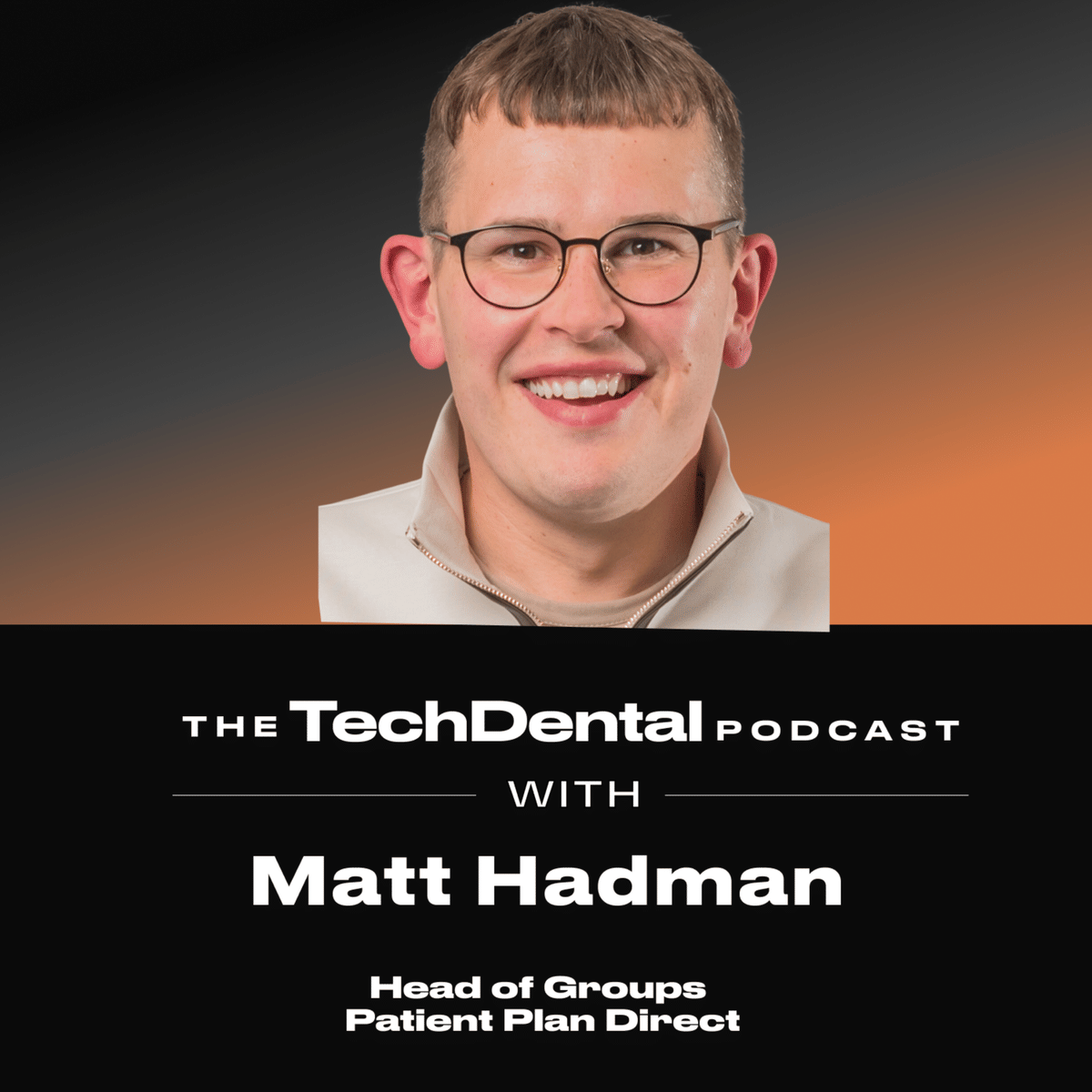
Direct answer: The dental groups that will define the next consolidation cycle are not those with the most sites or the fastest acquisition pace. They are the ones that built predictable, recurring revenue infrastructure before scaling, communicated their value proposition without commoditising it, and designed systems capable of growing without cultural or operational collapse. Matthew Hadman, Head of Dental Groups at Patient Plan Direct, sits at one of the most instructive vantage points in UK dentistry, working directly with hundreds of practices and DSOs navigating conversion, consolidation and recurring revenue strategy. His analysis, drawn from daily operational contact with the full spectrum of the UK market, offers dental leaders a clear diagnostic of where scaling ambition outpaces operational readiness and what to do about it.
What Is the Single Most Underrated Factor That Determines Whether a Dental Practice Can Scale Into a Group Without Chaos?
The default answer in most dental consolidation conversations is capital. The more considered answer is strategy. The real answer, according to Matthew Hadman, is neither.
The most underrated scaling factor is the willingness to build the infrastructure before buying the next practice rather than after.
"Having a visionary outlook is great, but the biggest stumbling block I come across is that people don't make enough of a plan in terms of what that's going to look like."
The transition from operating a small group of practices to leading a genuinely scalable dental organisation requires a structural shift that most leaders underestimate until they are already inside it. At four or five sites, a principal can still run on presence and relationship. They can cover gaps through personal involvement, manage associates directly and hold operational knowledge in their own head.
That model does not transfer.
"Having four or five practices where you're still a business owner delivering wet finger dentistry one or two days a week is very different to moving to ten practices where you now need to take a step back to lead that business, and you've probably got to start thinking about centralised teams in finance and operational support that sits just outside practice managers reporting directly into you."
The inflection point is not ten sites. It is the structural gap between where informal management fails and where professional infrastructure has not yet been built. Most leaders hit this gap at seven or eight sites and discover they are trying to retrofit an operational architecture into an organisation that is already too complex to stop.
"The biggest stumbling block is that people don't think about how they're going to fill that middle gap. They go on to buy practice number nine or ten, and once you've already scaled to that point, it's much harder to backfill. Whereas if you sit down and think, I need to get this team in place, I need to get them skilled up, and then I will buy practice seven, eight, nine, you're doing it the right way around."
The cost of building operational infrastructure retrospectively is significantly higher than building it proactively, in complexity, in management bandwidth and in margin. The leaders who understand that the organisational work is the prerequisite for acquisition, not a consequence of it, are the ones who scale without breaking. For a detailed examination of where exactly scaling dental groups lose control and what the structural remedies look like, see Scaling Dentistry Without Breaking It.
Why Are Membership Plans Now Viewed by Investors as One of the Clearest Signals of Operational Maturity?
Dental membership plans have moved from a patient retention tool to a valuation signal. Investors, acquirers and lenders evaluating dental practices and groups in 2025 and 2026 treat recurring subscription revenue as one of the most reliable proxies for operational quality, patient loyalty and long-term earnings defensibility. A practice with a well-managed membership base is not just more stable. It is demonstrably different in risk profile from one running entirely on fee-per-item income.
The fundamental reason is straightforward. Fee-per-item income is contingent. At the point of acquisition, there is no contractual mechanism binding a private patient to return. The revenue line that appeared in the accounts is a projection of past behaviour, not a guarantee of future performance.
Membership plan revenue is different in kind, not just in quantity.
"The risk of buying a private practice that operates entirely on fee-per-item or pay-as-you-go income is that there is absolutely no guarantee at the point of sale those patients are ever going to cross back over that threshold or return into the practice."
The pandemic provided one of the most compelling stress tests the sector has ever had for this distinction. Practices with large membership plan bases continued to generate monthly recurring income even when they were unable to see patients at all.
"It was a once-in-a-lifetime experience, but the COVID-19 pandemic showed huge stability in terms of that recurring revenue from plan patients, even when practices were unable to welcome patients into the practice for a period of time."
The investor logic is therefore not merely about income stability. It is about the quality of earnings. In the UK dental sector, recurring private income is valued more highly than NHS contracts or one-off procedures, and the composition of revenue matters materially to how buyers assess EBITDA quality. A membership plan base transforms a revenue line from contingent to contracted, and that transformation has a direct and significant effect on valuation multiple. The broader implications of this shift for capital readiness and how prepared organisations position themselves for exit are examined in The Great Dental Reset: Why 2026 Will Reward the Prepared, Not the Big.
The talent dimension adds further weight to the same argument. Associate recruitment and retention, already among the most acute operational pressures facing UK dental groups, becomes structurally more manageable when the practice can demonstrate a guaranteed patient list and predictable income forward.
"Clinicians are self-employed members of the team, highly reliant on knowing they've got a patient list that is going to come back. With the recruitment issues that currently face dentistry as a profession, being able to show clinicians we've got this list, we can see this predictable income, we can show you what spending has been like from those patients across the last two, three, five years, gives much more security when looking to retain and recruit talent."
Recurring revenue does not merely protect the financial model. It protects the clinical model that generates it.
What Is the One Conversion Lever That Consistently Turns Hesitant NHS Patients Into Confident Private Plan Adopters?
The single conversion lever that consistently determines whether hesitant NHS patients become committed private plan members is the framing of the conversation itself. Practices that frame conversion around financial terms consistently generate more resistance and more dropout. Practices that frame conversion around clinical value, continuity and prevention consistently generate more commitment. The difference is not the plan. It is the narrative.
The instinct to lead with financial reassurance, to talk about spreading the cost, saving money or affordable payment options, is understandable. It is also counterproductive. The moment a dental practice is positioned as a financial product, patients apply the same frame they apply to every subscription decision: is this worth the money, and can I cancel if I decide it is not?
"From a patient perspective, it's about ensuring that as a business, you do not commoditise dentistry as part of the conversion process. The absolute biggest put-off to a patient is if they have a conversation with a practice member, or receive a letter or communication about the conversion, that talks about money. All you then do is turn a real-time service into a commodity, and patients then have this whole cost fear of, can I really afford this?"
The alternative framing, which Hadman identifies as the consistently successful approach, positions the plan as a gateway to a fundamentally better clinical relationship.
"The biggest and single most important factor is that your communication to patients and the ongoing conversations by your practice team are all around the ongoing benefits to patients of being seen on an independent basis. That is not talking about spreading the cost or saving money. It's talking about truly prevention-led dentistry in the 21st century, that is trying to minimise the risk of that patient requiring invasive treatment or waking up with raging toothache on a Saturday morning."
This is not a subtle semantic distinction. It is the structural difference between a conversation about cost and a conversation about health. When the practice team, from the principal to the front desk, consistently delivers the clinical value message rather than the financial one, patient hesitation resolves around trust rather than price. The conversion rate improves, the dropout rate falls, and the patients who do join are more likely to remain long-term plan members because they joined for clinical reasons rather than financial ones.
The same principle applies to how practices communicate the wider transition to private care. Patients who understand why the change is happening, what it means for the quality and continuity of their treatment, and how the membership plan reduces rather than increases their exposure to unexpected dental costs are patients who convert with confidence rather than reluctance.
Why Is Full White-Labelling Becoming a Strategic Weapon for DSOs Looking to Protect Loyalty and Strengthen Brand Equity Post-Acquisition?
White-labelling of dental membership plans is not primarily a branding preference. It is a patient loyalty strategy. For DSOs that have invested in building either a respected group brand or a portfolio of community-trusted independent practices, allowing a third-party provider's brand to sit inside that patient relationship represents an unnecessary dilution of the most valuable asset acquired: patient trust.
The UK DSO market has bifurcated into two distinct brand strategies, and both arrive at the same conclusion about white-labelling.
"DSOs generally have one path or another in terms of brand identity. We have mid-group DSOs who actually want each practice to retain its individual identity as it was at the point of acquisition and to largely still feel like that independent, community-focused practice that it was before. Truly white-labelled plan offering is super important to that, to make sure the practice doesn't feel like it's becoming part of a big corporate body."
The logic here is rooted in how dental loyalty works. Patients do not primarily commit loyalty to a corporate group. They commit loyalty to their dentist and to the practice that employs that dentist. When a third-party brand enters that relationship through the membership plan, it introduces a visible signal that the practice has changed hands, changed character and changed priorities. Even where that signal is subtle, its effect on patient confidence is measurable in churn.
"What we know is that those patients want to commit loyalty to their dentist and their practice. You don't really want to be bringing in external partners where third-party brands are being promoted within that, because those patients want to commit loyalty to their dentist."
The second brand strategy, where the DSO actively rebrands acquired practices under its own group identity, arrives at the same requirement from a different direction. If the DSO brand is the loyalty anchor, then the membership plan must reinforce that brand, not undermine it with a competing name.
"If that DSO brand is an important part of the offering to the patient, they want to be able to offer a plan that is consistent with their brand. Not say, we can do all of this, but if you want the plan, you've got to go to a third-party provider. Having that truly white-labelled feel that gives full autonomy to the DSO around what they want to offer and how it is branded just helps strengthen their proposition."
The operational discipline required to maintain brand consistency at scale sits within a broader framework of decisions about what the group stands for and what experience patients are actually buying. White-labelling is one of the most visible expressions of that discipline. AI Didn't Fix Dentistry. Intelligence Will. explores how groups that build coherent, data-connected patient engagement infrastructure are the same groups that sustain brand trust at scale, because consistency of experience and consistency of data are two sides of the same operational discipline.
Which AI-Driven Capability Will Create the Biggest Uplift in Membership Retention and Recurring Revenue Over the Next 24 Months?
Of the three primary AI applications in dental membership management, predictive churn modelling, automated onboarding and personalised plan recommendations, automated onboarding will generate the largest near-term uplift. The reason is structural: the biggest constraint on membership plan growth is not patient reluctance but operational friction at the point of sign-up. AI that removes that friction converts existing demand into committed subscribers at a materially higher rate.
The bottleneck in membership plan growth is rarely the patient. Most patients who are appropriately approached about a plan, in a practice they trust, by a team that communicates the value clearly, are receptive. The bottleneck is the consistency and completeness of that approach.
"The biggest barrier to optimal sign-ups in a practice is that signing up is largely driven by that front-of-house team who have already got a queue of patients waiting to pay for things, other day-to-day operational responsibilities. As much as they want to try and promote a membership, they perhaps haven't always got the time to take the patient through the full sign-up process. So conversations get missed."
The follow-up problem compounds the initial conversation gap. A patient who expresses interest but asks for time to consider it requires a structured nurturing sequence to remain engaged. In the absence of automation, that sequence depends on a team member remembering to follow up, having the bandwidth to do it and executing it consistently across every patient who expressed interest. In practice, that chain breaks.
"If somebody wants to go away and think about it, is that patient ever followed up? That requires a really key nurturing pipeline process to make sure they're followed up."
AI-driven automated onboarding addresses both failures simultaneously. It removes the burden of manual sign-up from the front-of-house team by enabling patients to complete the process themselves, largely pre-populated with information already held in practice management systems. And it creates the structured nurturing pipeline that the team does not have the bandwidth to manage manually.
"If we could have automation that allows very quick and efficient signing up that the patient can just do themselves, largely pre-populated by information already held in practice management systems, that reduces the burden on the front-of-house team. But equally, if somebody wants to go away and think about it, to use technology, email or text messaging facilities to nurture that patient over the next five, ten, fourteen days, to get the touch points required to maximise sign-up. That's going to be the biggest change for dental plans over the next couple of years."
This is precisely the kind of AI application that rewards clean, connected data infrastructure. The practices that have unified their patient data across practice management systems, CRM and plan administration are the ones that will extract genuine value from automated onboarding. Those still operating on fragmented, siloed data will find that automation surfaces the fragmentation rather than bypassing it. People-First AI: Why Most AI Projects Fail in Dentistry sets out in detail why the data and cultural foundations matter more than the tool selection itself, and what the right sequencing of that work looks like.
What Leadership Mindset Has Shaped the Most Consistently Successful Dental Group Operators?
The leadership mindset that most consistently produces successful dental group operators is not the one that moves fastest or acquires most aggressively. It is the one that distributes trust, invites challenge and creates the organisational conditions under which teams build the business rather than merely execute instructions. The leaders who build the most resilient dental groups are those who understand the difference between managing a set of targets and genuinely leading people through change.
Hadman draws on a specific leadership framework that has shaped his own approach across a career working at the intersection of practice operations and group strategy.
"From very early on in my career, I learned about McGregor's Theory X, Theory Y management styles, and I have always been super conscious of that in terms of how I lead my own team. Giving people autonomy and knowing that you naturally trust other people to do their jobs develops much better morale within that team. It gives you a really creative opportunity to have a team of people who feel comfortable feeding ideas into you, which allows further development versus that Theory X management style of sitting on their shoulder and micromanaging."
The distinction between Theory X and Theory Y management is not merely philosophical in a dental group context. It has direct operational consequences. A group whose operational success depends on the principal's personal oversight cannot scale beyond the principal's personal bandwidth. A group whose teams are trusted, empowered and intrinsically motivated builds capability that compounds independently of the founder's direct involvement.
The trait that separates good leaders from great ones during the specific pressures of dental consolidation is equally instructive.
"The difference between a good leader and a great leader is somebody's ability to accept criticism. When things get a bit tougher and people want to give you feedback, if you get defensive and you start to take things personally and become hesitant to that change, that's where leadership just fails off. And actually, were you ever a leader, or were you just managing people? Managing is a set of objectives you're trying to achieve an outcome for, whereas leading people is about influencing, sitting down with people and saying this is what we need to achieve, and how are we going to get there."
The relationship between how leaders respond to challenge and the broader cultural health of the organisations they run is not incidental. Practices where leadership models openness to feedback are practices where teams surface operational problems early, when they are still solvable cheaply. Those where leadership defaults to defensiveness are practices where problems compound in silence until they become expensive. Burnout in Dentistry Is Not a Wellbeing Crisis examines how the operating system failures that drive clinical and team burnout trace directly to the leadership structures, or absence of them, that determine whether problems surface or fester.
What Is the Single Hardest Lesson Every Future DSO Leader Needs to Learn?
The hardest lesson for future DSO leaders is that speed of acquisition and speed of value creation are not the same thing, and frequently move in opposite directions. The groups that scale fastest are not the groups that scale best. The most durable and valuable dental organisations are those built through staged, controlled growth that creates the conditions for each acquisition to succeed before the next one is attempted.
The impatience problem is structural. DSO leaders at C-suite level typically arrived at that position through a combination of clinical excellence, commercial acuity and genuine vision for what a well-run dental group can achieve. Those qualities are real and necessary. They are also, without a counterbalancing discipline, the source of the most common and most costly scaling failures in dentistry.
"Many a time have I felt like I have been that voice of reason, that person on their shoulder saying just calm down a minute, let's do this in a controlled way. At C-suite level, you've got great vision, you know where the business wants to get to. Naturally, as humans, we can be quite impatient and we want to get there very quickly. But doing that could be very disruptive."
The staged approach that Hadman advocates is not about caution for its own sake. It is about recognising that dental consolidation is not a sprint where the fastest mover wins. It is a sequential build, where each phase must be complete before the next can generate its intended value.
"Rather than do this in six months, let's do it in 24. Let's create stages. Let's do it in a controlled way. When you do things in a controlled way, it may take a little bit longer, but it allows you to attain much more control. It allows much stronger and more meaningful relationships to be built across that period of change. And it really stabilises everything, because if something goes wrong in phase one, you've got an ability to sit back and reflect and correct it before you move on."
The inverse scenario is painfully familiar to anyone who has watched a fast-moving dental group encounter its first serious operational failure. Problems that would have been contained and correctable in phase one have instead been replicated across phases two, three and four. The cost of unwinding that is not proportional to the original error. It is proportional to the number of sites and systems across which that error has been embedded.
"If you're kind of charging forward with stage two, three, four before phase one has even completed, you're much more likely to trip yourself up further down the line. Just have that ability to take a breath, sit back, create a controlled and staged approach as opposed to charging forward to do everything overnight."
The operational intelligence required to recognise when a phase is genuinely complete, rather than merely started, is one of the most underdiscussed capabilities in dental group leadership. The practices and groups that will define the next decade of UK dental consolidation are not those that moved fastest through the current window. They are those that moved most deliberately. The Great Dental Reset: Why 2026 Will Reward the Prepared, Not the Big sets out the broader market dynamics that explain why measured, prepared organisations will outperform fast movers in the current cycle.
What Does the Future of Dentistry Belong To?
The dental organisations that will define the next decade are those that combine prevention-led clinical philosophy with technology-enabled operational infrastructure. Not technology as a replacement for people, but technology as a multiplier of what the right people can deliver. The future belongs to practices that treat the patient as a whole person and deploy AI to handle the workflows that prevent their teams from doing so.
Hadman's summative view of where dentistry is heading is grounded in the same operational logic that runs through every element of his work with practices and groups.
"The future of dentistry belongs to those who are patient-led and tech-focused. Dentistry is just fast evolving into being prevention-led, and that's going to be about treating a whole patient, not single-tooth dentistry, not fighting a problem, but actually understanding your patient from a holistic perspective."
The technology dimension of that future is not abstract. It is visible in the specific operational problems that AI and automation are already solving across dental groups that have built the right infrastructure.
"I see so many conversations where people are hesitant to embrace AI. It's not about seeing that technology is taking over people's jobs. It can really complement them. It's not about replacing a receptionist with a bot or an automated service, but it's about saying to this front-of-house team, you can now focus on looking after the people that are stood in front of you. And this technology system can do your email nurturing for you in a much more controlled way, with standardised scripts that go out. It's workload taken off your shoulders."
The harmony principle, where technology and people operate as complementary rather than competing forces, is the organisational design question that every serious dental group leader needs to answer before the next significant technology investment is made. AI deployed into a disengaged team, a fragmented process or a poorly governed data environment does not produce the outcomes described above. It produces faster versions of the existing problems. People-First AI: Why Most AI Projects Fail in Dentistry examines precisely why the people and process work must precede the technology selection, and what the organisational conditions for genuine AI return actually look like.
The practices that will extract genuine value from the AI and automation wave now moving through dentistry are those that have already answered the human questions: who owns the patient relationship, what does excellent look like, and how do we build a team that wants to deliver it consistently?
Key Takeaways
The most underrated scaling factor in dental group development is building centralised operational infrastructure before buying the next practice rather than after. The leaders who do it in the right order scale with control. Those who do not are forced into expensive retrospective restructuring at the worst possible time.
Dental membership plans have moved from a patient retention tool to a primary valuation signal. Recurring subscription income transforms contingent fee-per-item revenue into contracted earnings, with direct and significant consequences for EBITDA multiples, investor confidence and associate recruitment.
The single conversion lever that most consistently turns hesitant NHS patients into committed private plan members is framing the conversation around prevention-led clinical value rather than financial terms. The moment dentistry is positioned as a financial product, patients apply the same scepticism they apply to any subscription decision.
White-labelling of membership plans is not a branding preference but a patient loyalty strategy. Whether a DSO retains individual practice identities or rebrands under a group name, introducing a third-party brand into the patient relationship unnecessarily dilutes the most valuable acquired asset: patient trust.
Automated onboarding is the AI capability most likely to generate the largest near-term uplift in membership plan growth, because it addresses the structural bottleneck directly. The biggest constraint on membership growth is not patient reluctance but operational friction and inconsistent follow-up at the point of sign-up.
Theory Y leadership, built on distributed trust, genuine autonomy and active listening, is not a management style preference. It is an operational prerequisite for scaling a dental group beyond the founder's personal bandwidth. Groups that remain dependent on principal oversight cannot scale beyond the principal.
The hardest lesson for future DSO leaders is that speed of acquisition and speed of value creation are not the same thing. Staged, controlled growth that allows each phase to be completed and corrected before the next begins creates more durable and more valuable dental organisations than fast-moving consolidation that embeds operational errors at scale.
The future of dentistry belongs to those who are patient-led and tech-focused, combining prevention-led clinical philosophy with AI-enabled operational infrastructure that multiplies what teams can deliver rather than replacing what teams provide.
About TechDental
TechDental is a strategic intelligence platform for founders, executives, operators and investors shaping the future of dentistry.
Through high-level analysis and systems-focused conversations, we explore how AI, governance frameworks and operating model design influence performance, scalability and enterprise value in dental organisations.
If you are building, scaling or investing in dentistry and want independent, systems-level insight into AI, governance and capital readiness:
For strategic advisory, board briefings or keynote speaking enquiries: www.techdental.com/advisory
The future belongs to those who deploy technology with discipline.
© 2026 RIG Enterprises Limited. All Rights Reserved. This article was authored by Dr. Randeep Singh Gill and is published under the TechDental brand, a trading name of RIG Enterprises Limited (Company No. 11223423), incorporated in England and Wales on 23 February 2018, registered at 1a City Gate, 185 Dyke Road, Hove, England, BN3 1TL. All editorial content, analysis, synthesis and intellectual property contained within this article are the original work of the author and remain the exclusive property of RIG Enterprises Limited. Opinions and statements attributed to named guests reflect the views of those individuals as expressed during recorded interviews and are reproduced here for editorial and informational purposes. No part of this article may be reproduced, distributed, transmitted, republished, or otherwise exploited in any form or by any means, whether electronic, mechanical, or otherwise, without the prior written consent of RIG Enterprises Limited. Unauthorised reproduction or use of this content may constitute an infringement of copyright under the Copyright, Designs and Patents Act 1988.