
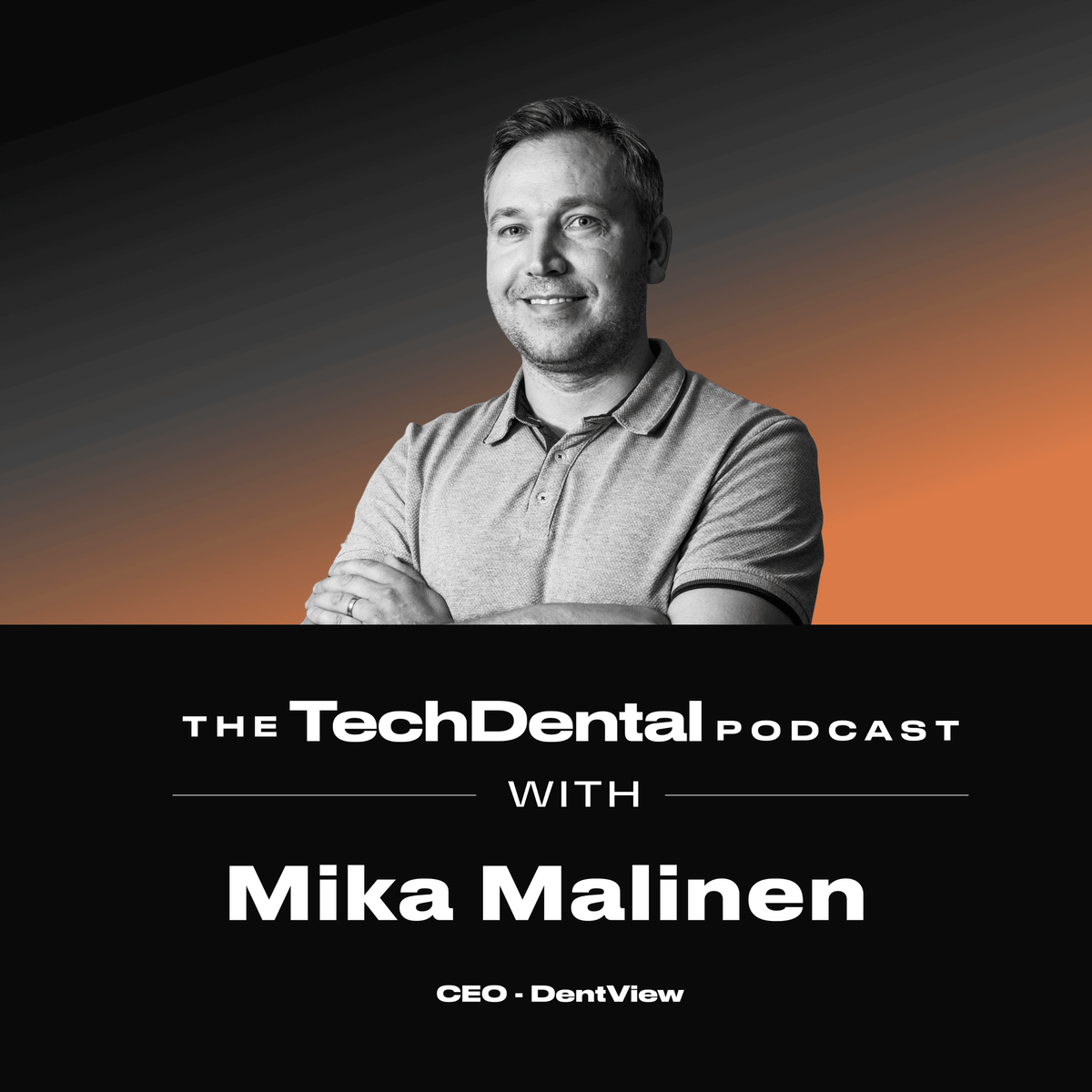
Direct answer: Across the UK dental sector, prevention is universally acknowledged as a clinical priority. It is rarely treated as an operational or financial one. The result is a gap that costs dental groups in multiple directions simultaneously: clinician time consumed by instruction that does not change patient behaviour, recall rates undermined by disengaged patients, and revenue opportunities left unidentified because the data that would surface them has never been captured in a structured form. Mika Malinen, CEO of DentView, is building the infrastructure to close that gap. DentView is not diagnostic AI. It is not a patient messaging tool. It is a Preventive Workflow AI platform, backed by clinical research from Turku University, designed to automate patient interviews, scale self-care education to population level, and convert behavioural data into structured revenue signals for private groups, DSOs and public health operators alike. For CFOs and group executives evaluating where their next margin improvement comes from, the case Malinen presents is precise, data-grounded and strategically significant.
Why Does Traditional Prevention Fail to Scale and What Does AI Change?
The failure mode of prevention in dentistry is well understood by everyone working inside the system and rarely addressed structurally by anyone managing it.
Malinen's origin story for DentView begins with his wife, a dentist working in Finnish public healthcare, observing the same constraint that clinicians across the UK face daily: the clinical appointment is too short, too pressured and too infrequent to deliver meaningful behavioural change.
"There was a patient coming from windows and doors. There was no really time for self-care. The ones who would benefit the most would benefit greatly from good self-care and the link to general health. When there was a possibility to give proper self-care, the difference could be significant in the person's life."
The structural problem is not clinical will or clinical knowledge. It is capacity.
"The problem generally is the resources. There is a huge workload on dental professionals. Especially in remote areas, there is a lack of staff. There is no time and there is no financial resource to give proper self-care to everybody. There is a will, there is a knowledge, but the tools are not there yet."
In UK dentistry, the resource constraint is acute. NHS dental access remains significantly strained, with millions of adults unable to see an NHS dentist within a reasonable timeframe, and private group operators facing rising clinical labour costs that compress margins at every point of scale. The conventional response is to do more with the same clinical time. DentView's argument is that this is structurally the wrong answer.
"The behavioral changes are at home. That's the key issue. There are two visits a year in the dental clinic. And that's quite an optimistic view. Everything that happens between those visits is the most important."
The platform's central proposition is that AI can extend clinical influence into the 98% of the patient's year that takes place outside the surgery, without consuming any additional clinical time to do so.
We examined how technology that operates outside the clinical chair creates disproportionate value for dental group operators in From Front Desk to Control Plane
What Does the Clinical Evidence Say About Digital Prevention Matching In-Person Instruction?
A randomised study conducted at Turku University in Finland found that DentView's digital self-care guidance achieved statistically equivalent improvements in patient oral hygiene to those produced by in-person instruction from an orthodontic specialist. The results were measured using the oral hygiene simplified index across a 30 to 60-day study period, with no significant statistical difference between the digitally guided group and the professionally instructed group.
This is the finding that changes the financial calculus for dental group operators. Not because it is clinically surprising, but because of what it implies for labour model design.
Malinen is precise about the scaling implication.
"When the self-care is given by a professional, it's limited to one person's working time. At maximum level, you can have 20 patients in a day that you give proper self-care to. When it comes to digital means, there are basically no limits to how you can scale it. You can scale it to the entire population level. Even if we can get close to the professional level, that's a huge opportunity that should be considered really seriously."
For a UK dental group operating across multiple sites, the implications are direct. If a trained dental hygienist's instructional output can be replicated by a digital system without measurable loss of clinical efficacy, the hygienist's time is freed for higher-value, billable procedures. The education function does not disappear. It scales without constraint and without additional payroll cost.
Comparable AI implementations in dental settings have demonstrated reductions in front-desk administrative workload of up to 35%, a figure that translates directly into either headcount efficiency or redirected capacity toward revenue-generating activity.
Where Is the Labor Arbitrage Happening and What Gets Relieved First?
When asked specifically which clinical roles experience the earliest labor relief through DentView deployment, Malinen is direct.
"I would go first with the dental hygienist. Because at least in public health, they are the people who are responsible for educating people to provide self-care. Of course dentists as well. I would go with these two professionals whose main job is to increase awareness in self-care."
At practice level, the mechanism is granular and measurable.
"If you save 10 minutes per patient, automating interviews, having the gamified self-care education given before the appointment, you can save 10 minutes from the interview time, from the education part, and you can do it much better because the data transfers from the pre-treatment room application. The professional can see the colour-coded self-care practices, risks highlighted, AI analysis."
In a group operating 20 sites at 15 patients per day per site, 10 minutes saved per patient represents 50 hours of recovered clinical time daily across the network. At UK dental hygienist rates, that is a material operational saving before any revenue uplift is factored in.
The data transfer function is equally important from a clinical governance standpoint. The AI analysis arrives at the professional's desk before the patient enters the surgery: risk flags identified, self-care profile assessed, potential clinical needs surfaced. The clinician begins the appointment already informed.
How Does Behavioral Data Become a Structured Revenue Signal?
DentView's Upsell Opportunity Analysis converts patient self-care profiling and behavioural mapping, gathered in a 4-minute gamified intake session, into structured, AI-generated revenue flags delivered to the clinical team before the appointment begins. In pilot deployments, a single clinic generated between 6 and 10 teeth-alignment leads per month from kiosk-based patient activation alone, with total upsell potential estimated at up to €500,000 per month per clinic across the full range of aesthetic and restorative opportunities identified.
The mechanism is worth understanding precisely, because it addresses a real operational challenge in private dental practice: how to open a commercial conversation without the patient feeling sold to.
Malinen explains the architecture.
"In a gamified way, you can map large amounts of data in quite a short period of time. In our case, the programme lasts four minutes. With this time, you can basically educate, map self-care practices, and also map if there is a hidden demand or unhappiness with the patient about some condition in their mouth."
The AI then processes that data and presents the clinical team with both a patient summary and a suggested conversational approach.
"AI will analyse and give an approach. It will generate the approach for the professional so that it's as easy as possible to approach the patient when it comes to, for example, an upselling opportunity in aesthetic treatments. Because that's quite a complicated issue. Without the patient saying anything, it's really hard to start selling aesthetic treatment for a patient."
The significance of this for treatment coordinators and clinical teams in UK private practices is considerable. High-value elective treatment, whether alignment, whitening, implants or ceramic restoration, is routinely undersold not because patients are unwilling but because the conversation is never opened in a clinically grounded way. DentView creates the clinical grounding automatically, using the patient's own expressed preferences and behavioural data as the starting point.
As Malinen notes: the patient sees the insight as data-led, not sales-led. That distinction determines whether the conversation happens at all.
What Does White-Label Preventive Infrastructure Mean for DSO Standardisation Post-Acquisition?
One of the most persistently underestimated challenges in UK dental consolidation is post-acquisition standardisation. Each newly acquired practice arrives with its own patient communication culture, its own clinical protocols and, frequently, its own absence of digital infrastructure entirely. Imposing uniform standards quickly is the difference between value realisation on the acquisition model's timeline and protracted integration drag.
DentView's architecture was designed explicitly for this environment.
"It's not a patient record system. It's not a CRM system. We have wanted to build a system that is really easy to adapt, with no long implementation processes, and also a cost that is really transparent. The dental operator can white-label it themselves so that it looks and feels like part of their clinic."
The white-label capability means a newly acquired practice can deploy the platform under the group brand from day one. A regional chief dentist in Finland described the result as a "virtual dental hygienist," a description that captures both the clinical and operational function precisely.
For groups executing roll-up acquisition strategies, the standardisation benefit extends beyond patient-facing experience. DentView's centralised data architecture allows group management to benchmark self-care compliance rates, upsell conversion performance and behavioral risk profiles across all sites on a consistent basis. A practice that arrived in the portfolio with no digital patient engagement infrastructure can be producing structured, comparable data within weeks of onboarding.
"Our customers can basically collect their own data and then review it based on the location, based on the age groups, by the spoken language and with different variables. This kind of big data gives operational management tools to evaluate different trends, behavioural trends among the population."
We examined how data standardisation across acquired practices creates durable operational and valuation advantages in Scaling Dentistry Without Breaking It
What Is the CFO's Case and How Quickly Does DentView Pay for Itself?
Malinen's pitch to financial executives is constructed around two distinct value cases: prevention as brand and retention infrastructure, and prevention as an active revenue engine.
The CFO argument against prevention investment has always been its indirect commercial logic. Prevention reduces future disease, which is clinically desirable but financially opaque: the avoided treatments never appear in a revenue line. DentView's approach reframes this entirely.
"The cost of DentView is significantly cheaper than a patient record system or even a CRM system. Every month it's the same. It's really predictable monthly payments and you get all the features with that one fee."
The subscription OpEx model removes the capital expenditure barrier that has historically slowed technology adoption in smaller and mid-size dental groups. There is no hardware to procure, no significant implementation timeline, and no unpredictable cost structure to model.
For the public health CFO, Malinen makes the prevention case cleanly.
"Basically with one dental hygienist's monthly fee, you can scale prevention research-backed across a small region. It's a no-brainer."
For the private group CFO, the retention argument is the primary value driver.
"The prevention itself engages the patient. It will, in the best cases, tie the patient to the clinic. So there is continuity, there is a brand impact. The dental clinic really shows to patients that they care. They are not there just for the invasive treatment and making money. They actually care about the patient."
In UK private dentistry, patient retention is the single most direct input into practice valuation. An EBITDA multiple applied to a stable, high-retention patient base produces a fundamentally different valuation outcome than the same multiple applied to a transactional patient base with poor recall adherence. DentView's structural improvement of patient engagement behavior translates directly into the quality and predictability of recurring revenue, which is the variable underwriters and PE acquirers weight most heavily in dental asset assessment.
The upsell revenue case provides the accelerant.
"Every second patient will leave some kind of upselling lead. We calculated estimates based on pilot thresholds. In one month, there were 6 to 10 teeth alignment leads in these pilot clinics, in one clinic. When you count the whitening, the closing of gaps, the ceramic fillings, everything, the potential upselling might be even half a million euros a month in a small clinic."
Even at conservative conversion rates, a structured pipeline of qualified aesthetic and restorative leads generated automatically through patient behavioral data represents a material revenue contribution with no additional marketing spend required.
We examined how operational platforms that generate predictable, recurring revenue translate into valuation premium at exit in The Great Dental Reset: Why 2026 Will Reward the Prepared, Not the Big
Why Is Behavioral Data the Missing Layer in Both Public Oral Health and Executive Forecasting?
DentView's PRO tier provides access to an anonymised, population-level behavioural data bank that currently holds ¼ million patient self-care sessions. The data is not linked to personal identifiers and is fully GDPR-compliant, but its analytical value at group and population level is significant.
"From the very beginning, we have collected this huge anonymous data bank. Currently we have a quarter of a million sessions from basically people's self-care behavioural data. Our customers can basically collect their own data and then review it based on the location, based on the age groups, by the spoken language and with different variables."
For a DSO CFO or clinical director managing operations across multiple UK sites, this represents something that has not previously existed in preventive dentistry: centrally benchmark-able behavioural data that is consistent, structured and actionable.
The applications are directly relevant to financial planning.
Compliance rate benchmarking across sites identifies which locations are underperforming on patient engagement before it manifests as recall failure or churn. Demographic risk segmentation by age group, geography and treatment history enables targeted clinical resource allocation. Trend analysis across self-care behavioural data generates leading indicators of future restorative demand, converting what has historically been unpredictable clinical throughput into something that can be modelled and resourced in advance.
For public health commissioners in the UK, the population-level analytics offer a planning tool that has never been available at this granularity: real-time behavioural data mapped to geographic and demographic segments, enabling targeted preventive investment at the population level rather than reactive restorative expenditure downstream.
"It might be so that in some area or segment there is a different kind of self-care habit. It might be a cultural thing. It might be a socio-economic related thing. But they can spot different trends and act accordingly."
What Is the Mindset Shift Dental Leaders Need to Make Prevention Scale?
Malinen's lightning round answers distill the strategic philosophy underlying DentView's entire market proposition.
On AI's disruption of prevention:
"It's not anymore about the goodwill of the professional. It's not about whether there is time for prevention. With the AI and the tools that are just emerging, like what is possible now compared to what is possible in five years, it will probably be a huge leap forward. You can basically scale the prevention to the entire customer base if you want to. There are no limits."
On the mindset dental leaders must adopt:
"The whole industry, unfortunately, is built on invasive treatments. Even though the professionals see the prevention, they want to spread good self-care practices, but still the whole industry is built on invasive treatments. That needs to be changed. We have to switch our thinking from invasive treatments to prevention and see it not as a threat but as the opportunity."
This is not a clinical argument. It is a business model argument. A dental group that structures its operational and technological investment around generating stable, compliant, retained preventive patients is building a fundamentally different and more valuable asset than one that continues to optimise purely for restorative throughput. The behavioural data infrastructure that DentView provides is the financial evidence base that makes that argument quantifiable to investors, acquirers and boards.
We examined how AI platforms that operate at the intersection of clinical engagement and business intelligence are reshaping dental group strategy in AI Didn't Fix Dentistry. Intelligence Will
Key Takeaways
· Prevention has historically been unscalable because it depended entirely on clinical chair time. AI removes that constraint. DentView delivers evidence-backed self-care guidance digitally, with clinical research confirming statistically equivalent outcomes to in-person professional instruction, allowing groups to scale preventive impact without scaling hygienist hours.
· A 4-minute gamified patient intake session generates structured clinical, behavioural and commercial intelligence before the patient enters the surgery. Risk flags, self-care profiles and upsell opportunities arrive at the clinician's platform automatically, reducing appointment friction and opening commercial conversations from a data-led rather than sales-led position.
· Pilot deployments generated 6 to 10 teeth-alignment leads per clinic per month from kiosk activation alone. When full aesthetic and restorative opportunities are included, estimated upsell potential reaches up to €500,000 per clinic per month at full conversion, making the platform's subscription cost structurally negligible against revenue generation.
· White-label deployment with no long implementation timelines makes DentView viable for acquisition-led standardisation. Newly acquired practices with zero digital maturity can be onboarded and producing consistent, "benchmark-able" data within weeks, accelerating post-acquisition value realisation across the group.
· The subscription OpEx model replaces unpredictable CAPEX with a predictable monthly cost that is, in Malinen's framing, significantly cheaper than a patient record or CRM system. CFOs can model the return without capital commitment risk.
· DentView PRO's population-level behavioural data bank, currently at ¼ million anonymous sessions, provides DSO leadership with leading indicators of recall risk, restorative demand and demographic behavioural trends that have never previously been available in structured, centralised form.
· Patient retention built through prevention infrastructure directly improves EBITDA quality. A stable, highly compliant recurring patient base commands a valuation premium at exit that episodic restorative throughput cannot replicate. Structural investment in behavioral engagement is an investment in multiple, not just revenue.
· The industry mindset shift required is from invasive treatment optimisation to prevention as a commercial strategy. Prevention tied to AI does not compete with restorative revenue. It creates the engaged, data-rich patient base from which restorative and elective revenue flows more predictably and at higher average value.
About TechDental
TechDental is a strategic intelligence platform for founders, executives, operators and investors shaping the future of dentistry.
Through high-level analysis and systems-focused conversations, we explore how AI, governance frameworks and operating model design influence performance, scalability and enterprise value in dental organisations.
If you are building, scaling or investing in dentistry and want independent, systems-level insight into AI, governance and capital readiness:
LinkedIn: https://www.linkedin.com/in/dr-randeep-singh-gill-576580357/
For strategic advisory, board briefings or keynote speaking enquiries: www.techdental.com/advisory
The future belongs to those who deploy technology with discipline.
© 2026 RIG Enterprises Limited. All Rights Reserved.
This article was authored by Dr. Randeep Singh Gill and is published under the TechDental brand, a trading name of RIG Enterprises Limited (Company No. 11223423), incorporated in England and Wales on 23 February 2018, registered at 1a City Gate, 185 Dyke Road, Hove, England, BN3 1TL. All content, analysis, opinions and intellectual property contained within this article are the original work of the author and remain the exclusive property of RIG Enterprises Limited. No part of this article may be reproduced, distributed, transmitted, republished, or otherwise exploited in any form or by any means, whether electronic, mechanical, or otherwise, without the prior written consent of RIG Enterprises Limited.
Unauthorised reproduction or use of this content may constitute an infringement of copyright under the Copyright, Designs and Patents Act 1988.