Direct answer: AI in dentistry is transforming preventive care by enabling earlier detection of dental conditions through diagnostic imaging analysis, expanding clinical capacity in markets facing acute dentist shortages, and shifting the operating model of dental practices from reactive treatment to continuous, data-driven patient monitoring. Current AI diagnostic tools achieve accuracy rates of 90 to 92 per cent, functioning as a clinical co-pilot rather than a replacement for dentist judgement.
What Is Happening to Dentistry Right Now?
Dentistry is being restructured from the inside out.
Not by regulation. Not by consolidation. By the quiet compounding of AI diagnostic capability inside clinical workflows.
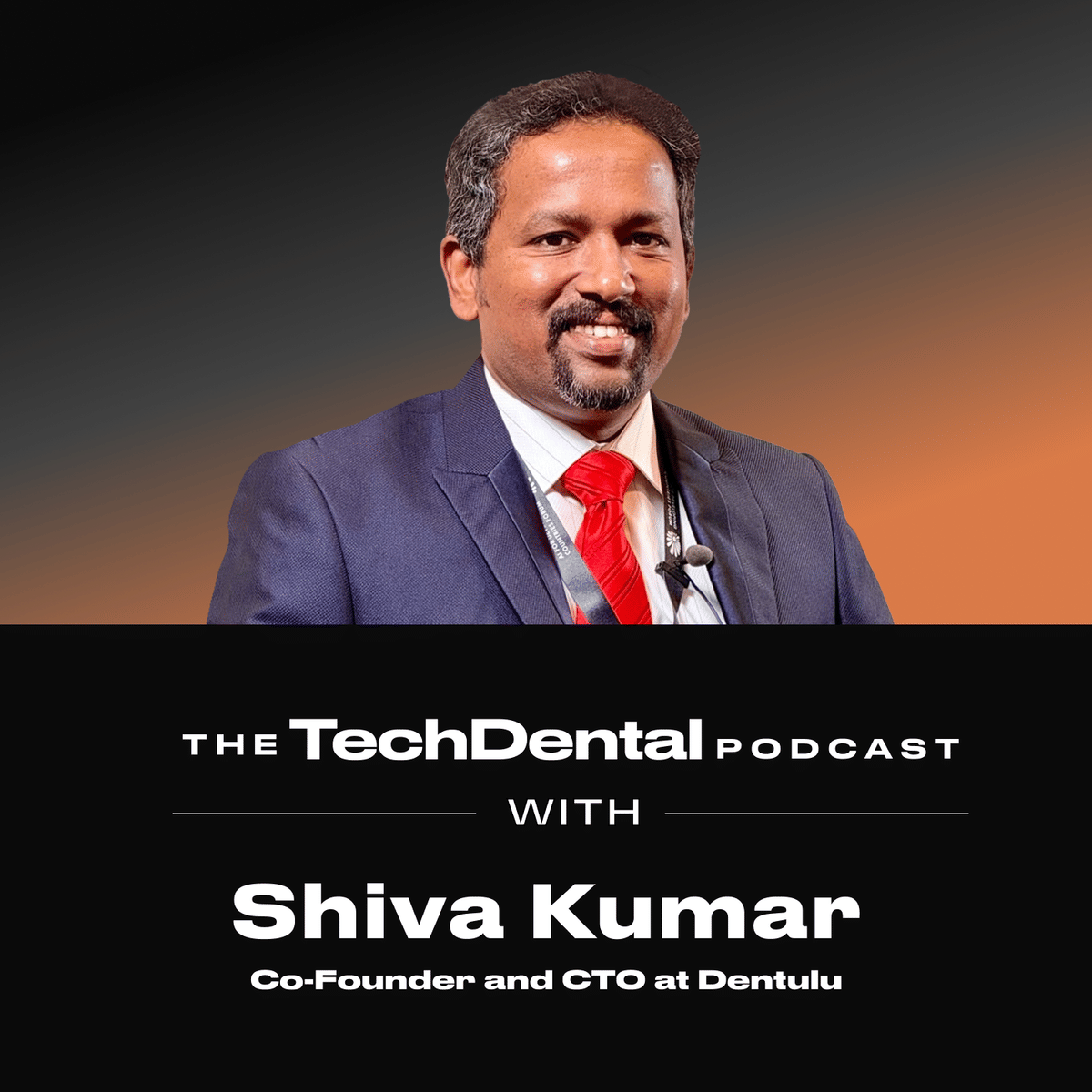
This briefing, drawn from a conversation with Shiva Kumar, Co-Founder and CTO of Dentulu, a US-based dental telehealth platform serving thousands of patients and practices, analyses what that shift actually means for practices, operators and investors.
The central argument: AI in dentistry is not a productivity tool. It is a diagnostic infrastructure shift. Those who treat it as the former will be left behind by those who understand it as the latter.
Why Is the Dental Access Crisis Driving AI Adoption?
The dental access crisis is the primary commercial driver of AI adoption in dentistry.
In the United States, there is a documented shortage of over 6,500 dentists, according to 2023 to 2024 workforce data. That figure continues to widen as demand compounds and supply cannot keep pace.
In the United Kingdom, NHS dental provision has become so constrained that millions of patients cannot access routine preventive care within a clinically appropriate timeframe.
The consequence is predictable.
Patients delay. Conditions that cost hundreds of pounds to treat at an early stage become complex, multi-appointment cases costing thousands.
The system structurally incentivises the opposite of what preventive care is designed to achieve.
Shiva Kumar, Co-Founder and CTO of Dentulu, described the practical reality that drove the platform's development:
"Getting an appointment in the US is so difficult. For small, small things, you cannot get an appointment. You can't go to the dentist. So you basically have to do some checks. This is where AI and digital dentistry started to play an important role."
According to TechDental analysis, this access gap represents the core market condition that makes AI-assisted triage commercially defensible at scale, in both the US and UK dental markets.
Platforms such as Dentulu began with photo consultation: a practitioner reviews a patient image and advises whether an in-person visit is necessary. The integration of AI into that workflow changed the unit economics entirely.
For practice owners, multi-site operators and investors, the access crisis is not merely a societal concern. It is the structural condition underpinning the entire AI dental technology market.
We explored this theme in more depth in AI Didn't Fix Dentistry. Intelligence Will.
How Does AI Improve Dental Diagnostics?
AI improves dental diagnostics by expanding the number of conditions identified in clinical imaging, increasing detection consistency across patient populations, and creating structured records that support long-term continuity of care.
At the core of preventive dentistry is differential diagnosis, the process of systematically distinguishing between conditions that present with similar symptoms or imaging characteristics.
Historically, that process depended entirely on the clinician's experience and the quality of tools available.
AI diagnostic tools in dentistry are beginning to alter that equation.
Not by replacing clinical judgement. By expanding the diagnostic aperture available to the clinician.
Shiva Kumar explained how AI-assisted X-ray analysis is being used in practice today:
"When you take an X-ray, the AI identifies and gives more conditions — maybe 15 to 18 different conditions it looks for. The doctor would have already identified the primary ones, but using AI, they can provide continuity of care for conditions they might not have flagged immediately."
AI in dental diagnostic imaging does not generate new diagnoses from nothing. It surfaces conditions that would otherwise remain below the threshold of clinical detection at the time of appointment.
The implications for each stakeholder group are distinct:
· For patients: earlier detection means less invasive treatment, lower cost and better long-term outcomes · For dental practices: AI creates the infrastructure for structured continuing care and more predictable revenue · For investors: AI shifts the unit economics of dental practices towards higher patient lifetime value and improved margin visibility
On the relationship between AI and the clinician, Shiva Kumar was unambiguous:
"It's not there to stop their work. It is there to help their work. It is actually upscaling everyone."
The analogy to software development is precise. AI-assisted coding tools do not replace engineers. They raise the quality floor and reduce error rates. The practices that integrate AI diagnostic tooling effectively will not merely be more efficient. They will deliver demonstrably better clinical outcomes over time.
That is competitive differentiation that compounds.
How Accurate Is AI in Dental Diagnostics?
AI dental diagnostic tools currently achieve accuracy rates of between 90 and 92 per cent, making them highly effective as a clinical support layer but not yet sufficient for autonomous diagnosis without dentist oversight.
This is one of the most important questions for any dental executive, group operator or investor evaluating AI in oral healthcare.
Shiva Kumar provided a clear benchmark from Dentulu's operational experience:
"AI is not 100% there. It's like 90%, maybe 95% or 92%. Relying on this 100% is not going to happen. Dentists making a decision depending on these AI outputs — yes, it can give them 90% accuracy. Over that, they have to put their experience and fine tune it before they conclude."
The appropriate framing for any dental practice evaluating AI diagnostic tooling: the technology functions as a co-pilot.
It expands the range of what a clinician can assess. It improves the consistency of detection across a patient population. It creates a structured record of findings that supports continuity of care over time.
It does not, and should not, substitute for clinical accountability.
A note on data quality: AI diagnostic accuracy is a direct function of data quality and structure. In healthcare markets where imaging and clinical records are largely digitised and standardised, as in most of the UK and US, the conditions for high-accuracy AI performance are increasingly in place. In markets with fragmented data infrastructure, the performance gap widens materially.
This has direct implications for how AI dental technology scales internationally and how operators entering new markets should treat data architecture as a prerequisite to AI deployment.
We examined the broader data readiness question in From Tools to Intelligence: What Large Dental Organisations Get Wrong About Technology
How Does Patient Engagement Technology Support Preventive Dentistry?
Patient engagement technology in dentistry, including home monitoring devices and secure communication platforms, improves recall rates, reduces unnecessary follow-up appointments, and generates longitudinal clinical data that strengthens AI diagnostic accuracy over time.
The preventive dentistry model only generates value if patients remain engaged between appointments.
This is where most dental practices fail, regardless of AI investment.
Recall rates in dentistry are chronically poor. Patients disengage because the interval between appointments is long, the feedback loop is weak, and the cost of inaction is not felt until it becomes clinically impossible to ignore.
Dentulu's MouthCam device addresses this directly. An affordable consumer-grade intraoral camera, it costs between £40 and £80, connects to a secure application, and allows patients to capture and share intraoral images directly into their provider's clinical record from home.
Shiva Kumar described the operational impact observed in practices using the device:
"Sending a MouthCam device home with the patient is a phenomenal drive — it increased efficiency in handling post-operative checks and changed user habits. It's like a brush."
The post-operative use case has clear efficiency implications.
If a patient does not need to attend a follow-up appointment because the provider has reviewed their images remotely and confirmed healing is progressing normally, both parties save time. Practice capacity is protected. Patient satisfaction improves.
The longitudinal imaging data generated also feeds directly back into AI diagnostic systems, improving accuracy over time and creating a compounding data advantage for practices that adopt early.
According to TechDental analysis, practices that engage patients between appointments generate higher recall rates, earlier re-presentations for developing conditions and stronger patient retention metrics.
For multi-site operators, the ability to embed this engagement infrastructure systematically, rather than leaving it to the variable practice of individual clinicians, is a structural lever for both clinical quality and commercial performance.
This operational framing connects directly to what we covered in Scaling Dentistry Without Breaking It
What Is Salivary Testing and Why Should Dental Practices Offer It?
Salivary testing in dentistry is a diagnostic service that screens for bacterial markers in saliva linked to systemic health conditions including cardiovascular disease, diabetes and dementia. It represents one of the highest-opportunity, lowest-adoption preventive services currently available to dental practices.
The systemic connection between oral health and general health is well established in peer-reviewed clinical literature.
The oral microbiome, the community of bacteria living in the mouth, has documented associations with cardiovascular disease, type 2 diabetes, Alzheimer's disease and adverse pregnancy outcomes.
Yet the majority of dental practices continue to operate as though the mouth is clinically disconnected from the body.
Shiva Kumar identified salivary testing as one of the most significant near-term opportunities in preventive dentistry:
"Salivary testing is one of the major things happening. Your oral health is so connected to your systemic health. The bacteria in the mouth can go to your brain. That's how serious it is. Every practice should start doing salivary testing."
Salivary testing panels, of the type offered through platforms working with clinical laboratory partners such as OralDNA Labs, can screen for up to twelve bacterial markers with direct associations to systemic conditions.
This is not a niche or speculative diagnostic category. It is a clinically validated preventive service that most practices are not currently offering.
The commercial case is clear:
· High-margin service with low procedural complexity · Extends the clinical conversation into areas patients prioritise: heart health, brain health, longevity · Repositions the dental practice as a whole-body health partner · Creates a clear point of differentiation in competitive local markets
For group operators and investors, this is a product expansion opportunity with low implementation friction and strong patient demand signals.
For individual practice owners, it is one of the most accessible ways to differentiate on clinical depth rather than price.
How Should Dental Practices Implement AI Without Disrupting Existing Workflows?
Dental practices can implement AI diagnostic tools with minimal workflow disruption by prioritising platforms that integrate with existing practice management systems, following an 80/20 onboarding model, 80 per cent automated and 20 per cent guided, and beginning with a single high-impact use case such as AI-assisted X-ray analysis.
The gap between the theoretical value of AI in dentistry and its actual penetration in dental practice is not primarily a technology problem. It is an implementation and change management problem.
Shiva Kumar identified this as the most consistent challenge in practice adoption:
"The biggest challenge is that nobody wants to waste time training staff or stopping their business. Dentists want it straight out of the box. Plug-and-play."
The most effective implementation model, based on Dentulu's operational experience across thousands of practices: 80 per cent of the onboarding process automated, 20 per cent requiring active support from implementation specialists.
That residual 20 per cent is where most platform relationships are won or lost.
Three prerequisites for successful AI implementation in dental practice:
· Practice management system integration: if clinical data cannot flow into existing record-keeping infrastructure, adoption stalls · Demonstrated clinical outcomes before asking for workflow change: clinician buy-in follows value, not feature specification · A single clear entry point, whether sleep apnoea screening, AI X-ray analysis or salivary testing, rather than attempting full-platform adoption at once
Shiva Kumar on how the commercial conversation needs to be framed with hesitant practice owners:
"First we have to tell them what their patients are getting. Once they see the value and how we are actually automating this process, and they feel this is inclusive in their existing workflow — I don't think they would say no to it."
Sleep apnoea is a particularly strong entry-point case.
Dentists are uniquely positioned to identify and treat obstructive sleep apnoea through mandibular advancement devices, a treatment pathway that is clinically validated, covered by insurance in many markets, and within the dentist's existing scope of practice. Yet most practices are not systematically screening for it.
Platforms that help practices identify, triage and manage sleep apnoea patients within existing clinical workflows create new revenue streams without requiring new clinical competencies.
We examined the broader challenge of AI adoption and leadership readiness in People-First AI: Why Most AI Projects Fail in Dentistry
What Is the Future of AI in Dentistry?
The future of AI in dentistry is not faster feature adoption. It is the rebuilding of dental operating models around continuous, data-driven patient care, with AI embedded as infrastructure rather than added as a tool.
The most useful analogy is not clinical. It is commercial.
The dot-com era produced two kinds of organisations: those that treated the web as a marketing channel, and those that understood it as infrastructure. The former added a website. The latter rebuilt their operating models around digital capability.
Twenty years later, the difference in outcomes is self-evident.
Shiva Kumar drew the parallel directly:
"Just like there was a dot-com wave when everybody started to have a website — it started replacing business cards — now it's the AI wave. Access to accurate information is going to increase much faster."
According to TechDental analysis, leading dental practices in 2026 and beyond will be defined by five infrastructure characteristics:
· AI-assisted diagnostic tooling embedded in every clinical workflow · Continuous patient engagement through connected home monitoring devices · Salivary diagnostics offered as a standard preventive care service · Predictive analytics identifying at-risk patients before conditions become symptomatic · Data architecture that improves AI system accuracy over time, compounding the advantage
That is not a description of a technology experiment.
It is a description of a new operating standard in dentistry.
The window for establishing a first-mover advantage in UK and European dental markets remains open.
It will not stay open indefinitely.
We examined what building this advantage looks like in practice in The Great Dental Reset: Why 2026 Will Reward the Prepared, Not the Big
Key Takeaways
AI in dentistry is a diagnostic infrastructure shift, not a productivity tool.
AI dental diagnostic tools currently achieve 90 to 92 per cent accuracy, effective as a clinical co-pilot, not as a replacement for dentist judgement.
The US dentist shortage of 6,500+ and the UK NHS dental access crisis are the structural conditions driving commercial AI adoption at scale.
Salivary testing is one of the highest-opportunity, lowest-adoption preventive services available to dental practices today.
Patient engagement devices such as home intraoral cameras improve recall rates and generate longitudinal data that strengthens AI diagnostic performance.
Successful AI implementation follows an 80/20 model: 80 per cent automated onboarding, 20 per cent guided support.
Practices that build AI and data infrastructure now are creating compounding advantages that late adopters will find increasingly difficult to close.
About TechDental
TechDental is a strategic intelligence platform for founders, executives, operators and investors shaping the future of dentistry.
Through high-level analysis and systems-focused conversations, we explore how AI, governance frameworks and operating model design influence performance, scalability and enterprise value in dental organisations.
If you are building, scaling or investing in dentistry and want independent, systems-level insight into AI, governance and capital readiness:
LinkedIn: https://www.linkedin.com/in/dr-randeep-singh-gill-576580357
For strategic advisory, board briefings or keynote speaking enquiries: www.techdental.com/advisory
The future belongs to those who deploy technology with discipline.
© 2026 RIG Enterprises Limited. All Rights Reserved.
This article was authored by Dr. Randeep Singh Gill and is published under the TechDental brand, a trading name of RIG Enterprises Limited (Company No. 11223423), incorporated in England and Wales on 23 February 2018, registered at 1a City Gate, 185 Dyke Road, Hove, England, BN3 1TL. All content, analysis, opinions and intellectual property contained within this article are the original work of the author and remain the exclusive property of RIG Enterprises Limited. No part of this article may be reproduced, distributed, transmitted, republished, or otherwise exploited in any form or by any means, whether electronic, mechanical, or otherwise, without the prior written consent of RIG Enterprises Limited.
Unauthorised reproduction or use of this content may constitute an infringement of copyright under the Copyright, Designs and Patents Act 1988.