
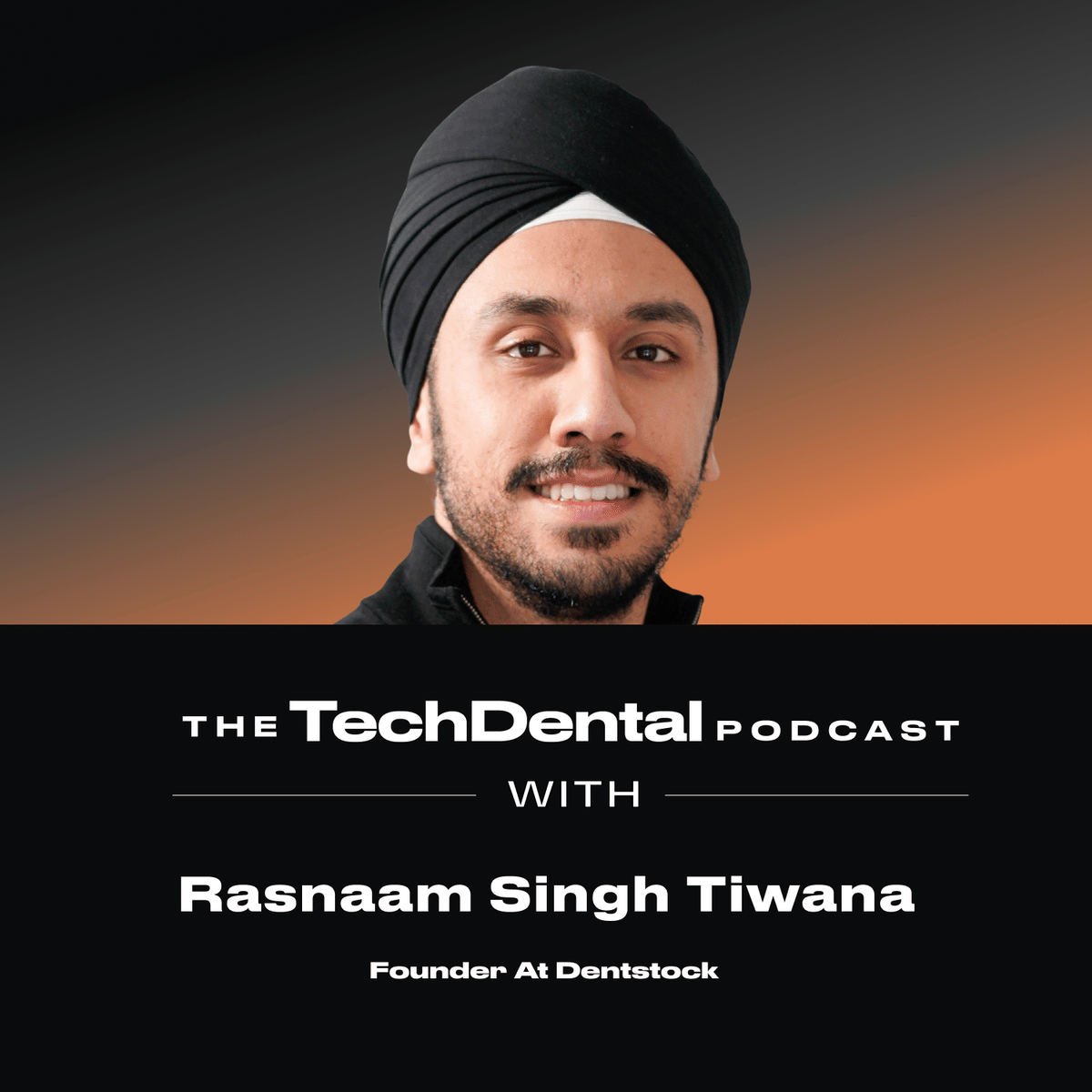
Direct answer: Rasnaam Singh Tiwana, founder of Dentstock, argues that procurement is the most consistently overlooked strategic lever available to independent UK dental practices, with the average practice purchasing between 300 and 500 unique products per year and carrying cost savings of 15% to 25% that go unrealised simply because no one has the time or tools to find them. Operating as a Group Procurement Organisation, Dentstock provides supplier-agnostic analysis, negotiated pricing and a unified purchasing platform that delivers DSO-level procurement intelligence to independent practices without restricting clinical freedom. Tiwana's central insight is that procurement is not an admin task. It is a profitability discipline, and in a market defined by rising costs, NHS contract pressure and increasing supply chain volatility, the practices that treat it as one will structurally outperform those that do not. The immediate action for any UK dental practice owner is to audit total annual spend across all suppliers, because in most cases they will not know the figure, and that ignorance is directly costing them money.
Ask almost any independent dental practice owner in the UK how much they spend on clinical supplies each year, and the honest answer is usually one of three things: an estimate, a figure they have not checked recently, or a candid admission that they simply do not know.
That admission is not a failing of attention or ambition. It is the predictable result of a profession in which clinical delivery, compliance obligations, HR management and patient care collectively consume every available hour, leaving procurement, the activity that directly determines a significant proportion of practice profitability, permanently at the bottom of the to-do list.
Rasnaam Singh Tiwana built Dentstock to change that. Launching in 2025 against the backdrop of a dental supply chain still adjusting to the purchasing disruptions and infection control-driven product changes of the post-COVID period, he identified a gap that was hiding in plain sight: independent practices were spending tens, sometimes hundreds, of thousands of pounds per year on clinical supplies without the data, tools or analytical support to know whether they were getting value for that spending.
His response was to build a Group Procurement Organisation designed specifically for the dental sector: supplier-agnostic, commission-free and focused on delivering the kind of procurement intelligence that corporate dental organisations take for granted, to independent practices and emerging groups that have historically had no access to it.
The Procurement Blind Spot and What It Is Actually Costing UK Practices
The scale of the opportunity Dentstock is addressing is not marginal. The average UK dental practice purchases between 300 and 500 unique products in the course of a year. That purchasing activity is typically managed by a member of the team who has been given the responsibility without being given the tools, the training or the analytical framework to exercise it strategically.
"For a big practice, you're often giving a person the responsibility of spending sometimes £60,000, sometimes even £100,000 or £200,000 per year without the tools, any kind of support and without any structure. A budget for that person to not have any kind of tools, training or insights often means they just end up ordering what they have in the past without any real strategy to purchasing."
The consequence is predictable: purchasing decisions that are driven by habit rather than analysis, supplier relationships that have never been independently benchmarked, and cost structures that have accumulated inefficiencies over years or even decades without anyone examining them systematically.
Rasnaam's headline finding, consistent across the practices Dentstock has analysed, is that cost savings of between 15% and 25% of total current spend are typically available without changing a single clinically sensitive product. That saving translates in most cases to approximately 1% to 2% of annual turnover going directly to the bottom line. In a profession where margins are under sustained pressure from NHS contract constraints, rising staff costs and supply chain volatility, that is not a marginal improvement. It is a structural profitability shift.
"Generally we're able to find people cost savings of between 15 to 25% of their current spend. That is a significant impact and often around a 1 to 2% of their turnover being put on their bottom line."
For context on how procurement discipline fits within the broader operational maturity required for sustainable dental practice growth, see The Great Dental Reset: Why 2026 Will Reward the Prepared, Not the Big.
The GPO Model: Why Supplier Agnosticism Changes Everything
The mechanism through which Dentstock delivers these savings is worth examining carefully, because it differs in a fundamental way from the traditional supplier relationship that most UK practices are accustomed to.
Dentstock operates as a Group Procurement Organisation. It does not supply products directly. It does not take commissions or kickbacks from suppliers. Its revenue comes from the practices it serves, which means its interests are structurally aligned with the practices rather than with the suppliers. The combined purchasing power of all Dentstock clients is used to negotiate pricing that individual practices could never achieve independently, and the savings are passed through in full.
"We aren't supplying you anything directly. We work as a GPO, a group procurement organisation, supporting practices in their purchasing. We are very much aligned with our customers. So we believe the customer is the person who pays you. And in our case it's our customers, the practice."
This model stands in contrast to the more common dynamic in UK dental procurement, where supplier representatives have a natural incentive to present their current customers as already well-priced. Rasnaam is direct about the gap between that perception and the data.
"Often they are surprised in how much we can save them. Just because practices often get told they have great pricing by their current supplier reps, which is understandable. However, we are very transparent in our whole process."
The specificity of the savings Dentstock identifies is striking. In one recently documented case, a practice was found to be purchasing gloves at double the industry average price. A product purchased in high volume by every practice, year after year, without the pricing ever being independently reviewed. The saving on that single product line, once renegotiated through Dentstock's GPO, amounted to between £3,000 and £5,000 per year for that practice alone. Multiplied across 400 or more products, and compounded over years, the cumulative impact of unexamined procurement is significant.
Data-Driven Procurement as a Resilience Strategy
The case for procurement intelligence extends beyond cost savings. In the current UK market environment, characterised by persistent inflation, supply chain volatility and the continued structural pressure on NHS contract income, the ability to make data-driven purchasing decisions is increasingly a resilience capability rather than simply an efficiency one.
Rasnaam draws a clear distinction between clinically sensitive purchasing decisions, where practitioner preference and outcome quality must be respected absolutely, and the much larger category of consumables and supplies where product changes have no meaningful clinical impact and substantial cost savings are available.
"There are often areas where the product you purchase may not have an impact on the clinical outcome as a whole. In changing a consumable, it won't have an impact on the treatment outcome. And these are areas where the patient won't know the difference. That's an area where you can truly control your costs quite well without having any impact."
The infection control wipes example from Dentstock's recent client work illustrates the principle precisely. A practice was not only overspending on its current wipe product but was using the wrong product for the majority of its surfaces from an infection control compliance perspective. The data-driven review simultaneously identified a compliance risk, corrected it and delivered an £1,800 annual saving. Neither outcome would have been visible through the traditional approach of ordering what had always been ordered.
This connects to a broader principle that Rasnaam returns to throughout the conversation: the tendency to sprint through operational tasks without ever stopping to question whether they are being done correctly or efficiently.
"Once in a while, you need to stop and have a look at what you are doing. Start with the why first and go, why are we completing this task or what are we trying to achieve, and try and have a look at processes in that lens."
For an extended analysis of how operational intelligence gaps are holding UK dental practices back from competitive parity, see The Intelligence Gap: Why 550 Dental AI Tools Exist and Most Practices Are Still on Paper and Pen.
Levelling the Playing Field Between Independents and Corporates
One of the most significant competitive asymmetries in UK dentistry is the procurement advantage that corporate dental organisations have always held over independent practices. Centralised purchasing, volume-negotiated supplier contracts, dedicated procurement teams and real-time spend analytics are standard infrastructure for any DSO of meaningful scale. For an independent practice or a small emerging group, those capabilities have historically been simply unavailable.
Dentstock's explicit mission is to close that gap, without replicating the feature of corporate procurement that independent practitioners most resist: the loss of clinical freedom.
"In some cases, corporate industry has been more authoritarian in trying to restrict people's purchasing. I'm very much a believer in clinical freedom, and a dentist is correct in being selective in their product selection. We aren't there to cut corners. We're there to improve your pricing, improve your purchasing and selection of products and speed up the whole process."
The platform delivers this through a combination of negotiated pricing, spend analytics, a unified ordering interface across multiple suppliers, and an approval workflow that can be configured to reflect each practice's internal governance preferences. A practice owner who wants the team to be able to create orders but retains approval authority over final purchases can configure that structure directly in the platform.
The operational time saving is also meaningful in its own right. Practices report saving between 20 minutes and an hour per order cycle, independent of the cost savings. In a working environment where practice managers and principals are already stretched across clinical, compliance, HR and business management responsibilities, the reduction of procurement admin is not a marginal quality-of-life improvement. It is a meaningful return of time to higher-value activities.
"Operationally, we give you tools which cut down the amount of time it takes you to purchase. People tell me it saves them anywhere from 20 minutes to an hour per order as a whole, plus those cost savings on top."
For analysis of how the operational infrastructure gap between corporates and independents is playing out across the broader UK dental consolidation landscape, see Scaling Dentistry Without Breaking It.
AI in Procurement: Advisory Intelligence, Not Autonomous Decision-Making
Rasnaam's framing of AI's role within Dentstock's operations reflects a maturity that is often absent from conversations about AI adoption in dental businesses. His position is precise: AI is a powerful tool for accelerating analysis, cleaning data and surfacing intelligence. It is not a substitute for human judgment in decisions that involve clinical preference, supplier relationship context or the nuanced complexity of individual practice purchasing patterns.
"We have used AI heavily in our internal processes. For us, it's been an avenue of support. It's been the kind of secondary employee who's a great generalist. And I'd say it's been an advisory tool. It's been very helpful at providing intelligence, cleaning up data as a whole, but it hasn't been an authoritarian for us."
His candour about the limits of AI in procurement forecasting is equally important. Practice purchasing varies significantly by location, by the clinical preferences of individual practitioners, and by the specific product categories involved. Meaningful forecasting accuracy requires a volume of standardised data that most individual practices have never accumulated. The human element of review, approval and contextual judgment remains non-negotiable.
"You wouldn't want to go and trust AI entirely to go and spend £40,000 or £50,000 a year without having some kind of approvals and checks."
This positions Dentstock's AI capability precisely as a co-pilot rather than an autopilot: a tool that handles the analytical heavy lifting, surfaces the insights and prepares the options, with a human in the loop to confirm, check and validate the decisions that matter. It is the same principle that defines effective AI deployment across every other area of dental business operations, and its application in procurement is both logical and overdue.
The Founder's Mindset: Calm, Curiosity and the Power of Questioning Process
Rasnaam's approach to building Dentstock from the ground up, in a market that has historically resisted change and in a post-COVID period of significant supply chain disruption, offers a useful window into the entrepreneurial mindset required to identify and act on structural gaps that the incumbent players have every incentive to leave unaddressed.
His first principle of resilience is simple and, he admits, learned rather than innate: the ability to stay calm in the face of operational problems, diagnose the root cause precisely, and solve the specific issue rather than reacting to the anxiety it generates.
"The best trait I've had is actually being able to keep calm, understand what's gone wrong and why, and just being able to problem solve on the exact issue rather than getting frustrated or flustered."
His closing answer to the lightning round question captures the intellectual orientation that underpins Dentstock's entire value proposition.
"The future belongs to those who question the why and the how of processes they undertake. The best innovators I have met are very much innovative. They try and learn, they try and question the 'we aren't a fan of how it has been done.' How it's always been done isn't how it should be done."
For UK dental practice owners and group operators, that question, applied to procurement, has a clear and immediate answer. The way it has always been done, ordering from familiar suppliers, trusting that the pricing is reasonable, managing spend through a spreadsheet or a book if at all, is not how it should be done. The data to support a better approach now exists. The tools to act on it are available. The question is whether the leaders running these businesses will stop long enough to ask the question.
Key Takeaways
The average UK dental practice purchases between 300 and 500 unique products per year, and cost savings of 15% to 25% of total current spend are typically available without changing any clinically sensitive product. This translates directly to a 1% to 2% improvement in annual turnover going to the bottom line.
Procurement has been overlooked as a strategic lever not because it is unimportant but because the admin burden required to analyse it has historically been prohibitive. Data-driven procurement platforms remove that barrier and make the strategic opportunity accessible to practices without specialist expertise in-house.
A supplier-agnostic GPO model, where the organisation is paid by the practice rather than by suppliers, fundamentally changes the quality of advice a practice receives about its purchasing. Commission-based supplier relationships create an inherent conflict of interest that most practices have never examined.
The client-server-to-cloud PMS migration happening across UK dentistry creates a parallel opportunity in procurement: the moment of operational change is the moment to audit and restructure purchasing, both because it forces a review and because cloud-based systems create the data infrastructure that makes ongoing procurement intelligence possible.
AI in procurement is most appropriately positioned as an advisory and analytical co-pilot rather than an autonomous decision-maker. Practices that deploy AI to surface purchasing insights whilst maintaining human approval for significant spend decisions will extract the most value without creating the governance risks that come with unsupervised automated purchasing.
The operational advantage that corporate dental organisations have always held over independents in procurement, through centralised contracts, volume pricing and dedicated analytical resource, is now addressable for independent practices through GPO models. The playing field is levelling, but only for practices that choose to use the tools now available.
Questioning the why behind entrenched operational habits, not just in procurement but across the business, is the foundational discipline that separates practices building structural competitive advantage from those compounding inefficiency year after year.
About TechDental
TechDental is a strategic intelligence platform for founders, executives, operators and investors shaping the future of dentistry.
Through high-level analysis and systems-focused conversations, we explore how AI, governance frameworks and operating model design influence performance, scalability and enterprise value in dental organisations.
If you are building, scaling or investing in dentistry and want independent, systems-level insight into AI, governance and capital readiness:
For strategic advisory, board briefings or keynote speaking enquiries: www.techdental.com/advisory
The future belongs to those who deploy technology with discipline.
© 2026 RIG Enterprises Limited. All Rights Reserved. This article was authored by Dr. Randeep Singh Gill and is published under the TechDental brand, a trading name of RIG Enterprises Limited (Company No. 11223423), incorporated in England and Wales on 23 February 2018, registered at 1a City Gate, 185 Dyke Road, Hove, England, BN3 1TL. All editorial content, analysis, synthesis and intellectual property contained within this article are the original work of the author and remain the exclusive property of RIG Enterprises Limited. Opinions and statements attributed to named guests reflect the views of those individuals as expressed during recorded interviews and are reproduced here for editorial and informational purposes. No part of this article may be reproduced, distributed, transmitted, republished, or otherwise exploited in any form or by any means, whether electronic, mechanical, or otherwise, without the prior written consent of RIG Enterprises Limited. Unauthorised reproduction or use of this content may constitute an infringement of copyright under the Copyright, Designs and Patents Act 1988.